
Home / Commercial Roofing Services
Commercial Roofing Services in Pueblo, CO
Compare commercial roof repair, replacement, inspection, and restoration in Pueblo, CO. We set scope from roof conditions, access, and operating needs.
A repair request can expand once a roof zone is opened. We inspect drainage, edges, penetrations, and visible layers before setting a boundary. Pueblo heat and winter snowfall make forecast and water path part of the decision. The scope follows field conditions, with concealed items marked for review.
Industrial and distribution properties add receiving and shift schedules. St. Charles Industrial Park is rail-served along I-25; Pueblo Memorial Airport sites connect to US 50 and airport taxiways. Delivery routing and active operations belong in the site walk.
What does the first roof walk settle?
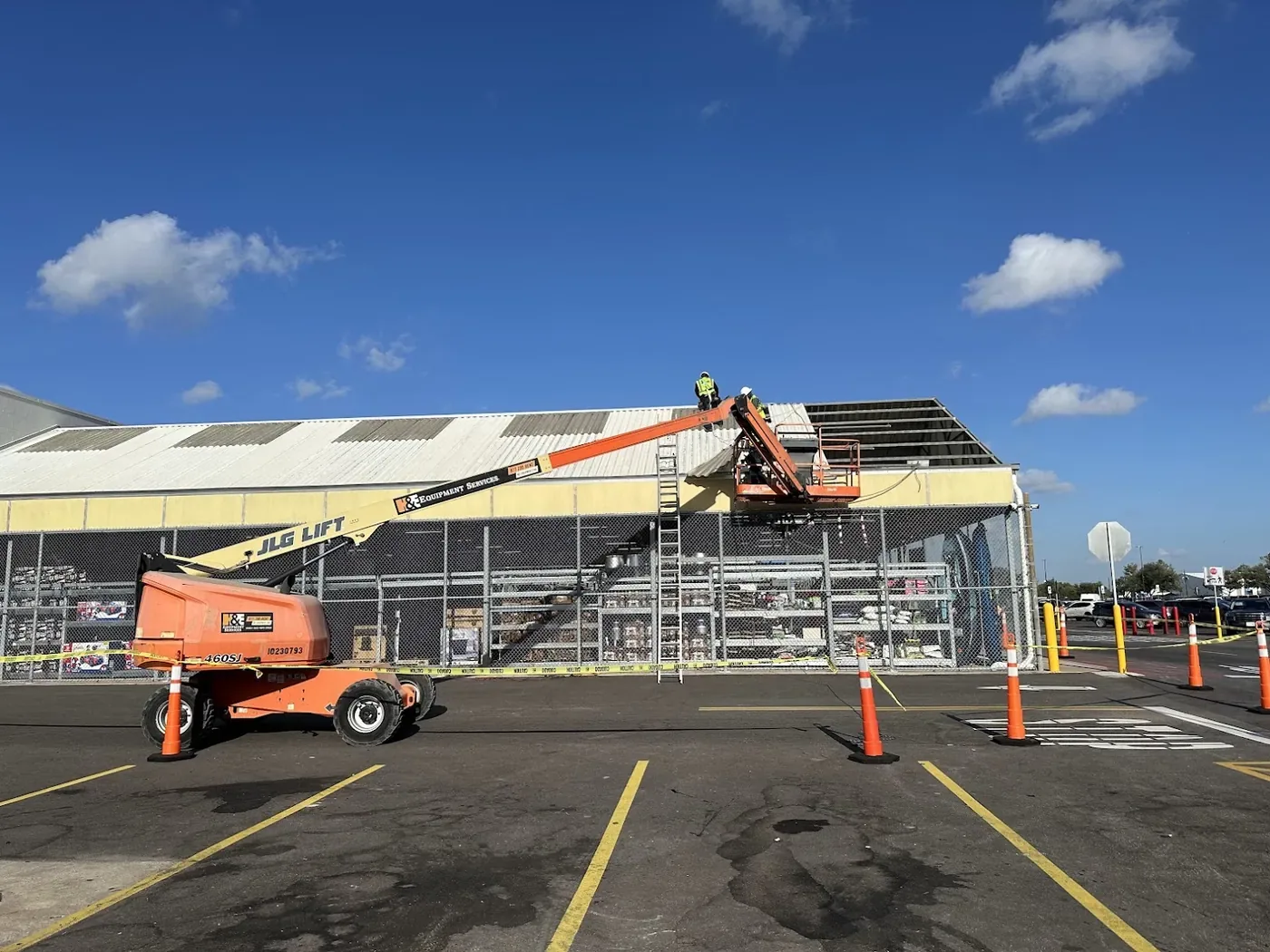
The inspection begins with the reported condition, then follows likely paths across seams, walls, curbs, drains, and previous repairs. We map areas that can be accessed and identify sections blocked by equipment or unsafe conditions. A commercial roof inspection records those observations; a moisture survey can help locate suspected wet insulation, with verification openings used where the decision requires confirmation.
For an active leak, the interior mark is one clue, not a roof diagnosis. We inspect transitions and drainage before defining a leak-repair scope. Pueblo averages 28.3 inches of seasonal snowfall, so drains, overflow paths, and low areas belong in the same review as the membrane. The weather number describes the city, not the loading or condition of a particular roof.
How do repair and replacement options differ?
A puncture or isolated flashing failure may support a targeted roof repair when the surrounding assembly remains serviceable. Repeated water entry, saturated insulation, poor attachment, or deck deterioration can change the scope. We compare the affected area with the roof’s layer count and drainage, then explain whether patching, coating, recover, or removal fits the observed conditions.
A commercial replacement includes sequencing, protection, tear-off limits, and closeout. A recover assessment checks moisture, attachment, and existing layers before another assembly is considered. When conditions warrant restoration rather than replacement, the proposed coating must suit the substrate and leave drainage functional.
What keeps the building protected during work?
Each roof zone needs an access route, material staging point, and end-of-shift stop point. We coordinate those with the site contact, especially when deliveries, production, tenants, or public entry continue below. For urgent water entry, emergency roof repair is available around the clock, including weekends and holidays; the immediate objective is to protect the building and define what permanent work still needs inspection.
Before work starts, agree on interior protection, access windows, and who can approve a concealed-condition change. The same approach applies to a phased reroof or a small repair: document the boundary, secure opened areas, and hand the next condition to the project lead in plain terms.
What belongs in the closeout?
Closeout photographs should match the roof-zone map. We record completed seams, flashing, drains, transitions, any changed work limit, and areas left for a future decision. A maintenance program can revisit exposed details and drainage on an agreed schedule. Where several buildings compete for capital, a roof capital plan can prioritize work using inspection findings rather than assumptions about age or roof type.
Bring roof plans, repair history, leak locations, operating hours, and a delivery route. We will inspect the assembly, mark concealed-condition stop points, and set a protective access sequence.
Commercial Roofing Questions
Can a leaking roof be stabilized before a full project is priced?
Yes. We inspect the affected zone, protect the opening or active leak, and identify temporary measures separately from a permanent repair. The report notes what could be confirmed and what needs another access visit or test opening.
What changes a repair into a replacement recommendation?
Recurring failures, widespread wet insulation, loose attachment, or a compromised deck can make a patch short-lived. We compare the findings with the assembly and drainage, then explain the repair, recover, coating, or replacement options that fit the building.
Do you work around an occupied facility?
We set the daily work area with the site contact, protect the interior, and close each opened zone before leaving. Access, deliveries, tenant movement, and any production window are part of the sequence.
What should be ready for an inspection?
Useful items include roof plans, prior repair notes, leak locations, access restrictions, and the operating calendar. We compare those records with the field assembly and mark any mismatch before expanding the scope.
Commercial Roofing Services
-
Commercial Roof Replacement
Plan a commercial roof replacement in Pueblo with assembly checks, clear work boundaries, and a sequence that protects active building operations.
-
Commercial Roof Recover
Evaluate a commercial roof recover in Pueblo with moisture checks, attachment review, drainage details, and a clear decision on retained layers.
-
Commercial Roof Repair
Get a repair scope for a Pueblo commercial roof with mapped defects, compatible materials, safe access, and a clear record of completed work.
-
Commercial Roof Leak Repair
Trace and repair commercial roof leaks in Pueblo with interior reports, roof-zone checks, compatible materials, and a documented closeout record.
-
Emergency Commercial Roof Repair
Get 24/7 emergency commercial roof response in Pueblo, with interior protection, controlled roof access, temporary dry-in, and a permanent repair plan.
-
Commercial Roof Inspection
Schedule a Pueblo commercial roof inspection that maps defects, checks transitions and drainage, and gives the project team actionable findings.
-
Drone Roof Inspection
Use drone imaging for a Pueblo commercial roof to map visible conditions, document hard-to-reach areas, and target hands-on verification.
-
Infrared Roof Moisture Survey
Locate possible wet insulation on a Pueblo commercial roof with infrared scanning, targeted verification cuts, and a mapped repair boundary.
-
Commercial Roof Maintenance
Plan commercial roof maintenance in Pueblo with seasonal drain checks, seam and flashing review, repair priorities, and a useful condition record.
-
Commercial Roof Coating Restoration
Review coating restoration for a Pueblo commercial roof with adhesion tests, substrate checks, flashing repairs, and a clear alternative comparison.
-
Storm Damage Roof Repair
Assess and repair storm-related commercial roof damage in Pueblo with mapped observations, temporary protection, and documented repair boundaries.
-
Commercial Roof Insurance Claim Assistance
Organize commercial roof claim documentation in Pueblo with dated photos, measured repair scopes, emergency work records, and clear condition notes.
-
Commercial Roof Drains and Scuppers
Correct commercial roof drainage in Pueblo with drain and scupper checks, cricket layout, outlet review, and a defined repair sequence.
-
Commercial Roof Edge Metal, Coping and Gutters
Repair commercial roof coping, edge metal, gutters, and downspouts in Pueblo with measured details and secure membrane transitions.
-
Commercial Skylight and Penetration Flashing
Repair commercial skylight and roof penetration flashing in Pueblo with curb checks, compatible membrane details, and safe opening protection.
-
Commercial Roof Insulation and Cover Board
Plan Pueblo commercial roof insulation and cover board with measured elevations, drainage design, secure attachment, and coordinated flashing heights.
-
Commercial Rooftop Equipment Curbs and Supports
Repair Pueblo commercial roof curbs and equipment supports with measured flashing, load and movement checks, and coordinated service access.
-
Commercial Cool Roof Installation
Plan a reflective commercial roof in Pueblo with assembly review, surface temperature checks, drainage details, and realistic performance expectations.
-
Commercial Solar-Ready Roofing
Prepare a Pueblo commercial roof for solar with condition review, drainage mapping, structural coordination, access paths, and documented attachment zones.
-
Occupied Commercial Building Reroofing
Plan a Pueblo commercial reroof around tenants, production, deliveries, and roof access with defined work zones, weather stops, and closeout checks.
-
Military and Federal Facility Roofing
Coordinate Pueblo military and federal roof work with access controls, mission schedules, UFC criteria, phased protection, and documented closeout.

Set the work boundary with a roof walk
Bring the project lead, available roof records, access windows, and operating constraints. We will map the inspected zones and identify the next decision.
Call 555-555-5555 or email [email protected].