Home / Commercial Roofing Services / Commercial Rooftop Equipment Curbs and Supports
Commercial Rooftop Equipment Curbs and Supports in Pueblo, CO
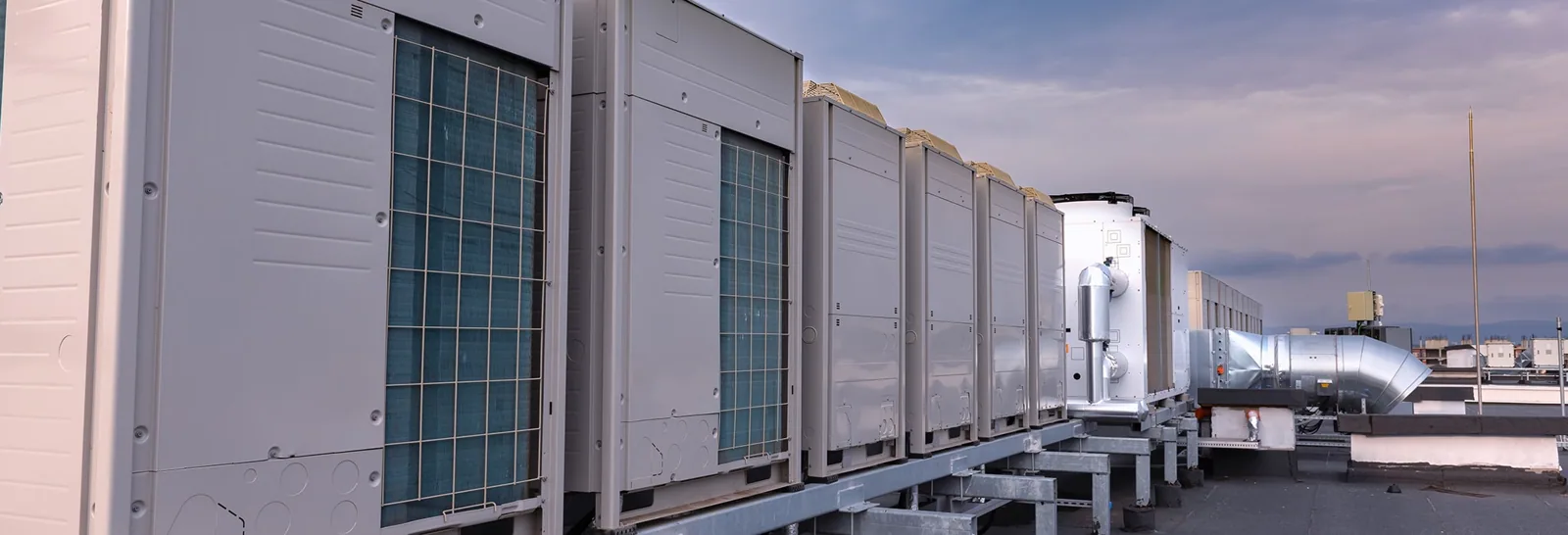
Repair Pueblo commercial roof curbs and equipment supports with measured flashing, load and movement checks, and coordinated service access.
The curb leaves a weak point if its flashing stops before the equipment base. We inspect the membrane transition, curb faces, support legs, fasteners, and nearby seams, then identify what can be repaired without disturbing the unit. In Pueblo, CO, industrial and airport-related buildings use rooftop systems that must remain accessible for service. The roof detail has to hold water out while keeping a safe route for mechanical work and a clear boundary for any shutdown.
The equipment schedule helps locate each unit, but the field walk shows whether the curb, conduit support, or vibration rail matches the plan. We record the assembly around each base and note prior patches, loose lines, and areas where water collects. Pueblo’s St. Charles Industrial Park includes manufacturing uses, while airport development sites include maintenance facilities and hangars. Neither setting identifies the equipment or roof detail at an individual building, so we verify the actual unit with its facility contact before work starts.
Which support detail is moving?
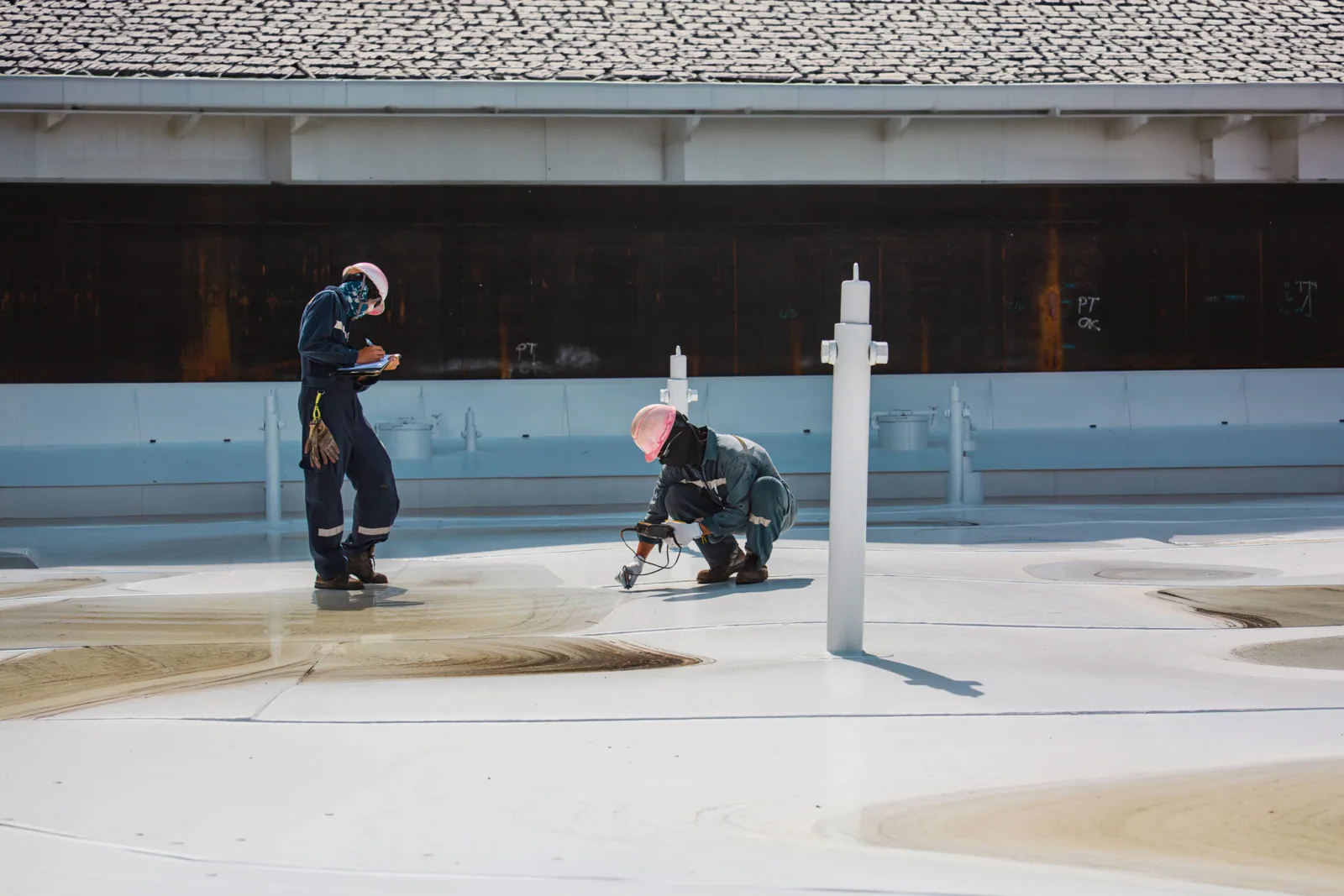
We check whether curb corners have separated, flashing has pulled away, fasteners are loose, or a support foot bears directly on the membrane. Vibration can work a penetration loose, and service crews may leave a cut or unsealed line entry behind. A condensate line, refrigerant pipe, electrical conduit, or gas line each needs a compatible roof detail. We photograph the base and surrounding field so the repair does not cover a nearby seam or block a drain. We note whether flashing is welded or mechanically attached and whether the bonding area is clean and dry.
Water near a unit may be traveling from a seam or low point rather than entering at the curb. We compare the interior report with the surface slope, drain location, and membrane transition. If the exact entry is unclear, a leak investigation can follow the water path. For a suspected concealed area, a moisture survey may help select verification points. The report labels visible movement and confirmed substrate damage separately, so repair quantities do not assume what a test has not shown.
How is the equipment protected during roof work?
Before removing flashing, we confirm whether the unit can remain running, whether a mechanical contractor needs to isolate it, and where temporary protection can be secured. Roofing work should not put tools, debris, or membrane scraps into an intake or exhaust. We coordinate a work zone around the curb, preserve clearance for service panels, and keep the unit’s nameplate and connections accessible unless the owner has approved a different arrangement.
If a curb is sound and the membrane around it remains stable, a localized flashing repair may be enough. A corroded curb, failed wood nailer, split weld, or wet insulation can extend the work beyond the visible opening. We mark the affected quantity and show the project lead where a mechanical or structural trade needs to participate. During a larger replacement project, curbs and supports should be included in the roof-zone plan. A penetration-flashing detail can address similar transitions around pipes and other openings, with material selected for the installed roof system.
Which support works with the membrane?
Pipe supports and equipment rails need to carry their load without cutting or pinching the roof membrane. The support base, bearing pad, attachment, and flashing have to suit the assembly and service conditions. A small pipe can still move with temperature or vibration, so the boot and seal need room to accommodate the connection. We identify whether a support is attached to the deck, curb, or another structure before changing a base detail.
For a TPO, PVC, EPDM, or modified-bitumen field, the tie-in and patch material differ. We select the repair detail from the confirmed assembly and the manufacturer’s published installation requirements. If a unit needs replacement or a curb must be raised, the new elevation can affect flashing height and drainage around the base. A TPO roof assembly and a rubber membrane need different flashing materials and preparation. The scope records how each support is stabilized and what remains accessible for future service.
How do service windows shape the repair?
A mechanical shutdown, crane pick, or rooftop service call can determine when the flashing can be opened. The facility team identifies units that cannot be interrupted, restricted roof paths, and the technician who can move lines or guards. We schedule the repair so the open curb can be closed within the agreed window. If a unit must remain active, we stage protection and materials before removing the existing detail.
Industrial operations in Pueblo can involve rail deliveries, vehicle yards, and production shifts. St. Charles Industrial Park connects to rail and I-25, while airport industrial sites are near US 50. Those corridors affect how teams may plan for access, but the building contact confirms where the crew may unload and stage. If equipment service is needed before roofing, we coordinate that trade in the sequence and document the handoff. A work plan for an active building can show how roof zones and mechanical access remain available during the project.
What should the equipment detail record show?
We record each unit or support repaired, its roof-zone location, the membrane type where confirmed, and the flashing or base detail installed. Photos show the original condition, the prepared substrate, the finished tie-in, and service clearances. If a mechanical contractor changed the unit or line routing, the final record notes that sequence. Excluded supports or adjacent curbs remain listed separately so the owner can route them to the right trade.
After work, the facility team should know which areas can be walked, which supports need periodic review, and how future service visits should protect the membrane. A curb that remains intact can still be damaged by an unprotected technician path. We can add a roof-zone reference to a photo condition report or the building’s maintenance file. Arrange the equipment schedule, roof plan, shutdown windows, and mechanical contact before the roof walk. We will inspect the bases, agree on which work can proceed around operating equipment, and leave a specific record for the next service call.
Commercial Roofing Questions
Can the equipment stay on while the curb flashing is repaired?
An operating unit can often remain online, but we check the service connections and repair method with the mechanical contact before opening the flashing. If a shutdown or line movement is required, that task is scheduled as a separate handoff before roofing resumes.
Why does a roof leak near an HVAC unit?
The opening may be at the curb flashing, a nearby pipe support, a seam, or a low spot that directs water toward the equipment. We inspect the base and surrounding roof, compare it with the interior report, and test where needed. The repair follows the confirmed entry detail instead of assuming the unit itself is the source.
Do pipe supports need to be flashed like a curb?
A pipe boot, equipment rail, and curb each call for different geometry and movement allowance. We identify the membrane and support type, then choose a compatible detail that leaves room for the line to move as designed.
What if the equipment curb is rusted or the nailer is soft?
We pause at the affected base, document the condition, and review the additional work with the project lead. New flashing needs a stable curb and fastening surface. Mechanical replacement or substrate repair may be required before the final membrane transition can be completed.

Walk the unit bases with the service team
Share the equipment schedule, roof plan, service windows, and mechanical contact. We will inspect the supports and flashing, set an access sequence, and define the repair boundary around each unit.
Call 555-555-5555 or email [email protected].