Home / Commercial Roofing Services / Emergency Commercial Roof Repair
Emergency Commercial Roof Repair in Pueblo, CO
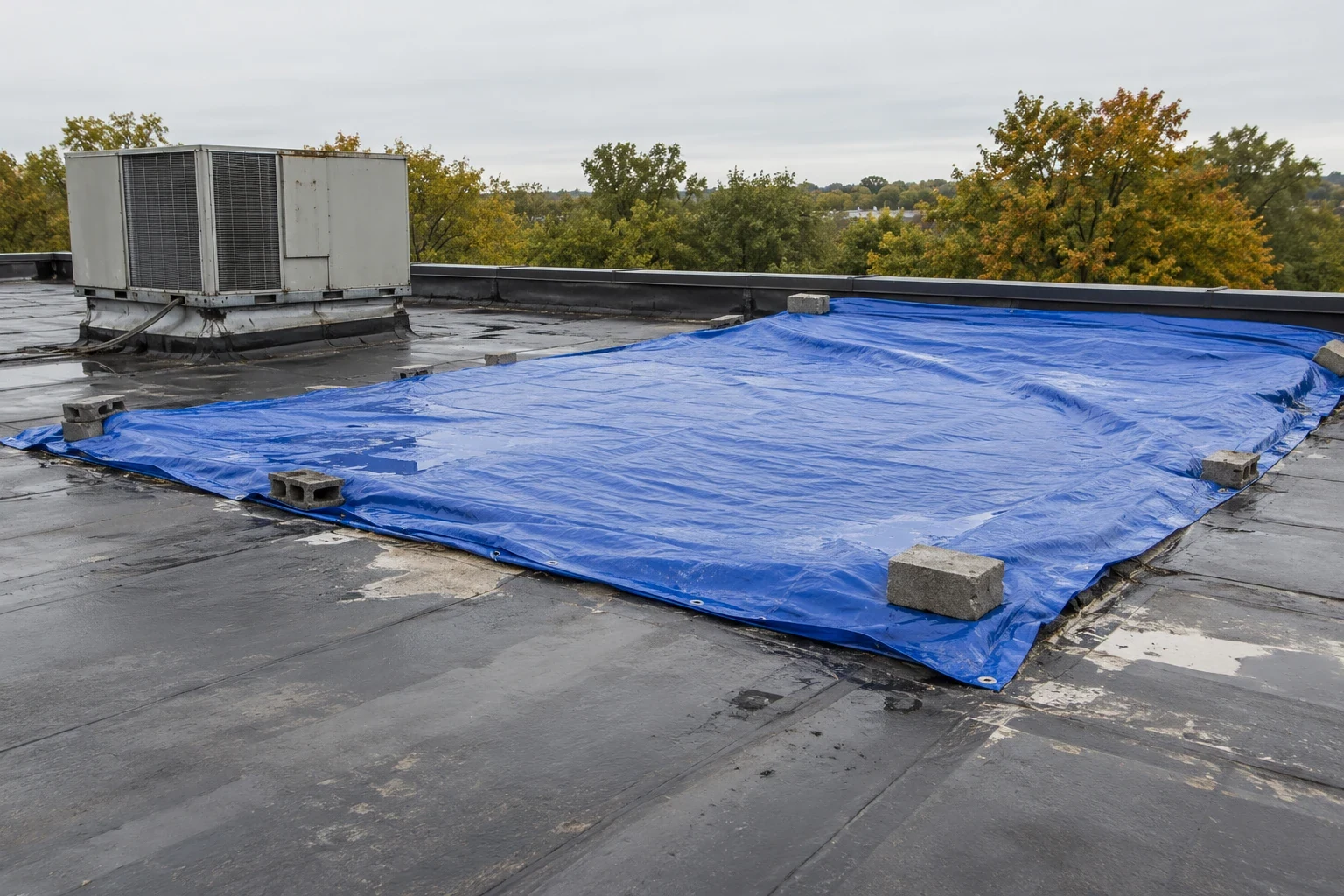
Get 24/7 emergency commercial roof response in Pueblo, with interior protection, controlled roof access, temporary dry-in, and a permanent repair plan.
A safe dry-in begins with the access route and the area we can protect. When water is entering an occupied building, we first confirm who can reach the roof, where interior conditions are active, and whether wind or electrical hazards limit the work. In Pueblo, CO, our emergency response is available around the clock, including weekends and holidays. We coordinate with the building contact, identify a controlled work boundary, and stop the immediate exposure before setting the permanent repair scope.
The first visit is about stabilizing the building and preserving useful evidence. We protect affected equipment and finishes where practical, document the reported location, and inspect the roof zones that can be reached safely. A tarp or temporary membrane is a short-term measure, not a substitute for a compatible repair. Pueblo’s severe-weather profile includes hail, tornadoes, and damaging wind across the region; that context can help explain an urgent call, but we assess the actual property damage directly. Sites near Pueblo Airport Industrial Park or rail-served St. Charles Industrial Park also need their own security and staging arrangements confirmed before materials arrive.
What can be secured on the first visit?
We begin by locating active water, checking the roof surface and interior report, and identifying the likely entry details. Loose flashing, an open seam, a puncture, or damage around a curb may be suitable for a temporary dry-in if the area is accessible and the conditions allow it. If the roof is unsafe to enter, we do not send a crew across a slick or wind-exposed surface simply to meet a clock. The project lead receives the observed limits and the safest available next step.
Inside, the building contact can identify equipment, inventory, or rooms that need priority protection. On the roof, we look for adjacent transitions that may feed water into the same area. We take photographs before covering the defect when conditions permit, then note where temporary material begins and ends. That record helps the permanent repair crew return to the right location. If the water-entry point is unclear, an emergency leak investigation follows seams, penetrations, walls, and drains. We avoid calling a tarp a completed repair; the closeout states what remains open.
How is the dry-in boundary set?
Temporary protection needs a secure perimeter, a stable tie-in, and a route for water to drain away from the affected interior. The boundary should cover the entry detail and enough sound surface to hold the temporary material without blocking roof drainage or covering an unrelated defect. We account for rooftop equipment, wind exposure, access paths, and the likely duration before permanent work. The project lead can then see which roof zone is protected and what condition could require another visit.
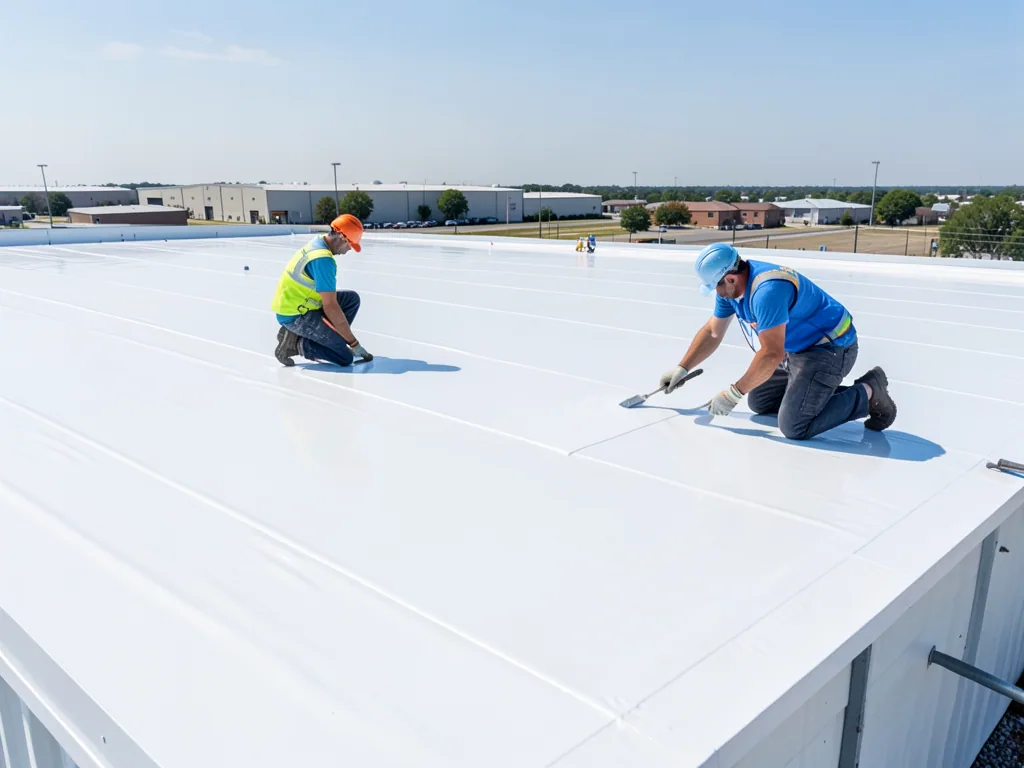
Different roofs call for different temporary measures. A membrane that is loose at the perimeter may need restraint before a cover is placed; a metal transition may need a different temporary seal. A penetrated or wet assembly may need the water path controlled at a curb or wall. We bring suitable emergency materials, but final membrane selection waits until the installed assembly is confirmed. For a sudden roof opening or puncture, our commercial repair work can follow the dry-in with a permanent compatible detail. Any insulation or deck condition discovered after temporary material is removed is reviewed as a separate scope item.
Who needs to coordinate access?
Emergency work can involve a building engineer, security desk, property manager, tenant contact, and the person who can authorize roof access. We ask the site contact to identify the roof hatch or ladder, restricted areas, interior leak locations, and any equipment that cannot be interrupted. If a lift or ladder is needed, the arrival route and setup area must be cleared. For an occupied hospital, distribution building, or production site, the project lead should identify pedestrian and vehicle paths that need to remain open.
After the immediate hazard is controlled, we schedule the permanent repair around weather, material availability, and operating hours. Pueblo Memorial Airport industrial sites have highway and taxiway connections, while the St. Charles area has rail links and I-25 access. Neither district profile establishes a particular property’s access rules, so we confirm the site contact, gate procedure, and laydown space before sending a larger repair crew. A roof inspection can document remaining conditions and help decide if the damaged zone can be repaired or needs a broader replacement evaluation.
What happens if the forecast shifts?
Emergency response does not remove the need for safe working conditions. Wind can make temporary covers difficult to secure, precipitation can make a roof surface unsafe, and temperature can affect sealant and adhesive performance. Pueblo’s July and August average highs are 93.4°F and 90.2°F, and seasonal snowfall averages 28.3 inches. We check the current forecast and the surface before selecting a temporary measure, and we change the plan if conditions threaten worker safety or the cover’s attachment.
A dry-in is checked before the crew leaves. We look for loose corners, exposed edges, trapped water, and a blocked path to drains or scuppers. If the roof has an active drainage issue, water can collect at the temporary boundary and reach the building another way. We record that condition and note whether a return visit is needed. A local wind-damage review or hail inspection may help document a broader event, but the repair remains tied to what is visible on this property. The building contact receives practical instructions about the temporary protection and when to call if it shifts.
What should the emergency record include?
The visit record identifies the reported interior impact, roof zone, observed damage, temporary measure, and any area that could not be reached. Photographs show the condition before and after stabilization where it is safe to capture them. We note the time, weather context, and access limits, then separate emergency work from the permanent repair recommendation. That gives the owner a useful account for maintenance and insurance documentation without implying that a temporary cover resolved the full roof condition.
When the permanent scope is ready, we compare it with the original observation and confirm that the dry-in can be removed without opening a larger area than planned. The repair detail uses material compatible with the existing assembly, and the closeout notes any insulation, flashing, or deck repair approved during the work. If the roof needs broader evaluation, we identify the options and the evidence that supports each one. Call with the affected room, access contact, current water activity, and any safety restriction. We will establish the first safe response, protect the building where conditions permit, and arrange the next roof check with the project lead.
Commercial Roofing Questions
Can emergency crews respond overnight or on a holiday?
Yes. Emergency response is available around the clock throughout the week, including holidays. The first call should identify active water, roof access, the site contact, and any hazards. We confirm the safe access plan, protect the affected area where possible, and document what must be addressed during the permanent repair.
Will a tarp stop the leak permanently?
A tarp or temporary membrane is meant to reduce immediate exposure until a permanent repair can be installed. It does not confirm the roof assembly or correct hidden wet insulation, failed flashing, or deck damage. We label the dry-in boundary and plan a follow-up inspection so the temporary measure is not mistaken for final closeout.
What details should we give the dispatcher?
Share the building address with the response team, the room or equipment affected, whether water is still entering, and who can meet the crew. Mention roof access limits, alarms, electrical concerns, and any loading or production window. Those details help us choose the first safe work area and bring appropriate temporary materials.
What if the roof is too dangerous to access during the storm?
Worker safety and roof conditions set the limit. If wind, lightning, standing water, or another hazard prevents safe entry, we explain the restriction and coordinate interior protection or a return as conditions improve. A crew does not cross an unsafe roof just to place a temporary cover.
Start with the safest access plan
Call with the active leak location, site contact, roof access instructions, and any operational restrictions. We will coordinate a safe response, stabilize the affected area where conditions permit, and document the permanent repair next step.
Call 555-555-5555 or email [email protected].