
Home / Roof Damage Repair / Commercial Roof Seam Failure Repair
Commercial Roof Seam Failure Repair in Pueblo, CO
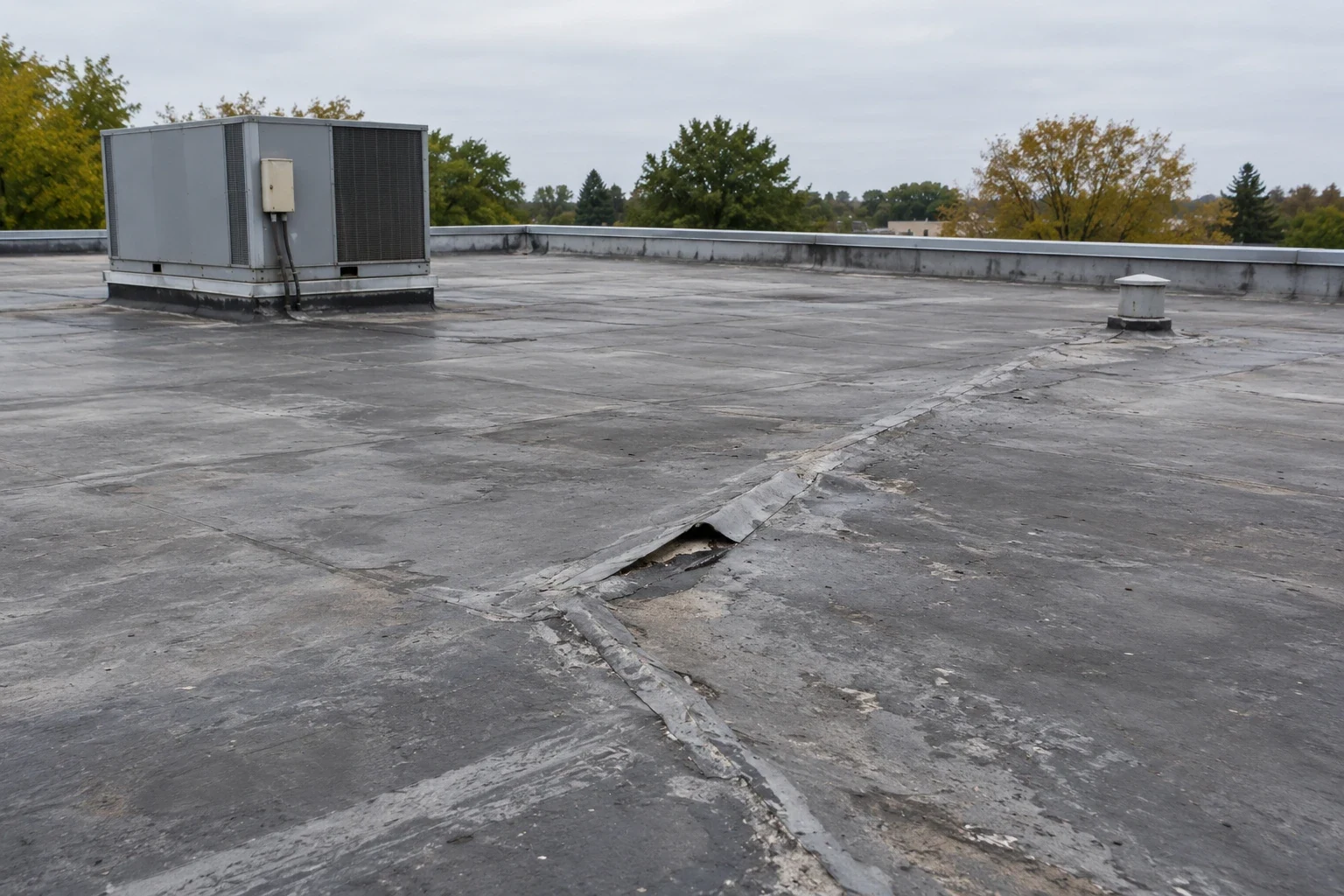
Restore split or open commercial roof seams in Pueblo, CO with a checked repair boundary, compatible materials, and a clear closeout for the owner.
A seam can look closed at one end and separate several feet farther along. Before pressing or coating the lap, we inspect its full length, the adjoining membrane, and the substrate underneath. The decision is whether the seam can be prepared and rejoined, whether a wider area has lost bond, or whether the assembly needs an opening to confirm hidden conditions. We mark the start and stop points so the work limit reaches sound material without absorbing unrelated wear.
Pueblo’s hot summers and winter snowfall affect seam-repair timing and water management. Heat can narrow the safe working window; thaw can leave a lap or substrate damp. We look at membrane temperature, recent moisture, and forecast before setting the work sequence. We look at the current membrane temperature, recent moisture, and forecast before setting a work window, then inspect the actual lap and its tie-in.
What tells us the seam has lost its bond?
On a single-ply roof, inspect for an open lap, fishmouth, wrinkling, contamination, or a separation that moves when the membrane is handled. A seam probe can identify a loose edge, but pressure alone does not show whether the substrate below is dry or stable. We check nearby patches, corners, penetrations, and transitions because movement in one detail can stress the next. The repair plan should distinguish a short seam defect from broader loss of attachment.
At a modified-bitumen roof, look for a split in the lap, displaced surfacing, exposed reinforcement, or a blister that crosses the seam. Metal systems have different joints and need a check of sidelaps, endlaps, clips, and fasteners. We identify the system before selecting a repair material. A roof inspection records the seam, surrounding roof zone, and any interior report. Where concealed moisture is a concern, infrared screening can guide follow-up when conditions suit the method.
Water does not always enter directly beneath the visible separation. It may travel along insulation, a deck flute, or an adjacent transition before reaching an interior surface. For that reason, we compare the leak location with the roof geometry and follow the path uphill where appropriate. If the seam sits beside a curb or parapet, inspect that flashing as a separate detail. A repair limited to the lap should not imply that the neighboring transition was also corrected.
Can the existing lap be prepared for a new tie-in?
A sound substrate and a repairable membrane edge are necessary for a dependable seam repair. The crew removes loose or incompatible material, cleans the bonding surfaces as the selected system requires, and prepares the lap without enlarging the opening unnecessarily. The new material must bridge to sound membrane on both sides. If the edge is brittle, contaminated below the surface, or detached over a broad area, extending a narrow patch may leave the same failure mechanism in place.
A flashing inspection is useful when the separation turns into a curb or wall. If a puncture is found nearby, document it as another defect and use a puncture repair scope for that opening. Active interior water may also call for leak investigation, which links the observation below with the roof zones above. Each item gets its own measured limit so the owner can see what the approved work includes.
How is a seam repaired without leaving a weak endpoint?
The seam is cleaned and prepared across the full measured length, including the ends where a patch can otherwise peel back. The selected repair detail follows the membrane manufacturer’s system requirements without suggesting a partnership or warranty outcome. The crew applies pressure or heat as appropriate, checks the finished bond, and inspects terminations, corners, and cross seams that meet the repair. Any location that cannot be completed in the planned shift gets temporary protection with a defined removal or return plan.
Where a liquid flashing or cover strip is specified, the crew confirms the surface is dry and compatible. An unprepared surface can trap dust or moisture beneath the repair and keep the new material from bonding. If an opening exposes soft insulation, we stop at the agreed boundary and show the condition to the owner before adding work. A targeted repair proposal can price confirmed seam work separately from replacement of wet substrate, preserving a clear decision for the project lead.
For occupied properties, sequence the roof zones so access to equipment, exits, or deliveries remains available. Materials should be staged without blocking drains or creating loose debris. If the work is near rooftop units, coordinate any shutdown and service clearances before the repair starts. At shift end, the open area, if any, must be protected and the temporary limit identified to the site contact. Those handoffs matter as much as the lap itself when several trades share roof access.
What Pueblo conditions should shape the seam work?
A membrane seam bonds under specific conditions. Cold substrate, dust, surface moisture, or excessive heat can affect preparation and installation, so the crew checks actual roof conditions rather than rely on a seasonal average. Pueblo’s average January low is 15.4°F. Compare the roof-surface reading and product limits before setting a cold-weather seam repair window. When those seasons are in play, material handling and access windows need closer attention. We follow the selected system’s application limits and protect the roof if the weather moves outside them.
The local building mix adds coordination decisions. St. Charles Industrial Park is a rail-served employment area along I-25, and Pueblo Memorial Airport industrial sites adjoin US 50. These are broad logistics facts, not proof that any specific property has room for a crane or a staging area. A PuebloPlex-area roof walk begins with the site contact’s access and operating rules. If seam repair changes attachment or another permitted detail, confirm the parcel’s reviewing authority and current requirements before setting the revised scope.
What does a useful seam repair record include?
Record the original seam location, length, roof system, repair method, and photographs that show the lap before and after preparation. Note any moisture, prior patch, loose membrane, or test opening found nearby. Photos should include the endpoints and tie-in, not only the center. If another section remains open or was not tested, label that limit in the closeout rather than let the reader assume the entire roof was checked.
When the repair sits in a zone that receives maintenance traffic, mark the route and any protection requirements for other trades. For a repeated seam issue, compare later observations with the same map and date the inspection. A condition report can carry unresolved items into a capital review, while scheduled roof maintenance can check repair edges and drains under a separate scope. Neither changes what the current repair covers.
Bring the property contact, repair records, and leak locations to the roof walk. We can mark a work boundary, set an installation window, and agree on who can approve concealed work if the seam opens onto wet or damaged material. That leaves the owner with a repair record that identifies what was completed, what remains, and which next decision belongs to the project team.
Commercial Roofing Questions
Can a seam be repaired without replacing the membrane?
A localized separation can be repaired if its edges, adjacent membrane, and substrate can accept a compatible tie-in. We inspect beyond the visible opening first. Widespread bond loss or wet materials may change the scope, and we document those conditions before recommending a larger option.
Why did the seam open again after a prior patch?
The earlier repair may have been too short, applied over contamination, or placed across material that had already lost bond. The nearby assembly may also be moving or wet. We inspect the old patch and its endpoints to identify which condition is supported before repeating the work.
Does a seam leak always show up directly below the opening?
No. Water can travel within the assembly before it reaches the interior. We compare the reported area with roof geometry, nearby penetrations, and moisture findings, then distinguish the failed seam from the point where water appeared.
What happens if the crew finds wet insulation?
We stop at the agreed work boundary, photograph and measure the exposed condition, and protect the opening. The owner can review the added scope before material is removed beyond the approved limit. The permanent tie-in follows after the substrate decision is made.

Schedule a seam-failure roof walk
Provide the roof plan, leak locations, prior seam repairs, access restrictions, and current operating window. We will inspect the lap, identify the repair boundary, and document the tie-in and any condition that changes scope.
Call 555-555-5555 or email [email protected].