
Home / Commercial Roofing Services / Infrared Roof Moisture Survey
Infrared Roof Moisture Survey in Pueblo, CO
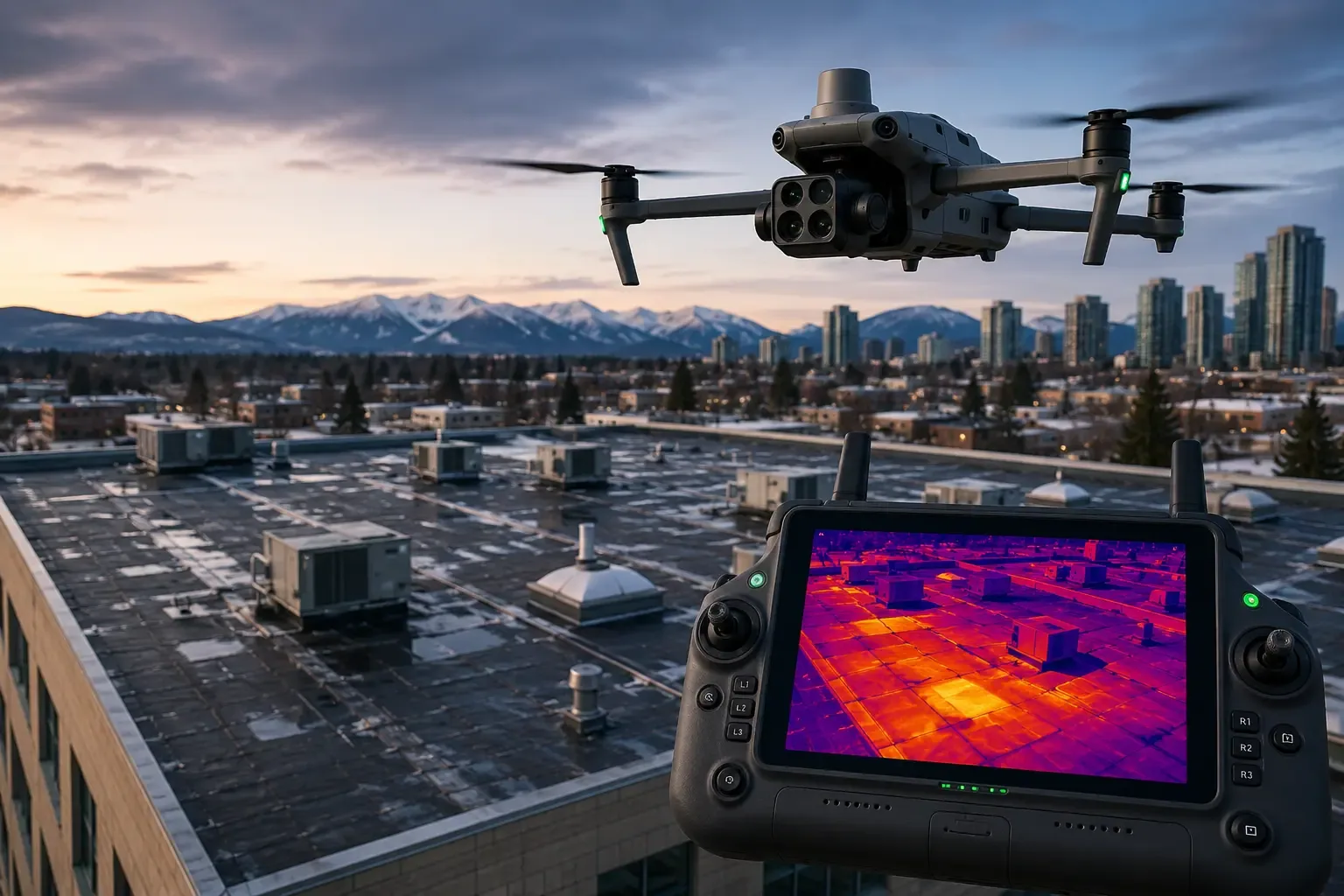
Locate possible wet insulation on a Pueblo commercial roof with infrared scanning, targeted verification cuts, and a mapped repair boundary.
A temperature pattern on an infrared image is a lead, not a moisture map. We scan roof zones under suitable conditions, compare thermal differences with visible details, and identify areas that need verification. In Pueblo, CO, strong summer sun and changing temperatures can affect how a roof surface stores and releases heat. The scan has to be timed and interpreted with those conditions in mind, then checked against core cuts or other direct evidence before wet insulation is priced for removal.
The survey is useful when a replacement or repair decision depends on how far a concealed condition extends. We review available roof plans, prior leak locations, membrane type, and the day’s weather before setting a scan route. A multi-building site such as PuebloPlex, which has a substantial existing-building inventory, may need individual roof-zone maps rather than a single campus summary. Industrial facilities in St. Charles Industrial Park also have operating schedules and access routes to coordinate. An infrared reading narrows the next inspection step; it does not establish a roof defect by itself.
What makes a roof ready for scanning?
Thermal contrast depends on the roof assembly, surface condition, recent sun exposure, wind, and temperature change. A survey may be more informative after a suitable heating and cooling cycle, but the actual method depends on the membrane and project conditions. Standing water, reflective surfaces, shade, rooftop equipment, and recent patching can alter the image. We review the roof first, note obstructions, and identify whether a handheld instrument, aerial sensor, or another method is appropriate.
Pueblo’s mean first measurable snowfall date is November 5 and mean last date is April 13. For an infrared scan, recent sun exposure, wind, and moisture on the survey day determine whether a useful thermal contrast is available. Snow cover, recent precipitation, or high wind can limit useful readings. We record the time and surface context and avoid treating images gathered under different conditions as directly comparable. Where weather is unsuitable, postponing the scan can produce a more defensible moisture map than collecting ambiguous colors.
How are suspect areas confirmed?
An infrared image can indicate that one area cools or warms differently from adjacent roofing. That pattern might reflect moisture, but changes in insulation, deck construction, shade, dirt, air movement, or surface repairs can produce a contrast too. We overlay the scan with roof boundaries and visible details, then select representative locations for direct verification. The test cuts reveal the layers, insulation condition, and substrate at those points. We photograph and label each opening before it is repaired or closed.
Verification should test both a suspect area and a comparison area when the project decision depends on the difference. If a thermal boundary is unclear, we add a test point rather than drawing a removal line from color alone. Openings also confirm the existing membrane and the condition of the deck. A recover evaluation may use this information to decide whether material can remain, while a replacement bid can separate dry areas from verified wet zones. We list the test locations and what each one confirmed so the owner can see where a conclusion begins and ends.
How does the map guide the repair quantity?
The final map groups scan observations by roof zone and labels which areas were verified. A confirmed wet area may call for insulation removal and replacement, while a thermal anomaly without wet material may not need the same scope. We show the boundary between those conditions and note where additional openings would reduce uncertainty. This protects the estimate from applying one test result to a large area that was never checked.
Drainage and roof details matter alongside the thermal map. Water trapped at a low point may be associated with a blocked drain or an insulation slope issue, while a wall or curb can direct water into the assembly. We connect the verified moisture area to nearby seams, drains, and penetrations before recommending repair. If ponding is present, a separate drainage review may be needed. For an active interior leak, the scan can support but not replace leak tracing. We keep those scopes distinct so each recommendation reflects the condition it addresses.
Who needs to be on site?
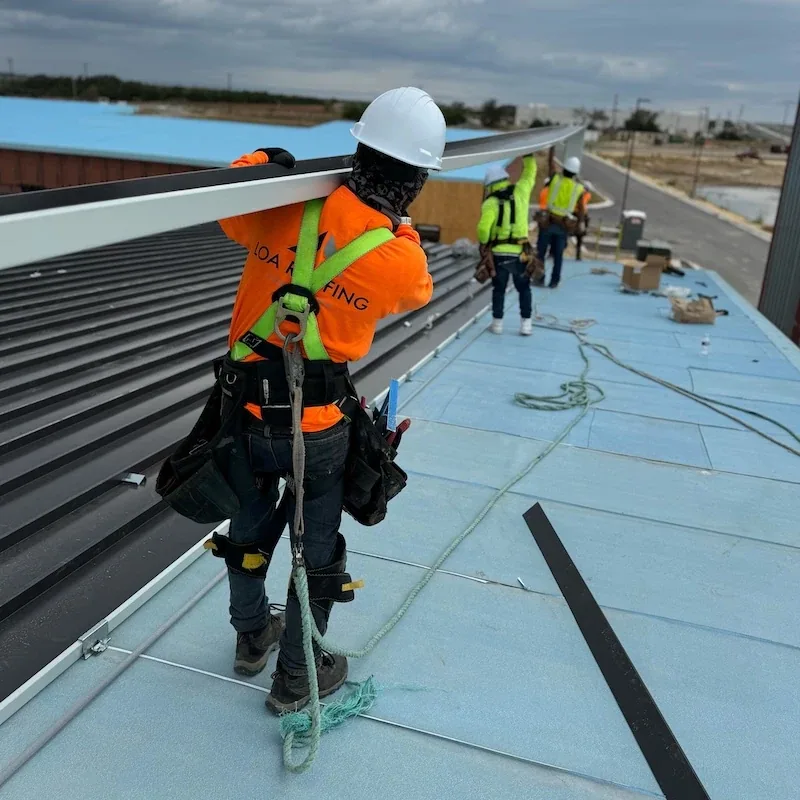
The facility contact can provide roof plans, prior leak locations, membrane records, equipment maps, and the access windows that avoid interrupting the building. We confirm roof entry, site security, fall-protection requirements, and any restricted zones before scanning. If a core cut is proposed, the owner or project lead should approve its location and understand how the opening will be closed. Interior access can help connect a reported leak with the roof above, especially when water has traveled within the assembly.
Survey routes should account for people, vehicles, and work in progress. At industrial properties, production and receiving schedules can determine when a technician can reach the roof. Pueblo airport industrial sites near US 50 and rail-served parks along I-25 have different access patterns, so we verify the actual gate and laydown plan for the building. We can coordinate a scan with a broader roof inspection when visible conditions need the same visit. If selected openings are needed, we map them first and restore each point before the crew leaves the zone.
What does the owner receive?
The report includes a roof-zone map, thermal images, surface photographs, survey conditions, test-cut locations, and verification findings. It distinguishes observed temperature patterns from areas confirmed to contain wet insulation. Where a cut shows dry material, the result is recorded as a sampled point, not proof that every adjacent square foot is identical. The project lead can review the evidence and decide whether another opening is needed before setting the removal quantity.
We also record obstructions, areas not scanned, and conditions that made the image less useful. A clear handoff supports a repair scope, replacement takeoff, or follow-up survey without overstating what the instrument can establish. If conditions change after the scan, such as a new leak or roof opening, the earlier image is a dated baseline rather than a current diagnosis. Arrange a survey with access instructions, operating windows, roof records, and leak locations ready. We will identify suitable scan conditions, verify the points that affect scope, and mark the boundary between measured evidence and remaining questions.
Commercial Roofing Questions
Does an infrared image prove insulation is wet?
No. It shows temperature differences that may be associated with moisture, but shade, construction changes, equipment, and surface conditions can create similar patterns. We verify the areas that would change a repair or replacement quantity with direct openings and label the report so scan observations are not confused with confirmed wet material.
Can a scan be performed right after rain or snow?
Recent precipitation or snow cover can limit the thermal contrast needed for a useful survey. We review the surface and forecast before setting the route and may reschedule if the image would be difficult to interpret. The report states the conditions during the scan and identifies any roof zones that could not be evaluated reliably.
How many test cuts are needed?
The number depends on the roof size, assembly variation, scan pattern, and how much the result affects the proposed work. We select points that verify suspect zones and, where useful, compare them with an apparently dry area. The report maps each opening and states what the sample confirms, without extending it beyond the evidence.
Can the survey separate repair from replacement areas?
It can help define where moisture was verified and where the roof remains a candidate for repair or retention, but it does not make that choice alone. Membrane condition, deck integrity, attachment, layer count, and code requirements also matter. We combine those findings and mark any boundary that still needs direct inspection.

Verify the thermal pattern before pricing removal
Share roof records, reported leaks, access instructions, and the operating calendar. We will plan the scan, select verification points with the project lead, and map the evidence that affects the scope.
Call 555-555-5555 or email [email protected].