
Home / Commercial Roofing Services / Commercial Roof Edge Metal, Coping and Gutters
Commercial Roof Edge Metal, Coping and Gutters in Pueblo, CO
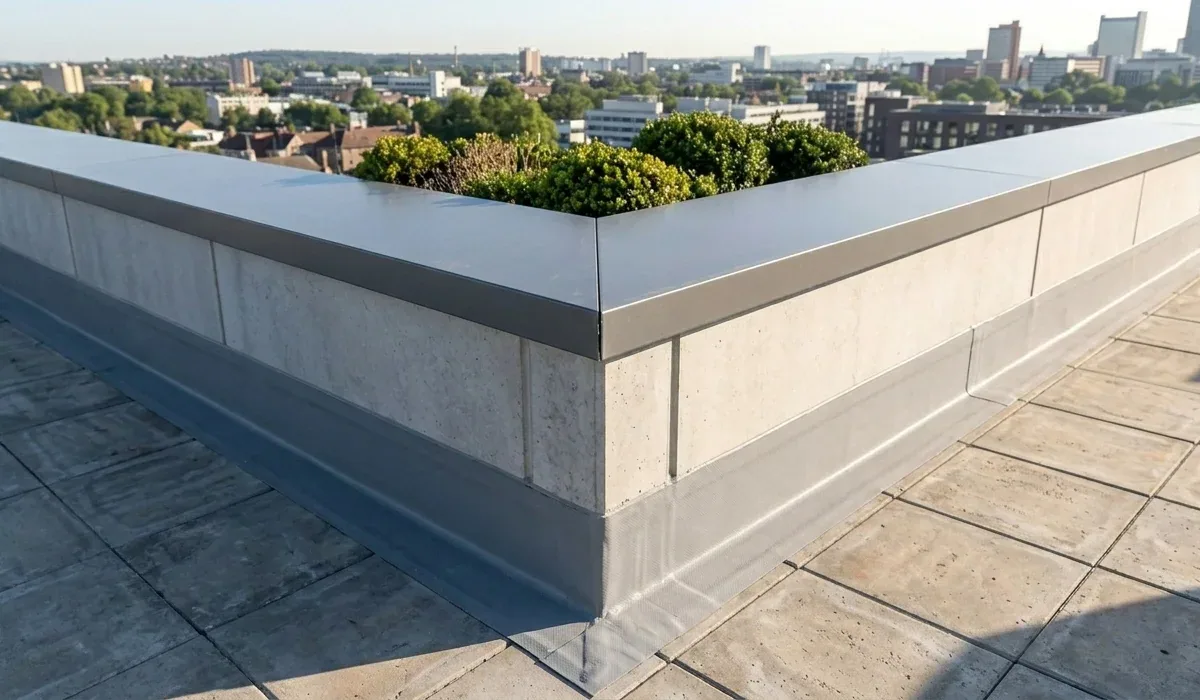
Repair commercial roof coping, edge metal, gutters, and downspouts in Pueblo with measured details and secure membrane transitions.
One open coping splice can put the parapet assembly under review. We inspect coping, cleats, joints, fascia, gutters, and the membrane termination as one connected detail, then identify where water or wind can enter. In Pueblo, CO, the roof edge sees summer heat, winter freeze-thaw, and regional severe wind. The work boundary follows the measured condition: a loose cap, failed joint, corroded gutter, or membrane termination may each require a different repair.
Edge work also touches other trades. Sheet-metal dimensions, roof membrane, insulation height, parapet condition, and downspout discharge all need to align. A facility in St. Charles Industrial Park may have truck or rail operations to coordinate below; a property in Pueblo West may have a different access and drainage plan. Those area facts do not establish the condition of an individual building. We measure the actual roof edge and review the detail with the project lead before fabrication begins.
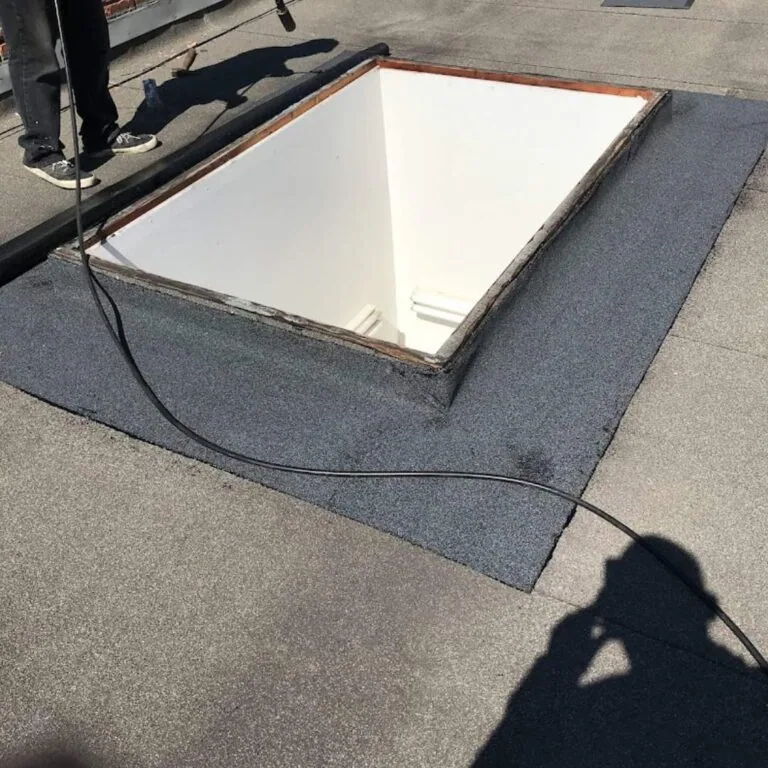
Where is the edge assembly opening?
We check coping joints, corners, cleats, fasteners, end dams, fascia, gravel stops, gutters, and downspout connections. On a membrane roof, the termination has to hold the roof system at the perimeter while allowing the metal to shed water. If the cap shifts or a splice opens, water may reach the parapet or insulation even when the field membrane appears intact. Photos show the full run and the specific detail so a repair can be measured rather than described as a general edge problem.
We also look for corrosion, loose hangers, separated seams, debris, and outlets that discharge against a wall or foundation. A gutter can be intact yet carry water poorly if its slope or outlet is wrong. At a downspout, we trace the route to the discharge point and note any blockage or missing extension. Where the edge defect has led to interior water, a leak inspection can follow the path back to the roof detail. Any concealed parapet or deck damage is recorded separately from the visible metal repair.
What has to be measured before fabrication?
Custom metal needs accurate length, width, cleat engagement, joint spacing, corner geometry, and termination height. We measure the parapet and identify changes in direction or elevation before setting a fabrication list. Existing coping may have multiple pieces, incompatible splice covers, or a cleat that no longer holds. A replacement cap needs a secure connection to the substrate and a profile that manages water without pinching or exposing the membrane termination.
When the roof membrane is being replaced, edge metal should be coordinated with the new assembly. Insulation height and perimeter attachment can change the required detail, and existing nailers may need repair. For a localized service call, we check whether the adjacent metal can accept a tie-in without replacing the full run. A replacement project can include perimeter work in its sequence, while a tapered insulation scope may affect edge elevations. The estimate identifies the footage, corners, outlets, and substrate work included.
How does runoff leave the roof edge?
The coping cap, gutter, downspout, and discharge area form a water route. We verify that the cap slopes toward the roof or exterior as intended, joints are sealed or lapped correctly, and runoff reaches a working outlet. At a parapet scupper, the membrane and metal must connect so water can pass through without entering the wall. If a gutter backs up, we check for debris and confirm the outlet and downspout can move water away from the building.
Pueblo receives winter snowfall and summer storms, so ice, debris, and short periods of heavy runoff can expose a weak transition. We inspect the edge during the visit and record conditions such as standing water, overflow stains, or ice marks when visible. US 50 and I-25 connect Pueblo’s commercial and industrial areas. At the building, we inspect the roof edge, drainage path, and discharge point before choosing a repair detail. If a low point or blocked roof drain contributes to the issue, a separate drainage repair can be included with the edge scope.
How will replacement metal be installed?
The installation plan should identify roof access, lift locations, material lengths, removal limits, and how open edges will be protected. Long coping pieces may require a clear path from delivery to roof, while gutter work can affect doors or pedestrian routes below. We coordinate the access window and work boundary with the facility contact, then avoid leaving an unsecured edge at the end of a shift. If the substrate beneath a cleat is soft or damaged, the project lead reviews that condition before new metal is fastened.
At an active manufacturer or distribution property, a lift setup can conflict with loading or yard movement. The location’s rail or highway connection does not show the actual delivery entrance, so we confirm the site route and laydown area with its contact. Wind and temperature can affect sheet-metal handling and sealants; the crew checks current conditions before installing the cap and joints. If a storm has displaced metal, a storm inspection can document the surrounding roof before the permanent edge work proceeds.
What should the edge repair record include?
We document the length repaired, profile and material installed, joint locations, fastener or cleat work, membrane tie-in, and gutter or downspout corrections. Photographs show corners and transitions, not only a broad view of the finished run. If the repair stops before another damaged section, the report marks that boundary and explains whether the remaining area needs another price or a monitoring visit.
Before closeout, we check that coping sits securely, laps and end conditions are complete, gutters are clear, and discharge routes are not blocked by debris or temporary materials. The owner should know which parts were replaced and which original components remain. If the edge is part of a larger reroof, the handoff connects the metal detail with the membrane and insulation records. Arrange access with roof plans, prior leak notes, edge photographs, and preferred working hours available. We will measure the perimeter, define the fabrication quantity, and set a safe installation sequence with the project lead.
Commercial Roofing Questions
Can one coping joint be repaired without replacing the full parapet cap?
It may be possible if the surrounding metal, cleat, and substrate remain secure and the joint can be rebuilt to shed water. We inspect adjacent pieces and corners before pricing a spot repair. If multiple joints are open or the cleat no longer holds, a longer replacement run may provide a clearer boundary.
Why does a gutter overflow even when it is not full of debris?
The gutter may have a reverse slope, a restricted outlet, an undersized downspout, or a discharge path that backs up. We check the full route from edge to outlet and identify the component causing the restriction. Replacing one section without addressing the outlet can leave the same overflow pattern in place.
Does new edge metal have to match the roof membrane?
The metal must connect to the roof assembly and termination detail, not simply match its color. We coordinate the profile, cleat, fasteners, membrane edge, and insulation height. If the membrane is being replaced, that work should be detailed together so the perimeter is not built to an obsolete elevation.
What should happen if the nailer below coping is damaged?
We stop at the affected run, photograph the substrate, and measure the additional repair needed. New metal cannot rely on a loose or deteriorated fastening base. The project lead reviews that added quantity before fabrication or installation continues through the area.

Measure the edge before ordering metal
Share roof plans, leak history, photographs, and access windows. We will inspect coping, gutters, and membrane terminations, then define the measured repair run and work sequence.
Call 555-555-5555 or email [email protected].