
Home / Roof Damage Repair / Commercial Roof Flashing Failure Repair
Commercial Roof Flashing Failure Repair in Pueblo, CO
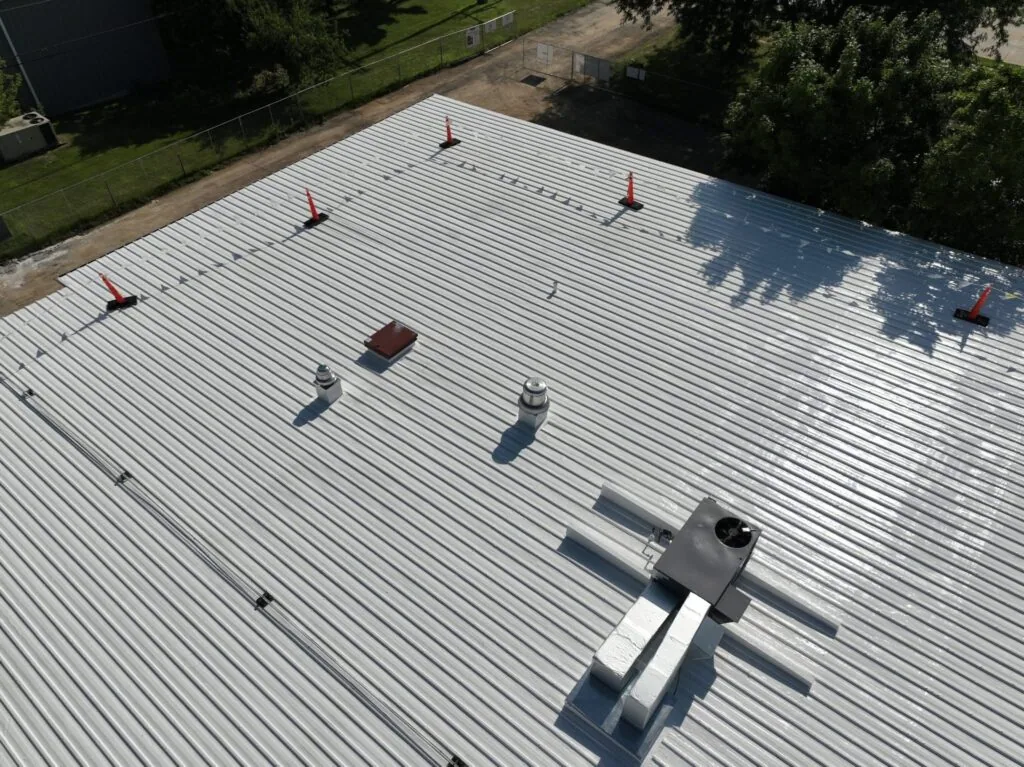
Repair commercial roof flashing failures in Pueblo, CO with a measured tie-in, compatible materials, temporary protection, and a documented work boundary.
A flashing failure can be a short split at a curb or a separation that follows a wall for several roof zones. We begin by locating the open edge, checking what the flashing is attached to, and tracing where water can travel beneath it. The first visible gap sets an inspection point, not the repair limit. Before material is removed, we identify the assembly and mark the nearest sound transition that can receive a durable tie-in.
Pueblo’s January average low is 15.4°F and July average high is 93.4°F, so a flashing repair has to account for the substrate temperature and the day’s installation conditions. Pueblo Armory roof drawings map drains, parapets, HVAC equipment, penetrations, and separate roof zones. That detail-by-detail organization helps set a flashing repair boundary. We measure the actual curb, wall, or edge before setting scope.
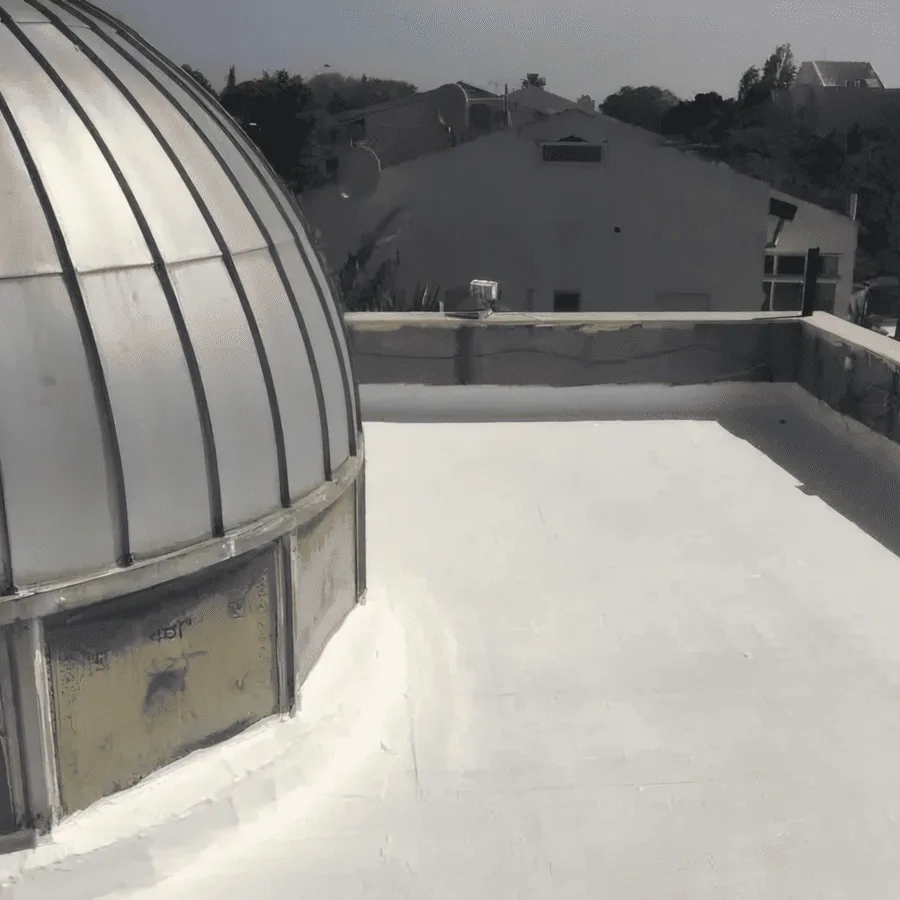
Where does the flashing stop holding?
At a curb, inspect the membrane turn-up, corner patches, counterflashing, and any termination bar or sealant that holds the top edge. At a wall, follow the transition from the roof field to the vertical surface and check for movement, open laps, loose metal, or a termination that has pulled away. At a drain or penetration, note whether water can pass behind the flashing. The same symptom can come from different layers, so the repair should name the failed component.
We photograph each side of the detail and mark its relation to the roof plan. A roof condition inspection can record the surrounding membrane, fasteners, and substrate condition before repair starts. Where interior moisture suggests concealed travel, infrared moisture screening may help select areas for confirmation when conditions support the method. The image or scan narrows a question; it does not replace opening and checking the assembly where the evidence calls for it.
Corner areas deserve a close view because stress can concentrate where two vertical planes meet. We check whether a patch bridges the corner without bonding, whether the membrane is stretched tightly over a sharp edge, and whether the underlying material is firm enough to hold a new attachment. If a metal counterflashing is present, inspect its laps and fasteners as well as its upper termination. A new bead of sealant cannot stabilize loose metal or a soft substrate.
What can be repaired without opening more roof?
A surface split with dry, stable material around it may permit a localized patch or replacement of the affected flashing. The repair limit should include enough sound membrane to make the new tie-in, plus corners and terminations that would otherwise remain vulnerable. We record the measured length, height, material transitions, and any adjacent detail included in the scope. If the substrate is wet or the membrane has detached beyond the visible opening, that boundary changes.
A seam separation review helps distinguish a failed flashing transition from an open field seam. For a puncture at the curb, membrane puncture repair may be part of the same work, but each defect should have its own location and closeout photo. If water is active inside, leak investigation can connect the interior report to the roof zone without assuming the nearest flashing is the source.
Where removal is needed, we agree on a stop point before cutting. The work plan should state what material will be lifted, how the opening will be kept watertight if hidden damage expands the scope, and who can authorize added deck or insulation work. A clean boundary is especially useful on an occupied building: the property contact can coordinate interior protection beneath the active zone while the crew keeps other roof areas closed to the work.
How should the replacement detail match the roof?
Flashing materials and attachment methods need to suit the field membrane and the surface receiving them. A thermoplastic roof, EPDM assembly, modified-bitumen surface, and metal roof do not share one universal patch detail. We identify the existing system, check compatibility, and specify how the new work connects at the field, vertical surface, and top termination. If records conflict with what is exposed, the field condition controls the repair decision.
A targeted roof repair scope can include the transition, nearby membrane, and any damaged metal as measured work items. If deterioration repeats at multiple curbs or walls, a full replacement comparison can be prepared separately; that route is not assumed from one failed flashing. During work, the crew checks adhesion or mechanical attachment at the intervals called for by the selected detail, then photographs corners and terminations before they are concealed.
Which Pueblo conditions affect the work window?
Cold substrate, wind, and heat can change how adhesives, primers, and sealants behave. Pueblo’s seasonal range includes a January average low of 15.4°F and July mean high of 93.4°F; those normals do not replace a current roof reading or forecast. Before installation, we confirm that the surface is dry and within the selected product’s application limits. If conditions move outside those limits, the crew protects the opening and resets the installation window.
For industrial properties, deliveries and roof access also affect sequence. St. Charles Industrial Park is rail-served along the I-25 corridor, while airport industrial sites connect to US 50. Those facts describe regional logistics, not a particular building’s gate or staging area. A St. Charles-area roof walk still begins with the facility’s access rules and a confirmed laydown area. Before fixing scope, confirm which permit authority reviews the parcel and what requirements affect the proposed roof detail.
What should the repair handoff show?
Closeout records should identify the roof zone, the detail repaired, the material transition, and photographs taken before and after the work. Note whether any substrate was opened, what was found, and whether hidden conditions extended beyond the approved boundary. If an adjacent area remains suspect but was not included, show it separately rather than imply it was corrected. The owner can then match the completed work to the original inspection finding.
Where a transition remains under observation, set a follow-up date or a condition that should trigger another look, such as renewed separation or water entry. A written condition report can preserve that distinction for the next capital or maintenance review. Keep any active interior report tied to the same roof-zone map and record whether the repair changed the observed water path.
For a roof walk, have access rules, prior repair records, and any interior leak notes available. We can then measure the work boundary with the property contact, identify an installation window, and agree on a stop point if concealed conditions appear. The result is a repair scope that makes clear what can proceed now and what requires a separate decision.
Commercial Roofing Questions
Can failed flashing be repaired without replacing the roof?
A localized failure can be repaired when the surrounding membrane and substrate are sound and the new detail can tie into compatible material. We inspect the adjacent zones first. Widespread detachment or repeated wet substrate may call for a larger comparison, which we keep separate from a confirmed small repair.
How do you know whether a curb leak comes from flashing?
We trace the detail at the curb, check its corners and top termination, and compare the roof condition with the interior report. Water can travel before it appears indoors, so proximity alone is not proof. If evidence points elsewhere, the scope follows that finding.
Can a flashing repair be installed during cold weather?
The selected materials have application limits for surface temperature, moisture, and other conditions. We measure the substrate and check the forecast before installation. If the limits are not met, temporary protection and a later access window may be the sounder sequence.
What records should be included after the work?
Keep dated photos of the original failure, exposed substrate if opened, completed tie-ins, and any condition left outside scope. The closeout should identify the roof zone and materials used, then note any follow-up needed so the next inspection starts with a clear boundary.

Arrange a flashing repair roof walk
Share the roof plan, prior repair details, interior observations, access rules, and available work windows. We will inspect the transition, measure the repair boundary, and document the tie-in and closeout.
Call 555-555-5555 or email [email protected].