
Home / Commercial Roofing Services / Commercial Roof Coating Restoration
Commercial Roof Coating Restoration in Pueblo, CO
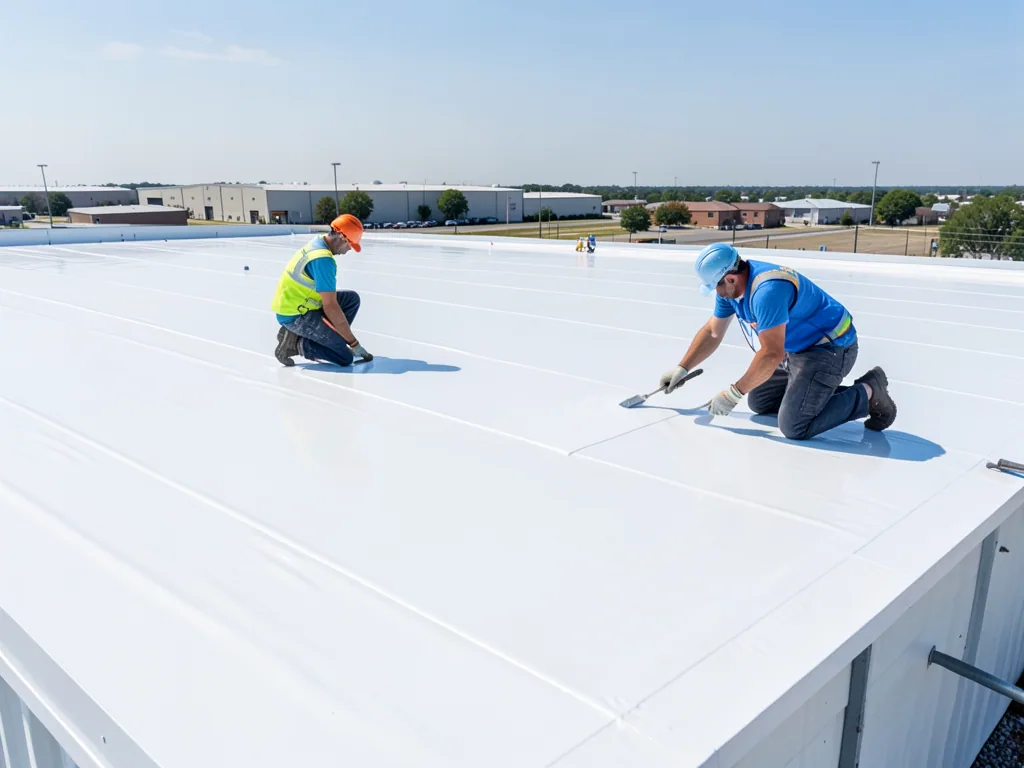
Review coating restoration for a Pueblo commercial roof with adhesion tests, substrate checks, flashing repairs, and a clear alternative comparison.
A coating bid begins with adhesion, not color. The existing roof has to be sound enough to accept a new surface, and seams, blisters, wet insulation, and failed flashing need attention before any coating is applied. In Pueblo, CO, we inspect the assembly, check representative areas for adhesion, and identify repairs that belong ahead of the restoration. The result is a defined preparation scope and a clear explanation of where coating remains appropriate and where replacement should be considered.
Coatings can protect a compatible roof from weathering and may provide a reflective surface, but they do not correct a weak deck or trapped water. We identify the current membrane and check whether the selected chemistry is compatible with it. A campus such as PuebloPlex, with extensive existing building inventory, may include different roof assemblies across separate structures; one coating specification should not be assumed for every building. Industrial areas like St. Charles Industrial Park also require staging and work windows to be set around facility operations.
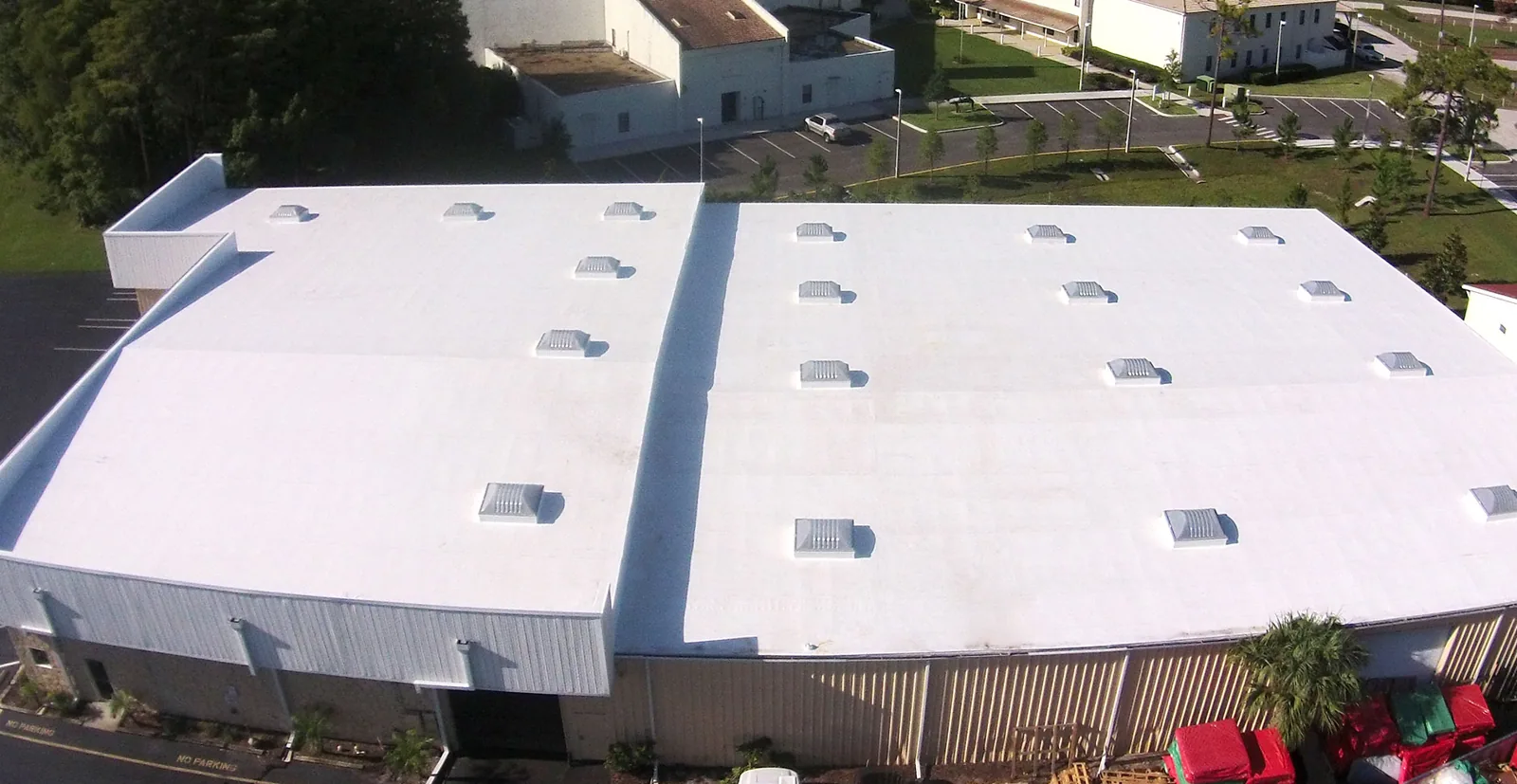
Which roof conditions can a coating accept?
We start by looking for active leaks, loose membrane, open seams, deteriorated flashing, ponding, corrosion, and areas where the substrate moves underfoot. A coating needs a stable surface and a drainage path that does not hold water against a weak detail. Wet insulation and damaged deck are not solved by covering the visible roof. If the surface is contaminated, chalked, or coated previously, preparation and adhesion testing determine whether the new system can bond.
Representative test areas matter because roof surfaces can vary by age, repair history, and exposure. We clean the area as specified, apply the proposed coating sample, and evaluate adhesion after its required cure. The report maps each test location and notes where results differ. Any failed seam, penetration, or wall flashing gets a repair detail before the field coating work. A roof inspection can identify what needs closer evaluation; if moisture is suspected beneath the membrane, an infrared survey can help choose verification openings. The coating decision follows those findings rather than replacing them.
What preparation changes the price?
Preparation includes cleaning, removal of loose material, treatment of rust where applicable, seam reinforcement, flashing repair, and protection of equipment or adjacent surfaces. The extent of those items drives labor and material more than the product color. We separate base preparation from concealed repairs that cannot be confirmed until a test opening. The owner sees how much roof is included and where a change in substrate condition would stop the coating sequence.
Drainage details also need review. A coating must not cover a drain opening, block scuppers, or create a new dam at a curb. Tapered insulation or drain work may be required if water remains on the roof; that work is separate from coating application. If the roof is not suitable for restoration, the project lead can compare a replacement assembly or targeted repairs. We may evaluate a silicone coating or an acrylic coating, but the system choice depends on the existing membrane, expected ponding, and manufacturer requirements.
How does Pueblo’s sun and snow affect application?
Pueblo’s climate record puts July and August average highs above 90 degrees and reports 28.3 inches of average seasonal snowfall. Roof-surface temperature can exceed the air reading, which affects coating viscosity, working time, and cure. Cold mornings, wind, and precipitation create other limits. We check product temperature ranges and the actual substrate before applying material, and we plan the day’s area so edges and detail work can be completed under suitable conditions.
The coating needs time to cure before rain, dust, or foot traffic reaches the surface. A project in an active industrial facility may need a sequence that keeps service paths available while work areas are isolated. We confirm ventilation intakes, equipment access, and delivery timing with the site lead before coating begins. If the forecast changes, the crew stops at a planned boundary and leaves the completed area protected. Local weather normals help with seasonal planning, but the current forecast and surface condition set the work window.
Which coating system fits the existing roof?
Silicone, acrylic, and other coating chemistries differ in water resistance, reflectivity, compatibility, and maintenance needs. The correct choice depends on the roof type, slope, drainage, prior coating, and details around equipment. We check whether the selected system can bond to the surface and whether reinforcement fabric or additional flashing work is required at seams and penetrations. A product data sheet is reviewed alongside the field test, not used as a substitute for it.
Reflective coatings can reduce solar absorption at the exposed surface, but that does not establish a specific energy savings for the building. Insulation, HVAC performance, operating hours, and interior loads also affect energy use. We keep any performance discussion tied to product documentation and the roof assembly. If manufacturer instructions require a particular primer, film thickness, or cure interval, those details belong in the work sequence. Our maintenance program can include periodic review of the restored surface and renewed attention to drains, seams, and rooftop service traffic.
What does a restoration handoff include?
Closeout should record surface preparation, repairs completed before coating, test areas, product system, application zones, and any locations excluded from the work. Photographs show the substrate and details before application, along with the finished film at edges, curbs, drains, and transitions. We also note cure conditions and identify what routine observation should check at future visits. The record makes it possible to compare the installed scope with later wear or service work.
Before approving a restoration, review how the work ties into walls, expansion joints, drains, and adjacent roofs. Confirm which rooftop equipment must stay accessible and where another trade may disturb the coating. At a multi-building site, label every structure and keep its coating system separate from neighboring roofs. If the project depends on adhesion or substrate conditions that vary by zone, the bid should preserve that boundary. Arrange a roof walk with records of prior coatings, leak reports, access windows, and the facility contact ready. We will test representative areas, identify required repairs, and show the project lead where the restoration scope ends.
Commercial Roofing Questions
Can a coating be applied over any existing commercial roof?
No. The membrane, surface condition, moisture, drainage, and compatibility with the proposed coating all affect eligibility. We inspect the roof and perform adhesion tests at representative locations. If the substrate is wet or the membrane is failing, repairs or replacement may be a better fit than covering the condition.
Will coating fix a roof that already ponds water?
A coating does not change the roof slope by itself. We inspect low areas, drain elevations, and overflow paths, then identify whether tapered insulation or drainage work is needed. Persistent ponding has to be addressed in the scope so the coating is not treated as a substitute for correcting water movement.
How do you confirm the coating will adhere?
We prepare sample areas using the specified cleaning and primer steps, apply the proposed material, and check adhesion after its cure period. Test points are mapped because an old roof can have more than one surface condition. A failed sample means the system or preparation needs another review before the full roof is coated.
Can a reflective coating lower utility bills?
No specific energy result can be promised from the coating alone. A reflective surface changes solar absorption, while insulation, HVAC, occupancy, and building loads also affect energy use. We can explain the coating’s documented properties and identify what other information would be needed for an energy estimate.

Test the surface before pricing restoration
Share prior coating records, leak history, roof plans, access limits, and operating hours. We will inspect the substrate, test representative areas, and separate preparation from any larger repair.
Call 555-555-5555 or email [email protected].