
Home / Roof Systems / Commercial KEE Roofing
Commercial KEE Roofing in Pueblo, CO

Review Pueblo KEE roofing for commercial facilities with attention to membrane exposure, welded details, attachment, drainage, and roof access.
A specification that names KEE does not settle the assembly until the substrate, attachment, seam details, and exposure are known. KEE membranes are PVC alloys, and the particular product's data and project requirements define where that sheet belongs. We examine the roof condition and the building's use before carrying the material into a repair or replacement scope. In Pueblo, CO, summer heat, winter snowfall, and the work window all affect how materials are stored, handled, and closed in at the end of a shift.
For a facility near Pueblo Memorial Airport's industrial area, delivery access may be part of the roof plan; at PuebloPlex, the campus includes diverse redevelopment and industrial uses. Neither place fact identifies a specific roof exposure. We ask about the process, exhaust, rooftop equipment, cleaning activity, and maintenance routes at the property, then compare those conditions with the membrane requirements. That turns a product choice into an assembly decision the facility team can inspect and maintain.
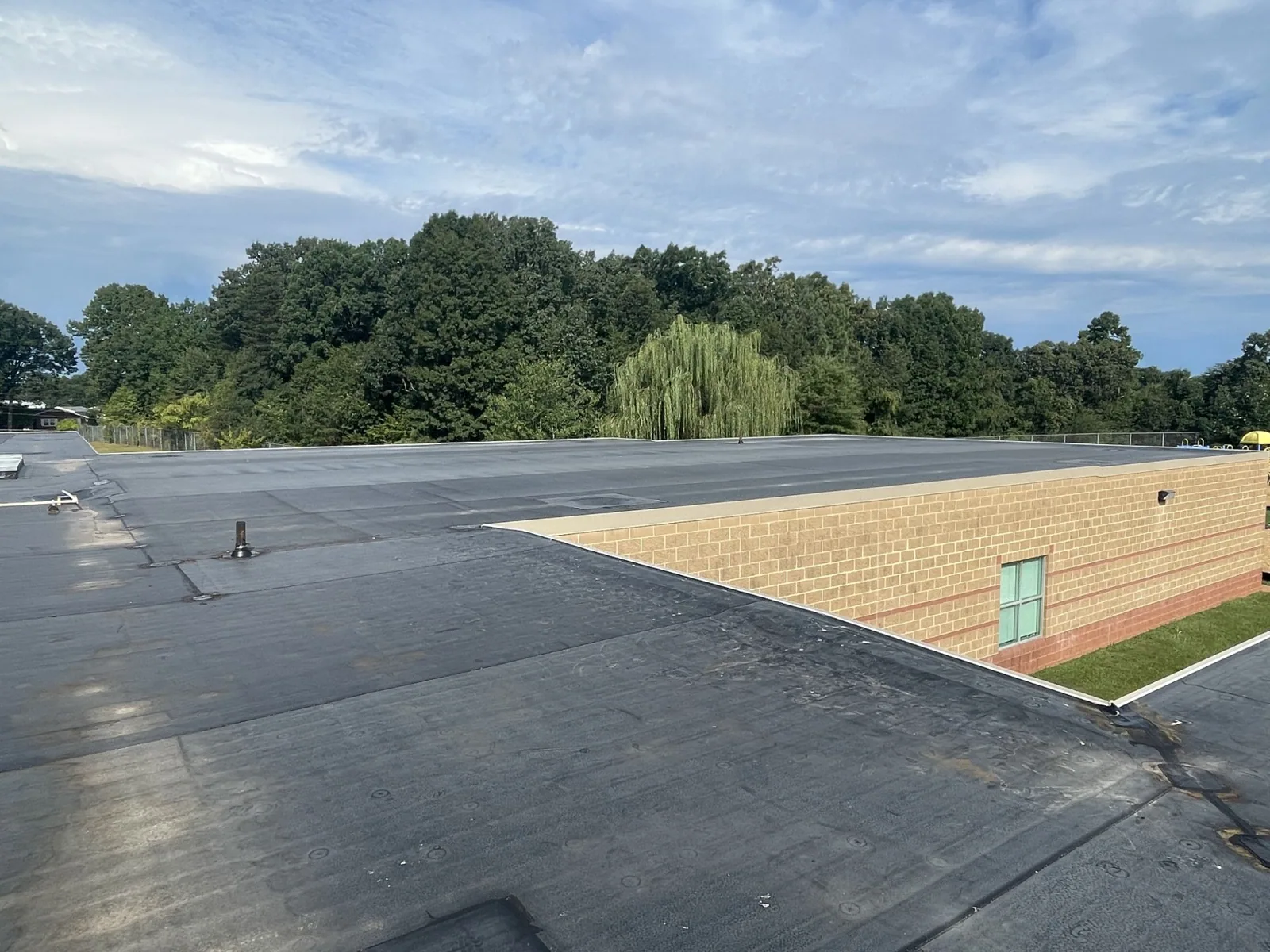
What does the project require from a KEE membrane?
The specification should identify the membrane product, thickness, reinforcement, attachment method, seam requirements, flashing details, and approved accessories. KEE is not a substitute for reading those requirements: products and system approvals vary, and the designer's selected assembly governs. We confirm compatibility among the membrane, adhesives, walkway materials, sealants, and transition details before installation. If the roof will see grease, oils, or process exposure, product-specific limitations must be reviewed against the actual conditions instead of assuming every PVC alloy has identical resistance.
We also verify the deck and existing layers, including the condition of insulation and the height of curbs, hatches, and parapets. A new cover board or insulation layer may change attachment and edge dimensions. If records conflict with the field condition, the project lead decides what testing or opening is authorized before the scope expands. A roof inspection can document the visible assembly; replacement planning can define removal and substrate repair. The estimate should preserve the named system while clarifying assumptions that cannot be confirmed without an approved opening.
How are welded seams and transitions handled?
Heat welding creates the field seam, but an accepted roof depends on careful preparation and control. We check that overlaps are straight, surfaces are dry and clean, and the weld reaches the specified width. Corners, pipe penetrations, drains, roof edges, and changes in plane call for details that match their geometry. We inspect completed welds after the material cools and follow the test method required by the project documents.
When a seam opens or a flashing lifts, we trace the defect to sound material and confirm that the sheet remains attached. A patch should not bridge a wet or loose area. Roof traffic from unit service can puncture a sheet or disturb a walkway pad, so we map common routes and set protection where the project calls for it. If rooftop equipment changes, curb and support work should be coordinated with membrane flashing and service clearance. A transition to TPO or PVC needs a compatible tie-in detail, with each adjoining system identified on the roof plan.
How should drainage and seasonal exposure be reviewed?
A membrane does not correct a low area or blocked outlet by itself. We follow the drainage path from high points to drains and scuppers, checking slope, strainers, clamping rings, flashing, and any repair that could hold water against a seam. Pueblo's seasonal snowfall average is 28.3 inches, and its July normal average high is 93.4 degrees. These climate values make seasonal checks relevant, while roof geometry and the current forecast govern work and water movement at the property.
Freeze-thaw can put stress on sealants and details where water remains, while hot surfaces can change how a crew handles material. We plan roof openings so each zone can be closed within the approved work window and keep outlets clear as installation progresses. A drain and scupper review can address flow issues before membrane work begins. If snow or hail causes damage, the observed area should be inspected before a permanent repair is set. A a storm-response inspection can document the affected zones and separate immediate protection from the larger roof-system decision.
When should the owner compare repair with replacement?
A limited puncture, isolated open weld, or single flashing defect may be repairable if nearby membrane and insulation remain sound. Multiple failures, widespread wet material, poor attachment, or repeated repairs can make a larger renewal more suitable. We document the extent, note where testing is required, and separate confirmed work from concealed conditions. That gives the owner a clear boundary for deciding whether a patch, repair campaign, or replacement fits the roof.
A recover may be considered only after confirming moisture, deck condition, attachment, code, and finished height. For a proposed recover, an assembly review identifies those constraints before new layers are placed. The facility team confirms the reviewing authority, applicable permit edition, and amendments before attachment and insulation details are finalized. If occupied operations must continue, a phased sequence can set roof zones, interior protections, and delivery windows so the installation remains coordinated with daily work below.
What should be included in the KEE roof handoff?
At turnover, the owner should receive the installed membrane and assembly information, required inspection results, photographs of seams and transitions, and a marked plan of completed zones. The record should note approved changes, concealed conditions encountered, and areas excluded from the job. We review drains, edge details, penetrations, hatches, and service routes with the project lead so operations staff know where the roof can be accessed and what protection is required.
After construction, maintenance checks can identify punctures, lifted flashing, blocked drains, or damage from service work. We can place those findings in a condition record and track recurring checks through roof maintenance. The product's approved care instructions should remain with the building file, and any later repair should use compatible materials. Arrange a Pueblo roof walk with roof plans, process details, leak history, and access rules available. We will match the KEE product requirement to field conditions and identify the weld, drainage, and closeout checks that define the work.
Commercial Roofing Questions
Is KEE the same as every PVC roofing membrane?
KEE is a PVC-alloy membrane, but products differ in formulation, reinforcement, thickness, and system approvals. We follow the specified product and its installation requirements rather than substituting a generic PVC detail. The proposal identifies the membrane selected and the compatible flashing, adhesives, and accessories included in the assembly.
Can a KEE roof handle grease or process chemicals?
The answer comes from the product data and the exposure expected at the facility. We locate exhaust and process areas, identify what may contact the roof, and review compatibility with the specified membrane. If the discharge or cleaning routine changes, the roof detail may need additional protection or a different system selection.
What should be checked before a KEE recover is approved?
We verify the existing layers, moisture, attachment, deck condition, drainage, and finished height at curbs and edges. The project team also reviews code and system requirements. If testing is needed, the owner approves an opening and the repair method before the roof scope moves beyond visible observations.
How can the facility prevent damage after installation?
Set approved routes to rooftop units, keep loose tools and parts off the sheet, and use the specified walkway protection. We show the access paths and repaired areas at handoff so service vendors know where to travel. Periodic checks can catch punctures or loose details before they affect the insulation or interior.

Review the specified KEE assembly in the field
Share the product specification, roof plans, process or exhaust details, and access restrictions. We will inspect the roof zones and confirm a repair or installation scope tied to the stated assembly requirements.
Call 555-555-5555 or email [email protected].