Home / Property Types We Roof / Manufacturing Plant Roofing
Manufacturing Plant Roofing in Pueblo, CO
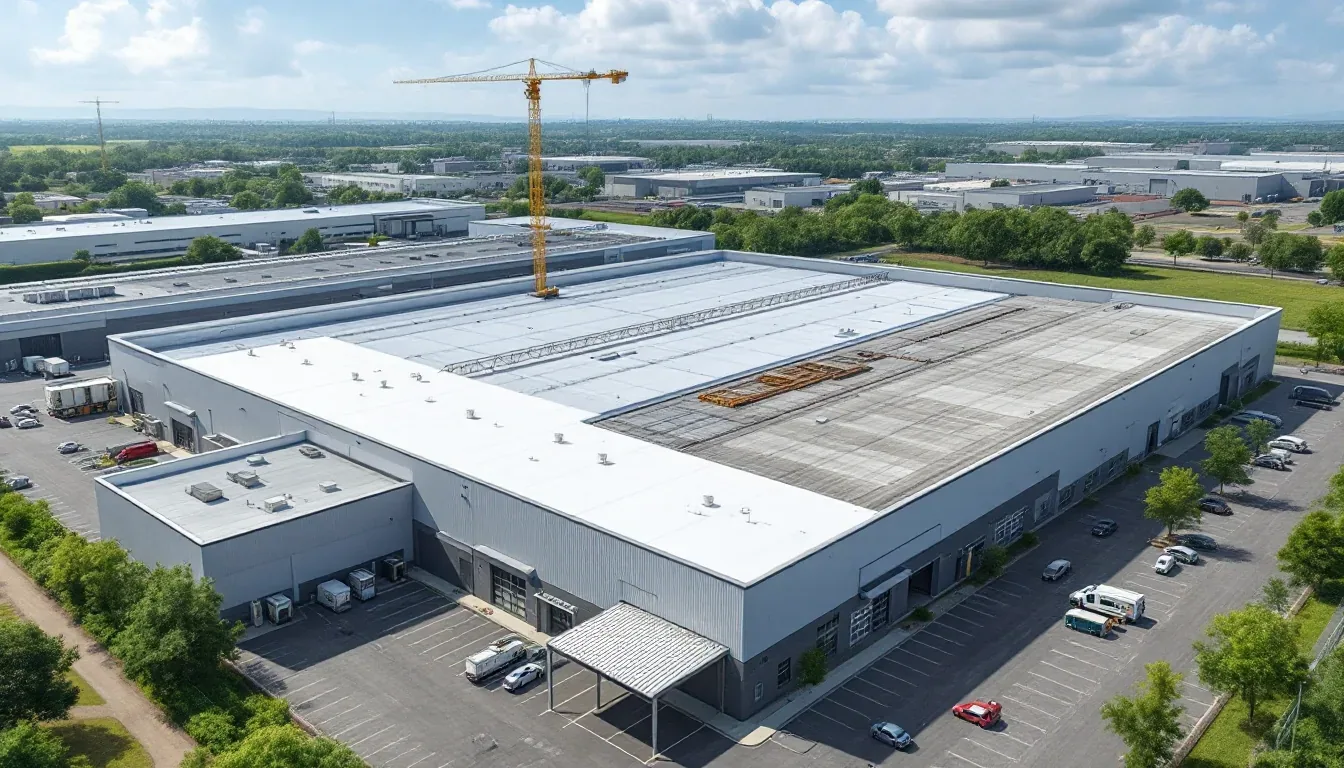
Plan Pueblo manufacturing roof work around production lines, equipment access, exhaust, inventory protection, drainage, and approved shutdown windows.
A roof opening over a production line changes the work plan below it. Before we set a repair or replacement zone, we identify the processes, equipment, personnel routes, and shutdown windows that the facility must preserve. Pueblo, CO, has manufacturing employers including Vestas, Trane, and Mission Foods, alongside local steel and concrete railroad-tie production. Those facts describe the market, not a specific plant's roof. At each property, we verify the assembly, leak path, equipment clearances, and interior limits with the project lead.
The EVRAZ Industrial District and St. Charles Industrial Park are among Pueblo's industrial employment areas; St. Charles is rail-served and positioned along I-25. Those corridor details may frame delivery questions, while each site contact confirms the actual gate, staging area, and freight restrictions. We align the daily roof boundary with production movement, material handling, exhaust activity, and any area where dust or water would interrupt the process. That map becomes the basis for sequencing, interior protection, and a controlled approval point if concealed conditions change the work.
What does the production map change on the roof?
We overlay leak reports, drains, equipment, penetrations, roof joints, and previous repairs on the building plan. The facility team identifies active lines, sensitive controls, stored materials, and spaces where a brief interruption would affect product or equipment. That information can shift the roof opening away from a critical run or place noisy removal in a defined window. If different plant areas have different requirements, we mark separate work zones and identify who can release each area.
The exterior check follows the assembly from field membrane to curb, wall, and edge. We inspect seams, flashings, insulation, deck conditions where accessible, and drainage paths. An interior stain may not align with the roof opening because water can travel along a layer or structural member. A roof condition inspection records visible evidence, and leak investigation traces a reported path to a likely entry. If an approved test opening is needed, we coordinate it with the process owner and restore it under the agreed detail.
How should exhaust and equipment curbs be treated?
Exhaust fans, ducts, pipes, supports, and rooftop units interrupt the water plane and can require access while the plant is operating. We inspect curb height, flashing, fasteners, nearby seams, and the service route. The facility contact can identify whether a process must stay running or whether a shutdown window is available. That information guides sequencing but does not replace the required mechanical isolation or electrical work by the responsible trade.
If equipment is being changed, curb dimensions and roof details should be reviewed before procurement. A curb coordination scope can identify the opening, support, flashing, and clearance needed for roofing work. For roofs with process discharge or overspray exposure, we locate the source and compare it with the specified membrane or coating requirements. A data center roof plan may prioritize continuous cooling, while a manufacturing line can have different exhaust and shutdown constraints; the site-specific plan should never assume the same operation across facilities.
How do weather and runoff affect an operating plant?
Water entry near electrical systems, finished goods, or process controls needs an immediate response and a measured permanent scope. We check drains, scuppers, overflow routes, low areas, and penetrations while the interior team identifies rooms or equipment that need protection. Regional hail, tornado, and wind histories give Pueblo facilities a reason to include the roof in post-event checks. We look for the actual puncture, shifted edge, open seam, or water path before assigning a repair scope.
A clogged drain, open seam, displaced edge, or impact mark calls for a different correction. We photograph the area, preserve active drainage, and avoid opening a roof zone without a closure plan. A drain repair can be measured separately from membrane work, while a storm review can document the affected roof after observed weather damage. Hot roof surfaces, cold mornings, and wind also influence material handling and crew safety. The daily plan sets a stop point for each zone so the plant does not inherit an unfinished opening when weather or operations interrupt the shift.
Production residue, vibration, or frequent equipment service can make a roof detail harder to isolate. We photograph the area, note whether the condition repeats near similar equipment, and coordinate any exhaust change with plant engineering. During rain, verify that drains remain clear and that temporary protection does not direct water toward a process line or stored materials.
Which assembly and sequence fit the plant?
System selection starts with the existing membrane or metal, substrate, insulation, attachment, drainage, and the project specification. We check where roof types change between the main building and additions, and we detail transitions rather than carry one assembly across every section. The decision may compare repair, recover, or replacement depending on moisture, deck condition, remaining serviceability, and shutdown limits. The written scope states which process zones are included and what approval is needed if concealed deck or insulation damage is found.
For a plant with multiple roof areas, warehouse roof requirements or distribution center sequencing may offer a useful comparison, but each facility's operations remain the control. Occupied-site phasing can set daily boundaries, interior protection, and communication points. We build the sequence around material delivery, available shutdowns, and forecast conditions, then leave a watertight stop point at the end of each approved window.
What should the production and maintenance teams receive?
At turnover, the plant should receive a roof map of completed zones, repaired details, product information, photographs, and any remaining monitoring item. The record identifies where a test opening was made, which concealed condition was found, and how the approved change was completed. We review equipment routes, drain locations, and the service access that other trades will use, then coordinate removal of temporary interior barriers and roof protection.
Production and maintenance teams can use those records to respond to future leaks without confusing one process area with another. A maintenance program can check drains, penetrations, seams, and roof traffic after equipment work. For an owner managing a plant portfolio, a condition record can track system and repair history by building. Bring roof drawings, process restrictions, past leak reports, and delivery instructions to a Pueblo roof walk. We will identify the roof boundary, coordinate the access window, and show how the completed work ties back to the facility's operating needs.
Commercial Roofing Questions
Can roofing work happen over an active production line?
It may be possible with a defined zone, interior protection, safe access, and an approved operating window. We coordinate with the process owner before opening the roof and identify any shutdown needed for noise, dust, vibration, or water risk. If conditions below cannot be protected, the project lead schedules that area for a different phase.
How do you protect production equipment from dust or water?
The facility contact identifies sensitive equipment and active processes below each roof zone. We plan the opening, barriers, debris path, and temporary closure before removal, then inspect that the area is secure at shift end. Equipment isolation or relocation remains coordinated with the responsible plant trade.
What if a process exhaust is affecting the roof?
We inspect the discharge point and surrounding membrane or coating, then compare observed exposure with the specified product requirements. The plant team may need to review exhaust direction or controls with its mechanical engineer. We repair damaged details after confirming the cause and compatible roofing method.
Can a roof replacement be completed during a scheduled shutdown?
A shutdown can create a larger access window, but the roof quantity, weather, material delivery, and cure requirements still set the achievable sequence. We map zones against the shutdown dates and identify a secure stop point if conditions change. Any work beyond the approved boundary is reviewed before it affects the production restart.
Tie the roof sequence to the production plan
Bring roof plans, process maps, shutdown windows, exhaust details, and access rules to a site walk. We will define the roof zones, interior protections, delivery plan, and approval points with your project lead.
Call 555-555-5555 or email [email protected].