
Home / Property Types We Roof / Aircraft Hangar Roofing
Aircraft Hangar Roofing in Pueblo, CO
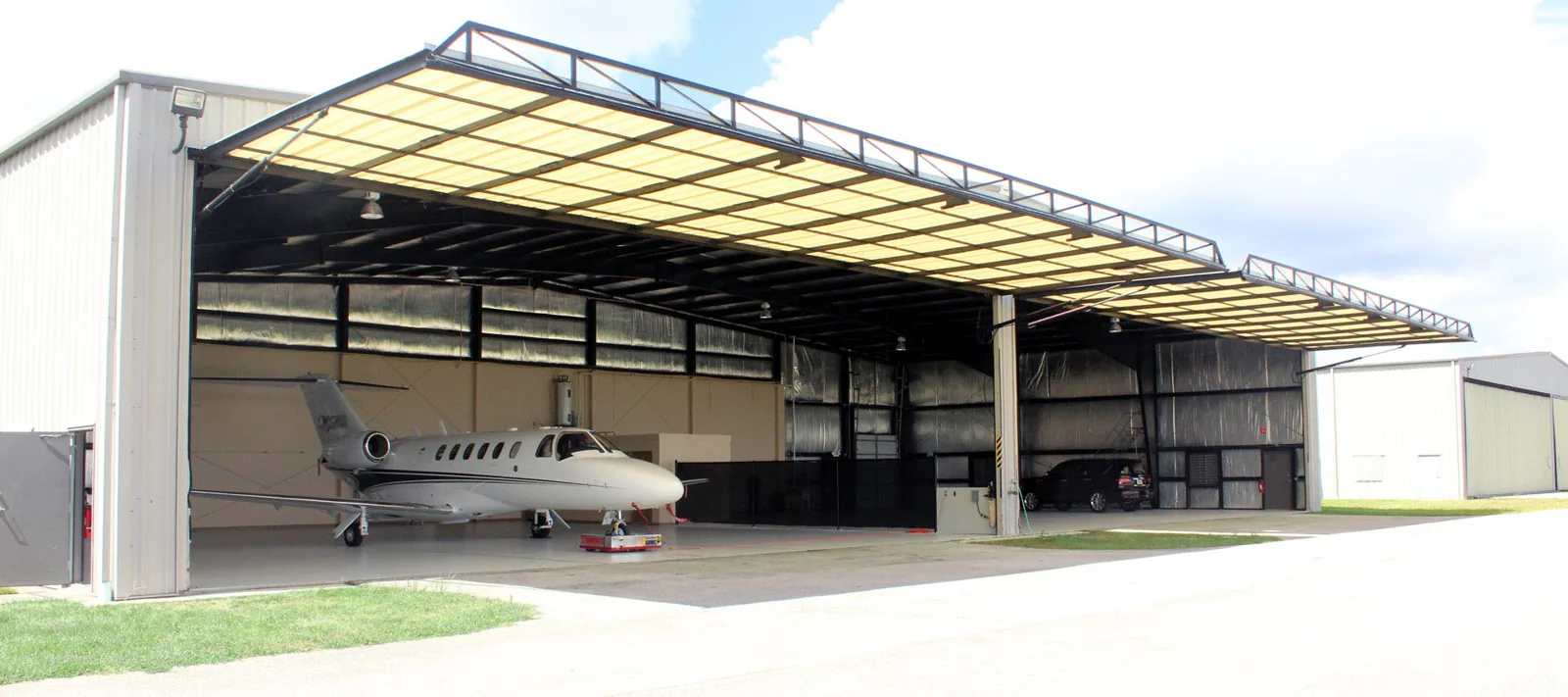
Plan hangar roof inspection and repair in Pueblo, CO around clear-span assemblies, door transitions, aircraft operations, drainage, and secure access.
A hangar door that binds or leaks can point to movement at the opening, but the roof and door frame need separate inspection before repair is assigned. We check the membrane or metal assembly, edge and wall transitions, penetrations, drainage, and the roof-to-door interface, then map the work zone against aircraft movement and maintenance activity. The operator confirms which bay can be isolated, what equipment needs protection, and how airside or secured access is controlled.
Pueblo Memorial Airport provides hangars, fuel, maintenance, charter, and commercial-flight services. Pueblo Memorial Airport industrial sites sit beside US 50 and have taxiway connections to the runways. Those facts establish aviation and logistics context for Pueblo, not the operating rules or roof details of a specific hangar. At each property, we verify escort and vehicle procedures, staging limits, aircraft clearances, and the authority responsible for approving work near active operations before planning mobilization.
What can fail at a large hangar roof?
Long roof spans and wide doors create transitions that deserve attention beyond a visible leak. We inspect panel laps or membrane seams, ridge and eave conditions, wall attachments, gutters, skylights, curbs, and fasteners. A door opening may allow wind-driven moisture to reach the interior without a roof membrane defect, while condensation or a blocked outlet can mimic a leak. We compare the reported condition with the assembly and drainage path before writing a scope.
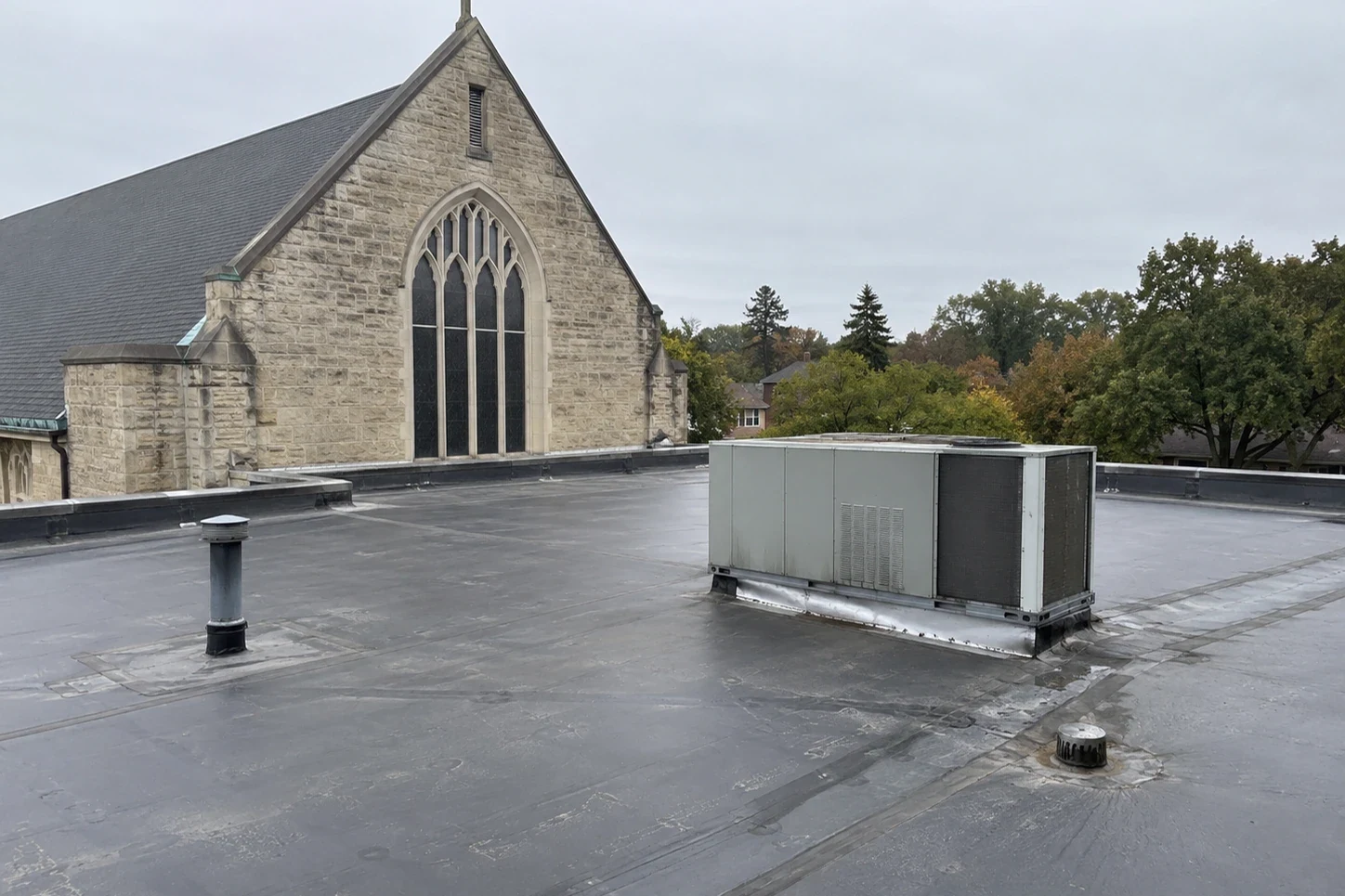
For metal roofs, check fastener movement, corrosion, panel seams, and incompatible repair materials. For low-slope systems, inspect membrane attachment, penetrations, edge securement, and ponding. A roof inspection can record both the roof and transitions at each bay. A drone survey may help document areas that are difficult to see from the ground, while close inspection remains necessary for hands-on testing. Owners responsible for hangars near Pueblo Airport Industrial Park can use the broader corridor context when discussing access, but the property’s specific airfield approvals still govern.
How can work fit around aircraft movement?
Identify aircraft arrival, departure, maintenance, and towing windows before reserving a crane or delivery. The work area may need a ground exclusion zone, fire access, and protection for sensitive equipment. We define how the crew reaches the roof, where material can be staged, and which bay remains unavailable during each step. If an escort or airside badge is required, the owner or airport contact confirms that process and timing; the roofing scope does not assume clearance or site access.
For replacement, sequence removal and installation in sections sized for secure end-of-shift closure. Occupied-facility phasing can set the sequence while keeping other approved areas available. If the structure also includes a maintenance shop, link its service-bay access with roof penetration work and mechanical shutdowns. Related military installation roof planning likewise considers escort, security, and mission operations, but the contracting and access requirements at any government site must be established separately.
Which assembly and repair scope fit the hangar?
Repair options depend on the existing roof type, connection details, and condition of the substrate. A localized panel fastener or flashing issue may be repairable when adjacent material is stable. Widespread seam failure, recurring water entry, corrosion, or insulation problems across several bays call for a broader comparison. We identify whether the roof is standing seam metal, retrofit metal, or a low-slope membrane before selecting compatible repair materials.
A standing-seam roof review considers panel seams, clips, eaves, and penetrations; metal retrofit work can be compared where the existing structure and attachment permit. A replacement scope should state removal areas, insulation, edge and door transitions, and phasing. If a coating or overlay is considered, check adhesion and substrate condition first. Any concealed deck or structural issue discovered after opening is documented for the owner’s review rather than absorbed into an undefined repair.
What does Pueblo weather mean for hangar work?
Summer heat affects crew timing and material handling on an exposed span. Pueblo’s climate normals record a July average high of 93.4°F. Average seasonal snowfall is 28.3 inches, so winter planning also needs a review of roof drainage, access, and the ability to close each bay before weather arrives. The actual forecast determines whether the planned area can be opened; prepare temporary protection and state the stop point before tear-off or panel removal starts.
Freeze-thaw periods can stress sealants and reveal water held at eaves or drains. A roof inspection should distinguish blocked drainage from a seam or slope condition before the repair type is chosen. Drainage work can be itemized separately from membrane or metal replacement. For hangars near the rail-served St. St. Charles Industrial Park has rail connections along I-25; for an aircraft facility, the site contact confirms the delivery route and staging area. The site lead confirms any staging or access restrictions directly.
What details should the operator keep?
Closeout should identify which bay or roof zone was repaired, the material and detail installed, the photographs permitted by the site, and any item that remains outside authorization. Note whether the work affected the door interface, a roof penetration, drainage, or a panel field. If the scope relied on a temporary stabilization, state its limit and the next inspection or permanent repair decision so a short-term measure is not mistaken for a complete renewal.
Keep the roof record with the facility’s access and maintenance documentation, but do not place security-sensitive instructions in a public-facing scope. A maintenance visit can review fasteners, drains, edge details, and prior repairs under separate authorization. Where the property includes a freestanding service building, service-building roof coordination and flex-industrial roof planning offers a related view of equipment and vehicle movement, while aircraft clearances and airfield approvals remain unique to the property. We finish with the work boundary, closeout status, and next action for the operator.
Door operation should be checked before a roof tie-in is closed. Note whether the door cycles smoothly, whether wind or precipitation is entering at its perimeter, and whether any planned service will remove a roof-mounted component. Coordinate the roofing and door trades on responsibility for counterflashing and temporary protection. Where an aircraft needs to move, the operator sets that window; the crew can then keep the work boundary clear and restore the bay in a sequence the facility can verify.
Commercial Roofing Questions
Can a hangar remain in use during roof work?
Some areas may stay operational if a secure work zone can be separated from aircraft movement and required access routes. The operator identifies which bay can close, who controls access, and whether escort procedures apply. We then phase the roof so each section has a safe, weather-ready closure point.
Does a door leak mean the hangar roof is failing?
Not necessarily. Water or air movement at a large opening can involve door seals, jambs, head details, or roof transitions. We inspect the door interface and roof system separately, then identify which observed condition supports the proposed repair.
What records help price a hangar roof project?
Roof plans, prior repair details, panel or membrane information, door drawings, access rules, aircraft schedules, and known drainage issues are useful. If the current assembly is unknown, a site inspection can document visible layers and identify where a limited opening is needed.
Can a drone replace a hands-on hangar inspection?
A drone can document visible surfaces and difficult-to-view transitions, but it does not confirm adhesion, fastener condition, or concealed moisture by itself. We use imagery as one part of the assessment and recommend hands-on checks where the repair decision depends on material condition.

Coordinate the hangar roof walk with operations
Share aircraft and maintenance windows, access and escort rules, roof records, and any door or leak reports. We will define the inspected bay, staging area, and secure daily stop point.
Call 555-555-5555 or email [email protected].