
Home / Property Types We Roof / Church Roof Repair and Replacement
Church Roof Repair and Replacement in Pueblo, CO
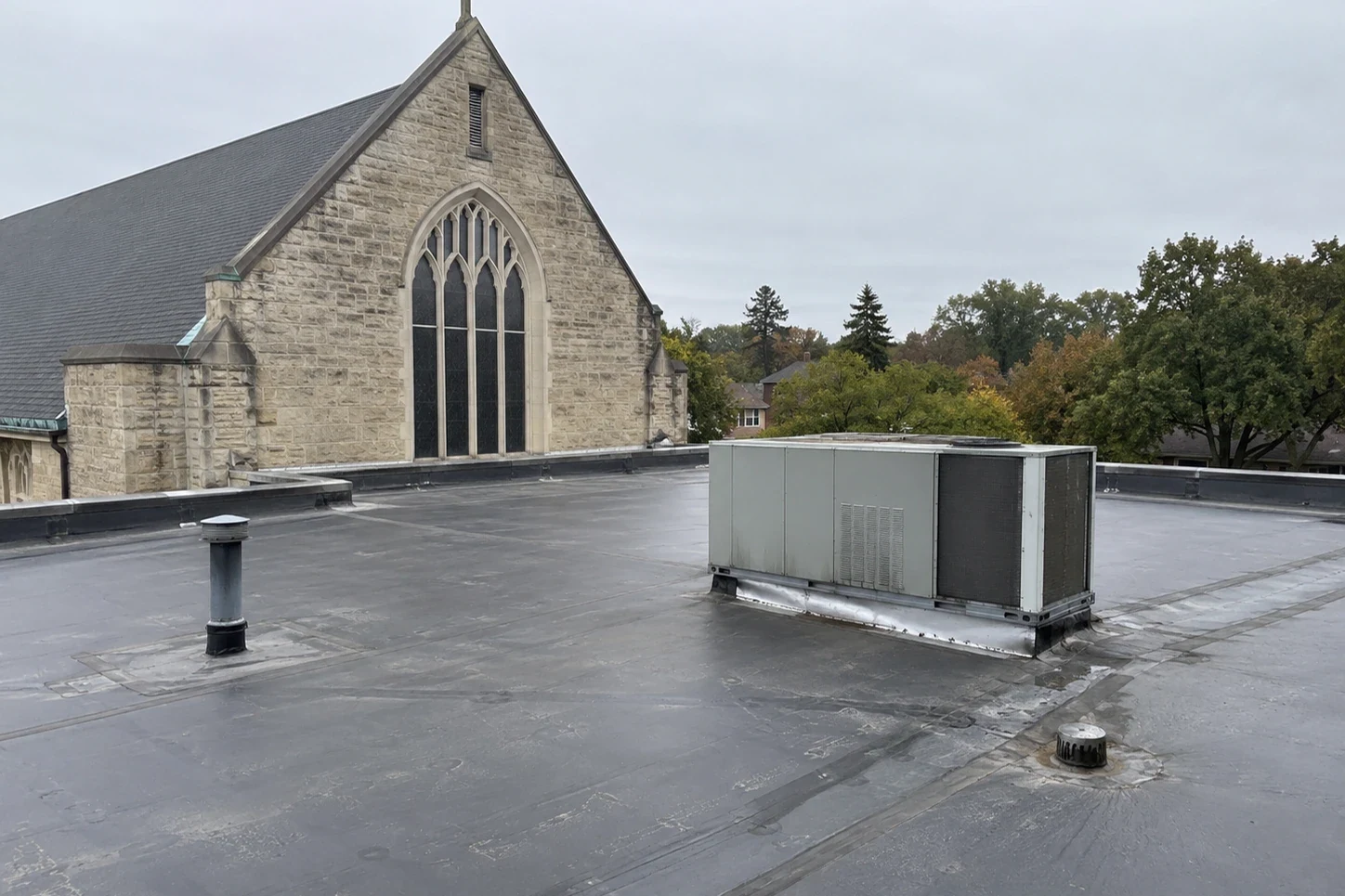
Plan church roof repair and replacement in Pueblo, CO around worship schedules, steeples, gathering spaces, drainage, and weather-sensitive work windows.
A leak above a sanctuary can move along a long roof slope before appearing near the seating area or a side room. We inspect the reported zone, trace seams and transitions, and note whether a tower, skylight, or mechanical curb changes the tie-in. The property contact can identify worship hours, funerals, classes, food service, and community events so access and noise do not become an afterthought. Before opening the roof, we agree on the area, interior protection, and a watertight stop point.
Pueblo has worship spaces across established commercial and residential districts. The Blocks is a South Pueblo historic area above the Arkansas River; Bessemer includes residences with attached commercial uses and local churches. These place facts provide context for varied building settings; they do not establish the age, construction, or roof type of a particular congregation. We inspect the actual assembly and confirm vehicle routes, gathering areas, and safe separation from the work zone with the site contact.
Which transitions deserve a close roof walk?
Sanctuary roofs often combine broad membrane fields with smaller transitions at parapets, valleys, rooftop equipment, skylights, and older additions. Water can enter at a flashing detail and travel before it reaches a ceiling tile, so we compare the interior report with the roof slope and nearby drains. We look for open laps, brittle sealant, movement at a wall, ponding, and past patches that may have changed the original assembly. Each finding is tied to a roof zone rather than generalized to the whole building.
If a steeple or other tall feature meets the low-slope roof, inspect the connection and surrounding counterflashing for separation. Penetration and flashing repair can address a confirmed detail; a broader roof condition review records the field, edge, and drainage conditions around it. Many older buildings have limited records, so we note visible materials and recommend a small verification opening only where it can resolve a real scope question. The project lead can then compare repair options against evidence rather than assume every wing shares one roof system.
How can the work respect worship and community use?
Set the access window against the calendar, including recurring services, weekday programs, weddings, memorials, and events that bring people to the property. Identify the entrance used by guests, the route for deliveries, and any accessible path that must remain clear. If a lift or debris container changes parking, the congregation’s contact should approve its location and tell staff when the restriction ends. A roof zone above a busy room can be scheduled separately from a less active wing.
For a larger renewal, stage material and removal so only a manageable area is exposed. Phased occupied-building work can establish a dry-in sequence and daily closeout, while a rapid repair visit can protect a leak before a permanent scope is set. At Downtown Pueblo, historic commercial uses include residences above storefronts; that illustrates how community and building uses can share a block, but actual access at a congregation must be checked locally. If the facility also operates a school, school roof coordination offers a separate view of class schedules and protected circulation.
What separates a repair from a full roof project?
A single failed flashing or punctured membrane can be repaired if surrounding material still provides a sound tie-in. Several leak paths, widespread wet insulation, recurring patches, or a drainage defect across a roof plane may justify comparing broader work. We review the assembly, substrate, penetrations, drains, and prior repairs, then describe what each option includes. For older construction, a visible surface alone does not show whether the deck or insulation beneath it is sound.
A repair scope should identify the detail and limits; a replacement scope should mark tear-off boundaries, new insulation, membrane, edges, and how adjoining walls or equipment are tied in. Commercial roof repair can cover limited defects where the surrounding field supports it. When conditions call for renewal, replacement planning defines the larger sequence and closeout requirements. Any concealed deck or moisture damage found after opening is recorded as a separate condition for approval before the original work boundary is widened.
How should seasonal weather guide the schedule?
Pueblo’s summer heat affects roof-surface conditions, while winter snowfall and freeze-thaw periods change access and drainage review. We check the current forecast and the assembly before choosing a removal window, then stage temporary protection so exposed work can close before the shift ends. A service or event date should not force crews to leave an unfinished tie-in; if conditions change, the facility contact needs to know which zone is secure and what remains scheduled.
Pueblo’s hot summer surfaces and winter snowmelt can change when a church roof zone is safe to open. We check moisture, forecast, and material limits before setting the work window around services and building use. Those regional figures frame material handling and seasonal inspection, not a prediction for an individual workday. Before design, determine which authority reviews the parcel. Before a roof alteration, confirm the parcel’s reviewing authority and current amendments, then match the assembly details to the approved project requirements. A drain and scupper assessment can distinguish obstruction from a roof slope or membrane issue after a storm, keeping the repair decision grounded in the actual field condition.
What belongs in a church roof handoff?
Closeout should identify the building area treated, the material and detail installed, photographs, and any nearby condition that remains outside the approved scope. Use labels that the facilities volunteer or property manager can recognize without needing the installer on site. If the work was a temporary stabilization, say what was stabilized and what still needs a permanent decision. Clear records help future leaders understand why a repair was made and where to continue inspection.
A separate maintenance visit can review drains, edge details, and patched transitions ahead of seasonal weather. When several buildings share a campus, keep their inspection notes distinct rather than rolling them into one assumed condition. For a different institutional setting, municipal building roof work also depends on access and public use, though its approval process may differ from a congregation’s schedule. We close with the next action, whether that means checking an interior area after rain, approving a defined repair, or budgeting for renewal.
Commercial Roofing Questions
Can roof repairs avoid worship hours?
The schedule can be scheduled around services and events when the repair and weather allow it. We identify roof access, noise, debris movement, and rooms below, then choose a work window and dry-in point with the property contact. If urgent stabilization cannot wait, management receives a clear access and interior-protection plan.
What if the ceiling leak appears far from a steeple or roof edge?
Water may travel across the deck or insulation before showing inside. We trace the likely slope and drainage path, inspect nearby seams and flashing transitions, and explain which detail is confirmed. A roof opening is recommended only when it can answer a specific question about concealed material or deck condition.
Should an older sanctuary be coated or replaced?
That decision starts with the existing assembly, adhesion, moisture, drainage, and edge conditions. A coating is not a substitute for unstable insulation or failed tie-ins. We inspect the surface and substrate indicators, then compare a restoration or coating scope with replacement where the field supports each option.
What should the congregation prepare before a roof inspection?
Share the event calendar, access and parking rules, reports of leaks, previous repair notes, and any available roof plan. Identify who can authorize work above the sanctuary or community rooms and which paths need to remain accessible. Those details let us mark the inspection zone and work boundary before crews arrive.
Set a roof walk around the congregation calendar
Bring the property contact, service and event schedule, access rules, leak reports, and available roof records. We will map the affected zone, interior protection, and daily stop point.
Call 555-555-5555 or email [email protected].