
Home / Property Types We Roof / Restaurant Roof Repair and Replacement
Restaurant Roof Repair and Replacement in Pueblo, CO
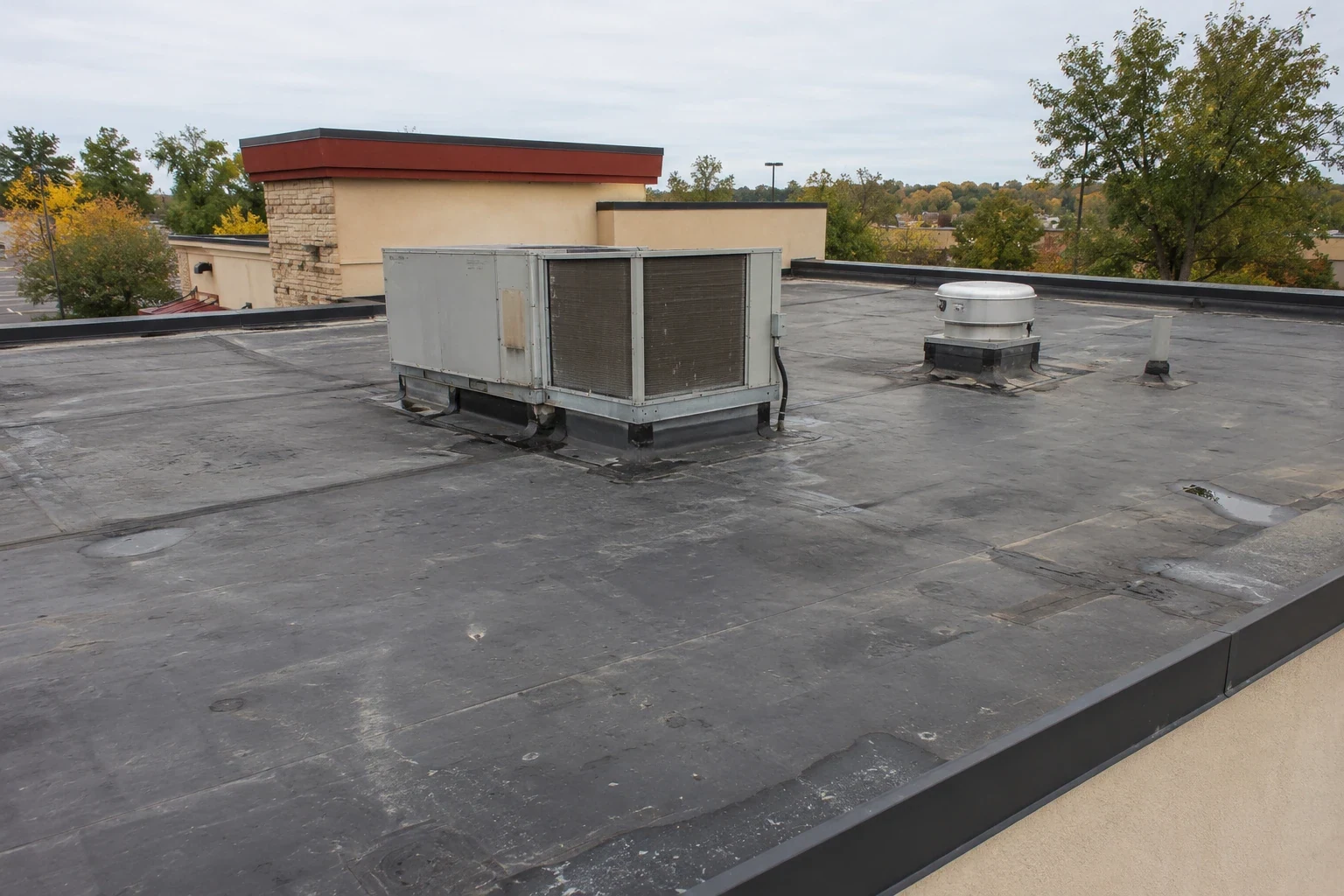
Plan restaurant roof repair, inspections, and replacement in Pueblo, CO around kitchen operations, guest access, exhaust equipment, drainage, and weather.
Exhaust equipment, dining spaces, and guest schedules all meet at a restaurant roof, so a small interior stain needs a field check before a repair is priced. We trace the water path, identify the roof assembly, and align the work boundary with the restaurant manager before recommending a repair. The kitchen, dining area, delivery door, and guest entrance each have different operating windows; the roof plan should name which area is affected and how it will be protected.
Pueblo’s summer heat and seasonal snow both affect roof work. Weather timing matters when seams or flashing are opened, and the project lead should know where materials can be staged without blocking food deliveries or customer access. Pueblo Crossing Retail Center includes retail and restaurant uses, while Downtown Pueblo has historic storefronts and restaurant activity. At the requested property, we confirm the operating hours and roof condition, then document a practical stop point for each work shift.
Which kitchen details can change the roof scope?
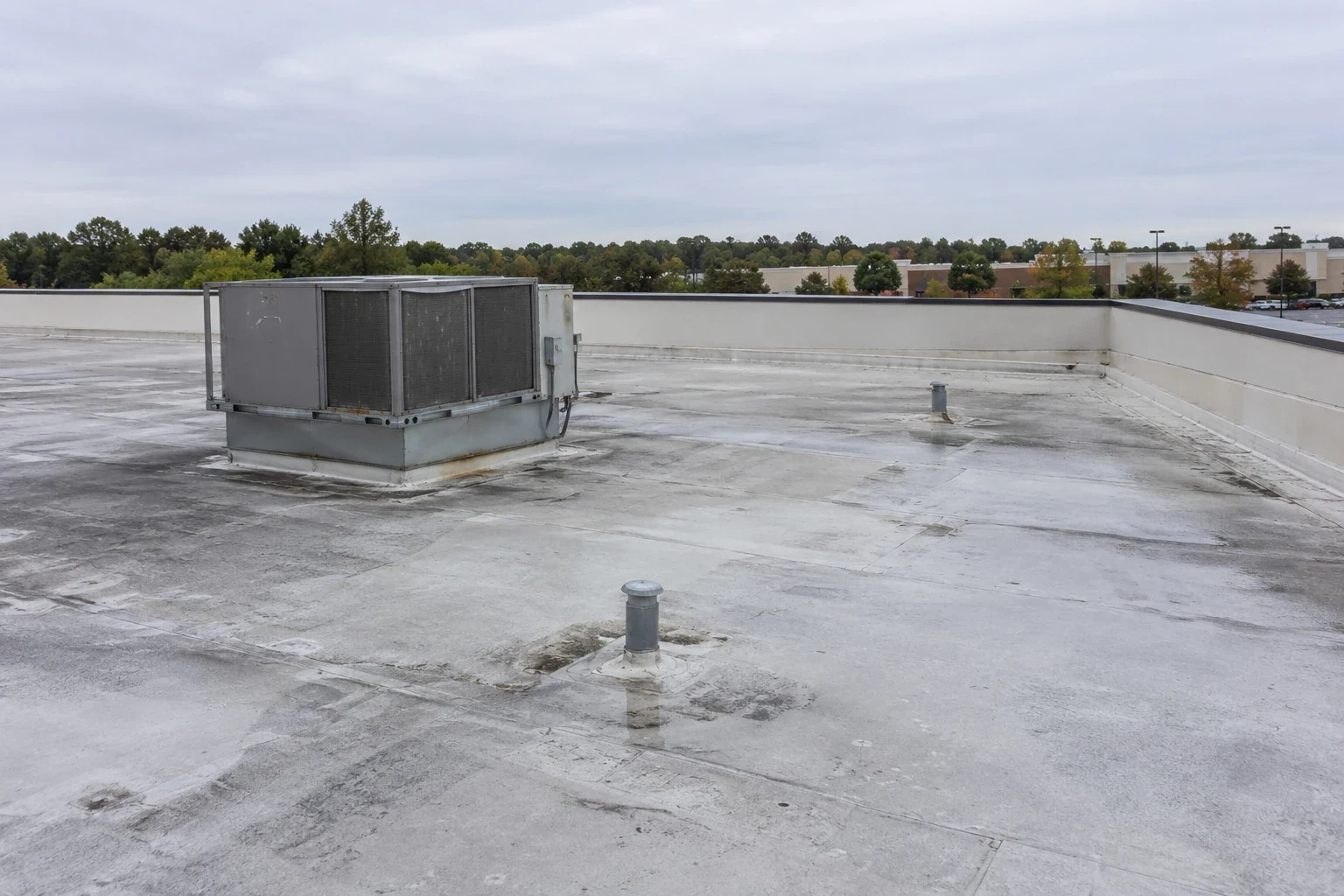
Exhaust fans, grease duct enclosures, make-up air equipment, and utility lines create several transitions through a commercial roof. The visible leak may be downstream from the actual failure, so we inspect the curb, counterflashing, fasteners, membrane seams, and nearby drainage path before assigning a repair. A fan that vibrates, a curb with separated flashing, or a patch that bridges incompatible materials can each change the recommended work.
We also identify whether the assembly is single-ply, built-up, coated, or a combination from prior repairs. That matters when heat or grease-related maintenance has affected the surface. A commercial roof inspection can map the condition by zone, while curb and support work addresses equipment transitions as a coordinated scope. The restaurant owner or facilities lead should identify any equipment scheduled for replacement so the roofer can distinguish current defects from future penetrations.
How can roof work fit between meal periods?
Start with the hours that matter to the building: prep, receiving, lunch and dinner service, cleaning, and any quiet period required by the operator. We use that schedule to identify when a crew can reach the roof, where a lift or delivery can stand, and which interior spaces require protection. Guest arrival paths and accessible entrances need to remain clear; a roof closure plan should not assume that a side door or loading area is available without the manager’s approval.
For occupied facilities, divide the roof into workable zones and specify how each open area will be closed before service resumes. Occupied-building reroofing can sequence removal and installation to limit exposed area. At a larger retail setting, Pueblo Transit Route 6 connects Pueblo Crossing with the mall, Downtown transit center, and North Elizabeth stops; the route reflects the corridor’s activity, while actual truck access and staging must still be confirmed at the property. A delivery plan can prevent roofing materials from competing with food, beverage, or waste service.
When is a focused repair enough?
A localized seam, flashing, or curb defect may be repairable if the surrounding membrane and insulation remain serviceable. When multiple leaks appear, the roof has repeated patches, or moisture extends beyond a single penetration, compare a broader repair area with recover or replacement. The decision should account for insulation condition, deck stability, drainage, and how many kitchen penetrations need attention, not simply the surface area of the visible stain.
We describe each option by roof zone, material, tie-in, and quantities so the owner can compare like with like. A leak-repair scope follows the reported water path and separates confirmed defects from concealed conditions. If renewal is more appropriate, a replacement plan can define tear-off limits, new insulation, membrane details, equipment curbs, and closeout. Any concealed wet material or deck damage discovered after opening should be photographed and priced as a change before the authorized boundary expands.
Kitchen exhaust changes deserve a separate handoff. If a contractor will replace a fan, curb, or duct enclosure, agree on who removes and reinstalls the roofing detail, how the opening will be protected, and when the assembly will be tested. This avoids treating a new equipment penetration as a warranty-free patch after the roof work is complete.
What should the crew plan for Pueblo weather?
Heat changes roof-surface conditions and can affect how crews handle materials; snow and freeze-thaw periods change access, drainage, and the time available to close an opening. We check the current forecast against the planned work area and select a sequence that can reach a watertight stop point each day. If precipitation or wind would make an exposed zone unsafe, the crew should protect it and defer the next step rather than leave a seam or penetration incomplete.
Pueblo’s published climate normals show average summer highs above 90°F and seasonal snowfall of 28.3 inches. Those are planning context, not a substitute for a current job forecast or roof measurement. Before fixing insulation or penetration details, establish the permit path with the local authority. Before changing roof attachment, insulation, or drainage, confirm the parcel’s permit authority and applicable amendments. Drainage work may be part of the same decision: drain and scupper repairs address outlets and low points that can keep a sound membrane from performing as intended.
What does a useful restaurant roof closeout include?
Closeout should let the operator understand what was repaired, which area was included, and what remains outside the approved work. We provide the roof-zone description, material and detail notes, relevant before-and-after photographs, and any concealed condition that changed the scope. The handoff can also identify a curb, drain, or seam that should be watched during the next maintenance visit without implying that it was part of the completed repair.
For a portfolio with several concepts or leased spaces, consistent zone labels help the property manager compare future inspections and budgets. A hotel roof planning can review drains, flashings, and equipment supports before a small defect grows. Owners coordinating a broader hospitality portfolio may also compare the planning needs in multifamily roof coordination. We finish with a clear work boundary and next action so the restaurant team can return its attention to the building’s daily operation.
Commercial Roofing Questions
Can roof work be scheduled outside restaurant hours?
Often, if access, crew safety, weather, and the work type allow it. We confirm prep and cleaning windows with the manager, then choose a roof zone that can be opened and made watertight before staff need the affected area. Some work is quieter or safer during daylight, so the schedule should reflect the actual repair rather than assume all work can happen overnight.
How do you investigate a leak near a kitchen exhaust fan?
We inspect the curb and flashing, look for membrane separation or fastener movement, and trace nearby drainage before deciding where water entered. The stain may be offset from the roof defect. If fan work is planned, coordinate that scope with the roofer so a new penetration or curb change does not undo a completed repair.
When should a restaurant consider replacing instead of patching?
Replacement deserves comparison when failures recur across several zones, the insulation or deck has widespread damage, or patches no longer provide reliable tie-ins. We document what is confirmed and identify concealed conditions separately, then compare repair and replacement by included area, assembly, and disruption to service.
What should we have ready for a roof walk?
Bring the leak locations and dates, access rules, operating hours, records of prior repairs, and any planned kitchen-equipment changes. A manager or facilities contact can identify receiving areas, guest routes, and rooms that need protection so the scope reflects the restaurant’s actual operation.

Set the restaurant roof work window
Bring the operating schedule, roof access rules, leak history, and available roof records to a site walk. We will map the affected zone, protection plan, and daily stop point with the manager.
Call 555-555-5555 or email [email protected].