Home / Roofing Manufacturers / GAF Commercial Roofing Systems
GAF Commercial Roofing Systems in Pueblo, CO
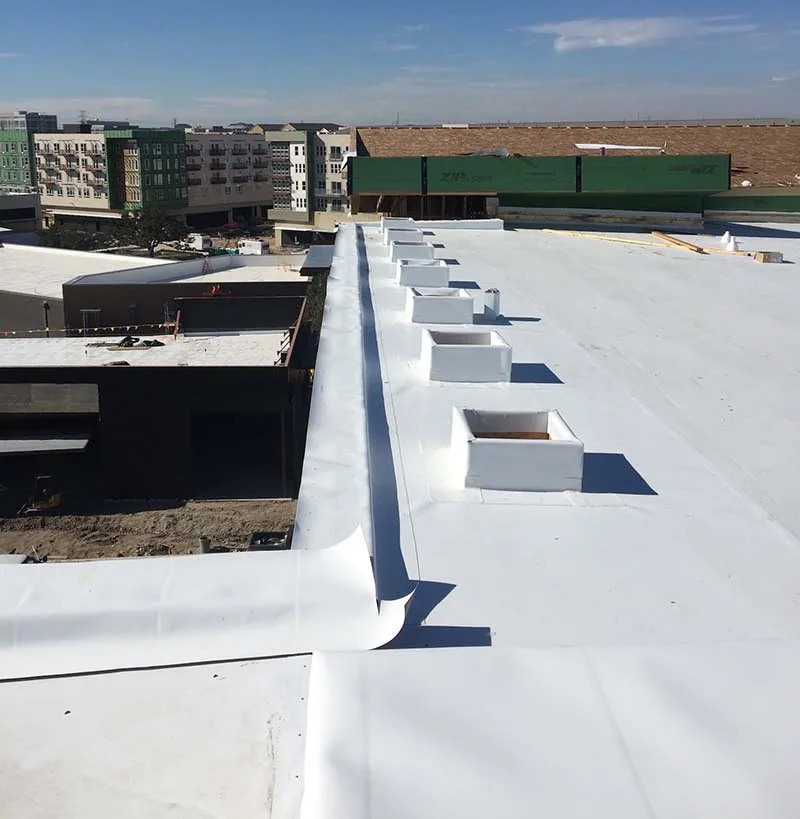
Evaluate GAF commercial roofing systems in Pueblo, CO with a field review of assembly, substrate, drainage, details, and installation conditions.
A GAF product name does not settle the roof scope. We first identify the existing assembly, attachment, insulation, deck, and repair history, then compare those findings with the system being considered. GAF offers EverGuard TPO membranes for commercial roofing; the project still needs a detail-by-detail review of seams, edges, curbs, drainage, and tie-ins. The proposed assembly is selected for the actual roof and scope.
Pueblo Memorial Airport industrial sites sit beside US 50, about five miles from I-25, and have direct taxiway access; St. Charles Industrial Park has an I-25 rail connection. At either setting, the facility contact confirms the delivery route, staging area, and operating limits before we recommend an assembly.
What should be confirmed before selecting EverGuard TPO?
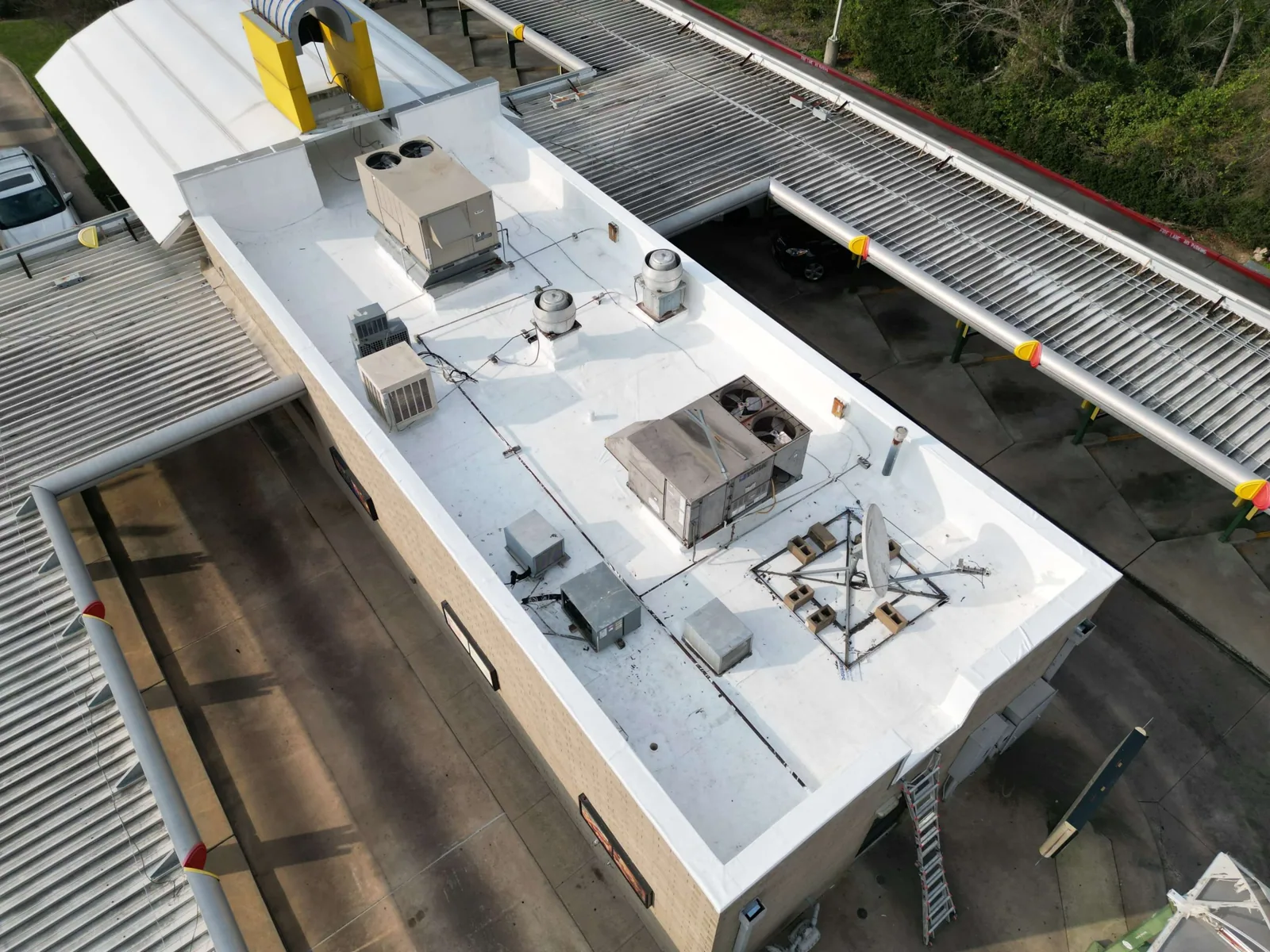
Confirm the deck, existing layers, insulation condition, slope, drainage, edge securement, and rooftop equipment. A thermoplastic membrane is heat-welded at seams, so access to sound sheet edges and suitable installation conditions matter. A recover may be possible only after evaluating moisture, attachment, allowable layers, and code. If the roof has repeated wet areas or unstable substrate, a new surface layer alone may not address the cause.
A roof inspection can map the current assembly and defects. For suspected moisture beneath the surface, thermal screening may help identify areas for further confirmation when conditions support it. Compare a TPO system option with PVC or EPDM by exposure, chemical risk, attachment, details, and owner priorities rather than color alone.
For comparison, Carlisle offers its Sure-Weld TPO membrane, and Johns Manville lists TPO membrane systems as well. The right choice still depends on approved assembly details and the building conditions found in the field. The existing roof plan and field walk should agree before quantities are fixed. If the drawings show a single membrane layer but a test opening reveals more, stop at the agreed boundary and document what changed. Detail the proposed insulation and cover board, perimeter, curbs, drains, and transitions. A complete scope names these components because the performance of the roof depends on the assembly and tie-ins, not just the membrane roll.
How do seam and transition details shape the work?
EverGuard TPO seams are joined with hot-air welding under the selected system’s installation requirements. Preparation, temperature, weld settings, and a consistent test process determine whether the seam is properly joined. We identify field seams and detail work separately, then plan the sequence so roof zones can be closed and checked before the next area is opened. If a repair crosses an existing patch or incompatible surface, test and prepare that transition before the production run.
At curbs and penetrations, draw the membrane turn-up and termination rather than assume a generic flashing will fit. At drains, confirm the bowl, clamping arrangement, slope, and overflow path. An edge-metal scope should name coping and perimeter transitions, while drain work can address outlet details. If existing joints have split, seam inspection identifies the full affected length before a repair tie-in is priced.
Before starting, check the surface and ambient conditions against product requirements and establish a work boundary that can be left watertight at shift end. Pueblo’s July mean high is 93.4°F; roof temperature can exceed air temperature and change through the day. We check roof-surface temperature, wind, and moisture through the shift, then set the work boundary against the selected product’s installation requirements. Coordinate equipment shutdowns and site access with the owner.
When is repair different from a full system project?
A localized seam or flashing defect may be repaired if the surrounding membrane remains sound and a compatible tie-in is available. A broader project may be needed when the assembly has wet insulation, repeated open seams, poor drainage, or widespread deterioration. The proposal should identify what is confirmed and what remains concealed. A limited repair should identify the affected roof zone and detail; wider system renewal requires separate assembly findings and scope.
For an active opening, temporary stabilization can limit water entry while a permanent detail is reviewed. A recover assessment requires inspection of the existing layers and substrate. If full removal is the better comparison, replacement planning can define phasing, disposal, edge work, and interior protection. Each option is written as its own scope so the owner can compare like items.
Where an existing coating or repair is present, check compatibility with the proposed membrane and the manufacturer’s current details. Compatibility between the existing surface and proposed membrane must be confirmed before a recover is priced. If a test opening is needed, agree in advance on its location, who authorizes added work, and how the roof will be closed the same day. That gives the owner control over concealed conditions and keeps the project lead informed at the stop point.
Which Pueblo project conditions matter?
Pueblo averages 28.3 inches of seasonal snowfall, with measurable snow typically beginning November 5 and ending April 13. That range makes drain access and the day’s forecast part of tear-off planning; current roof conditions determine whether installation can proceed. Inspect the roof for low areas and confirm temporary protection before scheduling tear-off. The current forecast, membrane temperature, and dry surface determine whether the planned work can proceed.
PuebloPlex is planned for industrial, warehousing, rail-related, research, and technology activity. A PuebloPlex-area project walk still depends on the particular building’s access, security, operations, and laydown area. A GAF assembly still needs project-specific permit review. Confirm whether Pueblo Regional Building Department has authority over the parcel and which code editions and amendments govern before finalizing the roof details.
For a roof serving a warehouse or plant, coordinate loading windows, interior protection, and work routes below. A manufacturing roof plan may need equipment and outage coordination that differs from a retail roof. Keep those site constraints visible in the proposal. If a delivery or lift is proposed, the facility contact confirms where it can be placed and which operations must remain clear.
What belongs in the GAF system handoff?
Closeout should identify the installed products by exact name where known, substrate preparation, roof zones completed, details tied in, and any variation from the plans. Include dated photographs of seams, perimeter, curbs, and drains before they are obscured. Record the inspection or test results actually completed and any area not included. If warranty documents are supplied, retain the issued terms and required maintenance with the owner’s file; do not imply a coverage outcome.
A condition report can capture remaining issues after installation. The facilities team should know which surfaces are new, where existing work remains, and when access restrictions end. Set a closeout walk with the owner or construction lead to review open items and confirm that temporary protection has been removed or converted to a permanent detail.
Bring roof plans, prior repairs, known leak zones, and operating rules to a roof walk. We will confirm what can be inspected and outline the system, edge, and drainage decisions that affect the proposal. The resulting scope is based on the actual building and states the handoff between inspection, installation, and owner records.
Commercial Roofing Questions
Do you install GAF commercial roofing systems?
We install and repair commercial roofing systems, including TPO. Product, assembly, and installation method are confirmed for each project from roof conditions and the selected specification.
Can EverGuard TPO be installed over an existing roof?
A recover depends on existing layers, wet insulation, attachment, drainage, deck condition, and code. We inspect those items and define any test openings before presenting a recover option.
How do you check the finished seams?
The crew prepares and heat-welds seams under the selected system requirements, then checks completed work and details. The closeout identifies which inspections or tests were performed and the roof zones included.
What should be included in a GAF roof proposal?
List membrane, insulation, cover board, attachment, edge and penetration details, drainage, removal assumptions, access, phasing, and protection. Separate confirmed quantities from conditions that may change after opening the assembly.
Review a GAF roofing option in Pueblo
Share roof plans, inspection records, assembly details, access rules, and operating windows. We will inspect the roof and prepare a system scope with seam, edge, drainage, and closeout decisions identified.
Call 555-555-5555 or email [email protected].