
Home / Roofing Capabilities / Commercial Roof Warranty Management
Commercial Roof Warranty Management in Pueblo, CO
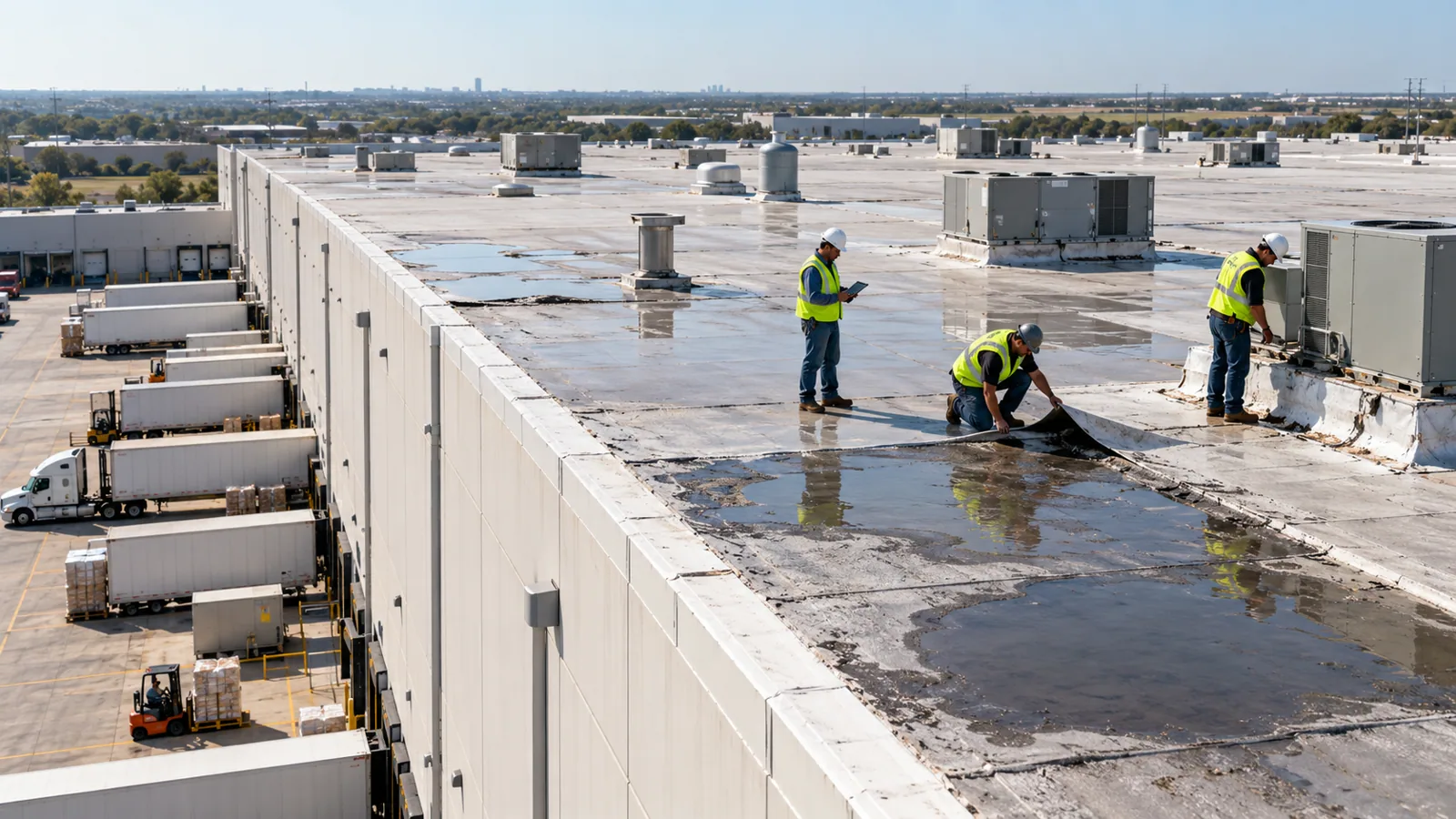
Manage commercial roof warranty records in Pueblo, CO with document reviews, maintenance tracking, repair history, and clear obligations for owners.
A warranty file can be hard to use when the owner cannot match its roof, coverage, and maintenance obligations to the building. We organize the documents available, identify the system and area they describe, and track the inspections or repairs called for in the terms. We do not assume coverage is active or that a particular condition is covered. The owner should review the actual agreement and confirm questions with its issuer before authorizing work that may affect it.
A historic Pueblo Armory project record specifies an adhered EPDM assembly over an existing SBS modified-bitumen roof. That bid drawing is useful evidence of a past project scope, not proof of the current roof or an active warranty. For any Pueblo property, the file must connect the issued document to the building and installation being discussed. The site and assembly are confirmed from owner records and the field.
Which records should be matched to the roof?
Collect the issued warranty, approved submittals, completion records, installer closeout, maintenance logs, repair invoices, and any inspection correspondence. Compare the building name, roof zone, system, dates, and stated conditions across the documents. If a file refers to only one section, do not treat it as a whole-building warranty. Missing dates, unclear boundaries, or changed ownership are questions to resolve with the issuing party.
A roof inspection can document the current visible assembly and any active repair need. A condition report can tie findings to zones and photographs. For ongoing records, roof asset tracking preserves system information, repair history, and access limits. These services organize evidence; the written warranty terms control coverage and obligations.
Separate product documents from the actual warranty instrument. A manufacturer data sheet may describe a membrane or coating but does not establish that the building has an issued warranty. Keep approval letters, final closeout, and any extension or transfer confirmation with the policy records. If documentation is incomplete, note the missing item and ask the owner or issuer to confirm it rather than fill the gap with a general statement.
How can inspection and maintenance obligations be tracked?
Read the maintenance and notification terms as written, including any interval, access, repair, or reporting requirement. Build a calendar from the confirmed document and record when work is completed, who performed it, and which zones were checked. Do not add obligations that the document does not state. If a term is unclear, send the question to the issuer or the owner’s coverage contact and keep the response with the file.
For Pueblo roofs, seasonal access can affect inspection timing. Pueblo’s average April low is 35.3°F; we still compare the roof surface and forecast with the repair material’s application limits. Those seasonal conditions inform planning; roof temperature, moisture, and the current forecast determine whether a repair material can be installed. The record should show the actual inspection date and any access limitation. A maintenance visit can inspect drains, seams, and flashings under a defined work order, while drain service can address a specific outlet issue.
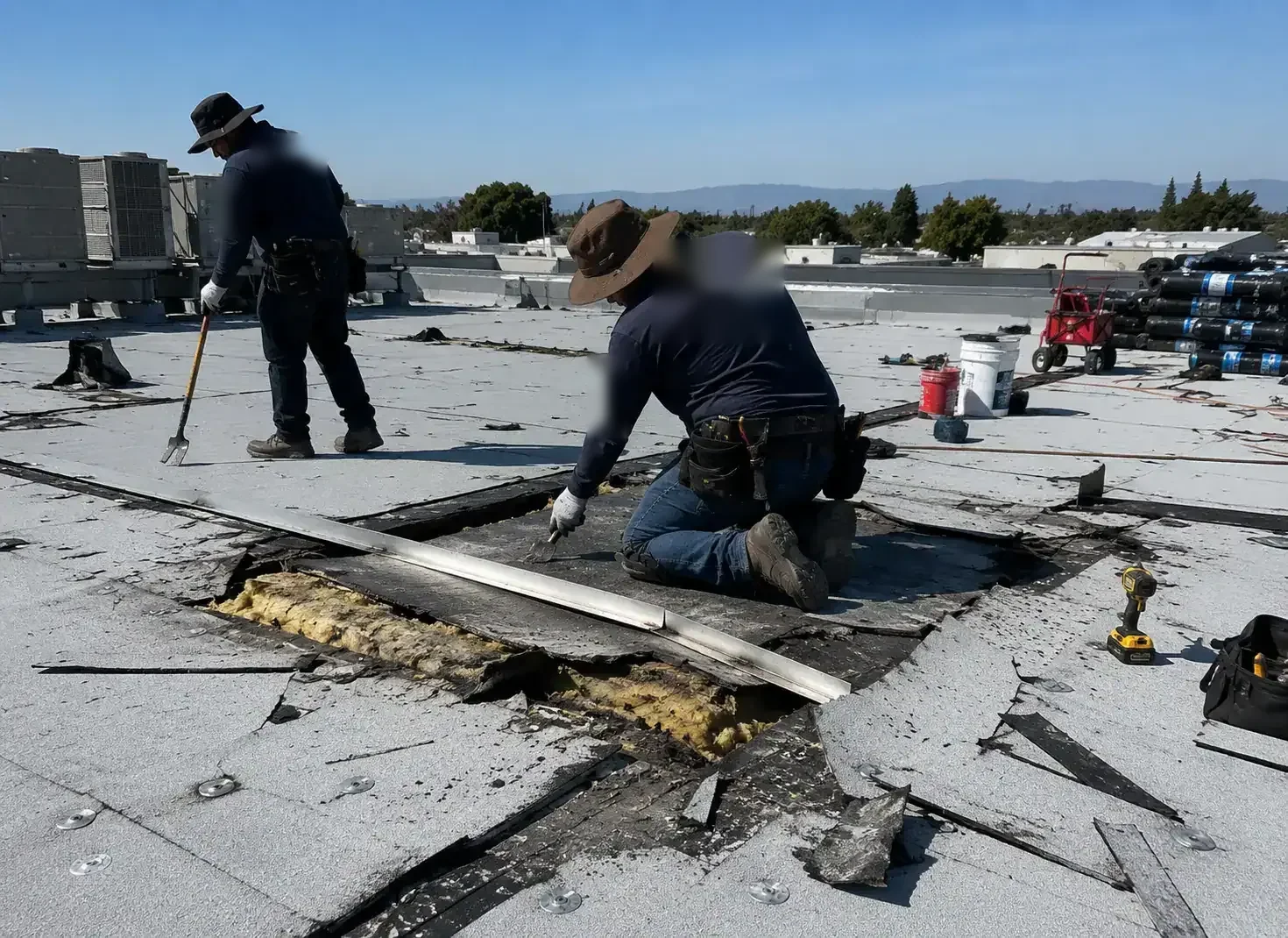
Photographs and work notes should identify the area inspected, conditions found, maintenance performed, and any recommendation deferred. If the crew opens the assembly, capture what was exposed and obtain approval for added work. This creates a dated history the owner can present if a question arises later. Coverage questions remain separate from the contractor’s description of field work.
What should happen before warranty-sensitive repairs?
Before work begins, compare the proposed repair with the actual warranty terms and identify any notice or authorization requirement. If the owner needs the issuer’s direction, obtain it before removing covered material where practical. An active leak may still require immediate protection; document stabilization, notify the appropriate contact, and preserve photographs of the condition. Permanent work proceeds under the owner’s approval and the confirmed repair detail.
A localized repair proposal can state the affected zone, material, tie-in, and any unknown substrate. For repeated failures, a replacement comparison can be developed separately after inspection. If an open seam is involved, seam evaluation can document the lap and adjoining membrane. Keep the proposal factual and let the document issuer determine any warranty consequence.
Use compatible materials and installation methods for the roof system, but do not imply that material choice alone preserves coverage. A product may be technically suitable while the warranty terms still require a specific notice or approved process. The property contact should confirm those conditions and tell the crew what approvals apply. The work record then shows the method used and the instructions that were available at the time.
Which Pueblo records help establish the project context?
The Pueblo Armory roof drawings document a past replacement assembly and divide the roof into three named areas. This historic information can help explain how a project file identifies zones, but it should not be applied to another building or represented as a current condition. PuebloPlex, by contrast, is a large redevelopment campus with existing buildings and storage structures across planned manufacturing, warehousing, and rail-related uses. For a PuebloPlex-area roof review, the owner identifies the building and roof zone included in the scope.
Before finalizing a roof alteration, verify the parcel’s reviewing authority, current code amendments, and permit path. Building approval and permit records are separate from a manufacturer’s warranty and do not determine coverage. The warranty file should retain permit records where relevant, but avoid describing a code reference as an issuer’s approval.
For industrial properties, note the project contact, site access controls, operating hours, and any rail or highway delivery constraints that affect repair records. St. Charles Industrial Park has rail connections along I-25, but that does not establish an individual building’s staging or access. Record site-specific instructions from the facility lead rather than infer them from the surrounding district.
What does a completed warranty file look like?
Keep a copy of the current warranty instrument, roof-zone map, system and installation documents, inspection reports, maintenance work orders, repair approvals, and closeout photos. Identify which documents were reviewed and any missing confirmation. Date each entry, label the building and zone, and preserve the issuer’s exact correspondence. The owner should be able to find the next required action without relying on a contractor’s memory.
At transfer or refinancing, assemble the file for the owner’s designated reviewer and identify questions that need issuer confirmation. A due-diligence roof survey can document condition separately from the warranty file. If several buildings are involved, a multi-site program can coordinate records while keeping each property’s terms and conditions distinct.
Bring issued documents, available repair records, and current roof plans to a records review. We will identify what can be matched to the property, what maintenance items are documented, and which questions belong with the issuer. That leaves the owner with a practical record and no unsupported claim about coverage.
Commercial Roofing Questions
Can you confirm that our roof warranty is active?
We can review documents supplied by the owner and record their dates and scope, but only the issuer can confirm current status or coverage. We identify missing transfer, completion, or maintenance records so the owner can ask the right question.
Do all repairs need manufacturer approval?
That depends on the actual warranty terms and the proposed work. We help identify the roof system and repair boundary, then the owner confirms any notice or authorization requirement with the issuer before permanent work proceeds.
What should we keep after a maintenance visit?
Retain the dated work order, zones inspected, photographs, findings, materials used, and any item deferred. If the warranty instrument specifies additional records or notice, include those as well and confirm the requirement with its issuer.
Does a product data sheet prove the roof has warranty coverage?
No. A data sheet describes a product, while an issued warranty document identifies its terms and covered work. We keep those records separate and do not infer coverage from a product name or material submittal.

Organize your Pueblo roof warranty records
Bring the issued warranty, roof plans, maintenance logs, prior repairs, and current inspection records. We will match documents to roof zones, identify missing records, and list questions for the issuer.
Call 555-555-5555 or email [email protected].