Home / Service Areas / Lake Minnequa
Commercial Roofing in Lake Minnequa, Pueblo, CO
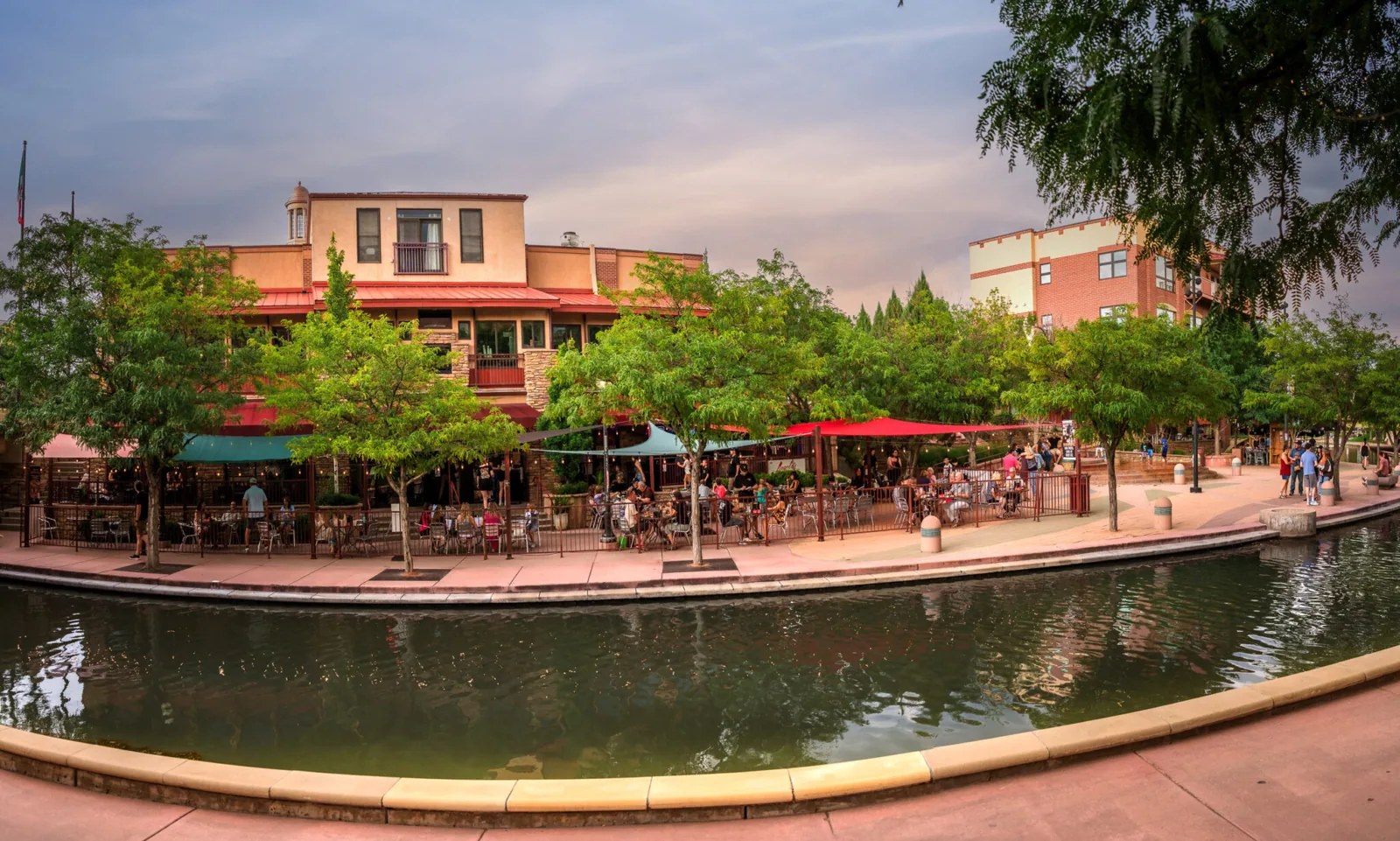
Coordinate Lake Minnequa commercial roofing with a measured inspection, occupant protection, and work sequence for its mixed-use corridors.
A commercial roof repair in Lake Minnequa has to account for the mixed uses along its corridors and the people moving through the property below. Lake Minnequa includes commercial, residential, and recreational uses, with St. Mary-Corwin Medical Center as a major healthcare presence. Lake Avenue and Pueblo Boulevard carry commercial activity, while Minnequa Lake Park provides trails, boating, and sports fields nearby. Those facts locate the work area; they do not establish the occupants or roof assembly of an individual building. We inspect the property and set its actual boundary.
The former Town of Bessemer was established in 1886 to provide housing and services for CF&I steel-mill workers. That history supplies district context, not a roof age or material. For the current project, we verify the roof layers, drainage path, penetrations, access, and interior use directly. Pueblo heat and winter weather make surface readings, flashing condition, and water discharge part of the sequence. A workable plan keeps the roof secure while coordinating the active property uses.
What changes when a property sits in a mixed-use district?
The initial walk checks the reported leak and the surrounding roof zone, including seams, drains, edges, rooftop equipment, and previous repairs. We record whether a detail is visibly open, deteriorated, or simply needs more investigation. Property use varies across the district, so the owner confirms current occupancy, access, and interior protection needs. We confirm current occupancy and access limits with the building contact before choosing a work method.
A commercial roof inspection ties photographs to roof zones. For active water entry, leak tracing follows the path from the interior report through the roof assembly and drainage. If hidden moisture could change the repair boundary, an infrared survey may help direct follow-up when conditions suit the method. An opening remains the direct check when the substrate or insulation must be confirmed.
Where a property is near a medical or residential use, the site contact can identify interior protection, access windows, and any service that cannot be interrupted. We plan the lift and material staging so routes remain available, and mark where the work boundary stops. If a roof zone cannot be reached during the first visit, the report identifies that limit rather than treating it as inspected. The owner can then schedule a follow-up with the right access arranged.
How do we separate a local defect from a broader issue?
A failed flashing or puncture may be isolated, while repeated seam openings or wet insulation can indicate a wider problem. We inspect the adjoining material, substrate, attachment, and drainage before deciding whether to patch, recover, coat, or remove the existing system. The recommendation states which conditions were confirmed and which require an opening. If the deck is different from the available record, stop at that zone and keep the change separate for review.
On a membrane assembly, modified bitumen review examines seams, surfacing, flashing, and prior repairs in relation to the existing layers. A recover-or-removal comparison checks layer count, moisture, and fastening capacity before another roof is considered. A coating restoration scope is appropriate only when the substrate, adhesion, drainage, and compatibility support it; coating will not dry wet insulation or correct a failing deck.
Pueblo’s 28.3-inch seasonal snowfall average and 93.4°F July normal high give seasonal context for drainage and work windows. We inspect the actual low points and edges, measure surface temperature, and check the day’s forecast. Ice or heat does not by itself prove failure, but it changes when an adhesive, sealant, or coating can be applied. Every opened roof area needs a defined temporary protection plan and a watertight end-of-shift stop.
How do we coordinate work along Lake Avenue and Pueblo Boulevard?
Before staging, confirm the property’s entry, delivery approach, loading requirements, parking, and hours when equipment can operate. Lake Avenue and Pueblo Boulevard identify commercial corridors in the district, but neither tells us the gate or laydown area for a particular roof. The site lead confirms those details and identifies any pedestrian route that needs protection. We schedule material delivery to the zone in progress so the crew does not block a business entrance or a service path longer than necessary.
For an occupied building, the roof schedule should identify which section is active and who can approve movement to the next zone. Coordinate equipment, sign, and electrical work before covering any curb or penetration. If the property uses a shared wall or parapet, confirm ownership and access before setting a flashing boundary. A forecast change or delayed trade can shift the plan; the crew records what is secured and when the next access window can resume.
Nearby properties still need separate roof records. A Minnequa Industrial Park roof walk may involve repair or distribution operations, while a Downtown Pueblo roof survey considers mixed-use storefront access. A portfolio report can compare work priorities without transferring roof age, tenant, or assembly assumptions from those places to Lake Minnequa.
Where a property shares a service alley or roof edge with another parcel, confirm the work limit before staging. We photograph the existing flashing and identify which party controls access, then keep the repair within the approved boundary. If the neighboring detail contributes to water entry, show that finding separately and coordinate the next step with the property contacts rather than extending the scope without approval.
What should be settled before the crew leaves?
Before altering insulation or attachment, identify the agency reviewing this Lake Minnequa parcel and confirm its current rules. Before altering the assembly, the owner verifies which building department reviews the parcel and what current attachment and insulation requirements apply. Use that review to settle permit steps, while the roof walk addresses drainage, substrate, and hidden conditions.
At closeout, inspect repaired seams, flashing, transitions, and drains against the approved zone map. Photograph the finished details, note temporary protection or excluded areas, and record any condition that remains for another phase. If the work grew after opening exposed damage, document the approval and revised boundary. A complete handoff lets facility staff know what is done, where water should discharge, and what still needs monitoring.
A roof condition report can keep images and findings together for maintenance planning. A maintenance visit can revisit drains and vulnerable details on an agreed schedule. The contact receiving the report should also know whom to call if a new leak appears or the roof needs another access window.
The record should also state who receives photographs and signs off on a completed roof zone. This keeps maintenance follow-up tied to the right building contact and avoids treating a neighboring property’s work as part of the same repair.
Commercial Roofing Questions
Does Bessemer’s history show how old a Lake Minnequa roof is?
No. Bessemer was established in 1886 to provide housing and services for CF&I steel-mill workers; the current roof assembly still requires property records and inspection. We verify roof layers and condition through inspection and available building records.
Can work be phased near St. Mary-Corwin Medical Center?
The district includes that healthcare presence, but each property sets its own operations and access rules. We coordinate the actual site contact, affected area, and work window before mobilizing.
What if the leak is near a shared wall or parapet?
We inspect the transition and confirm which property controls access before setting the repair boundary. The scope identifies the tie-in and any adjoining area that could not be inspected.
When would a coating be considered for this district?
Only after the assembly is checked for compatible surface condition, sound substrate, dry layers, and effective drainage. If those conditions fail, repair or removal may be the better comparison.
Arrange a Lake Minnequa roof inspection
Share the property’s access limits, operating schedule, reported leak areas, and available roof records. We will map the roof zones, document the assembly, and coordinate a clear repair boundary.
Call 555-555-5555 or email [email protected].