Home / Roofing Manufacturers / SOPREMA Commercial Roofing
SOPREMA Commercial Roofing in Pueblo, CO
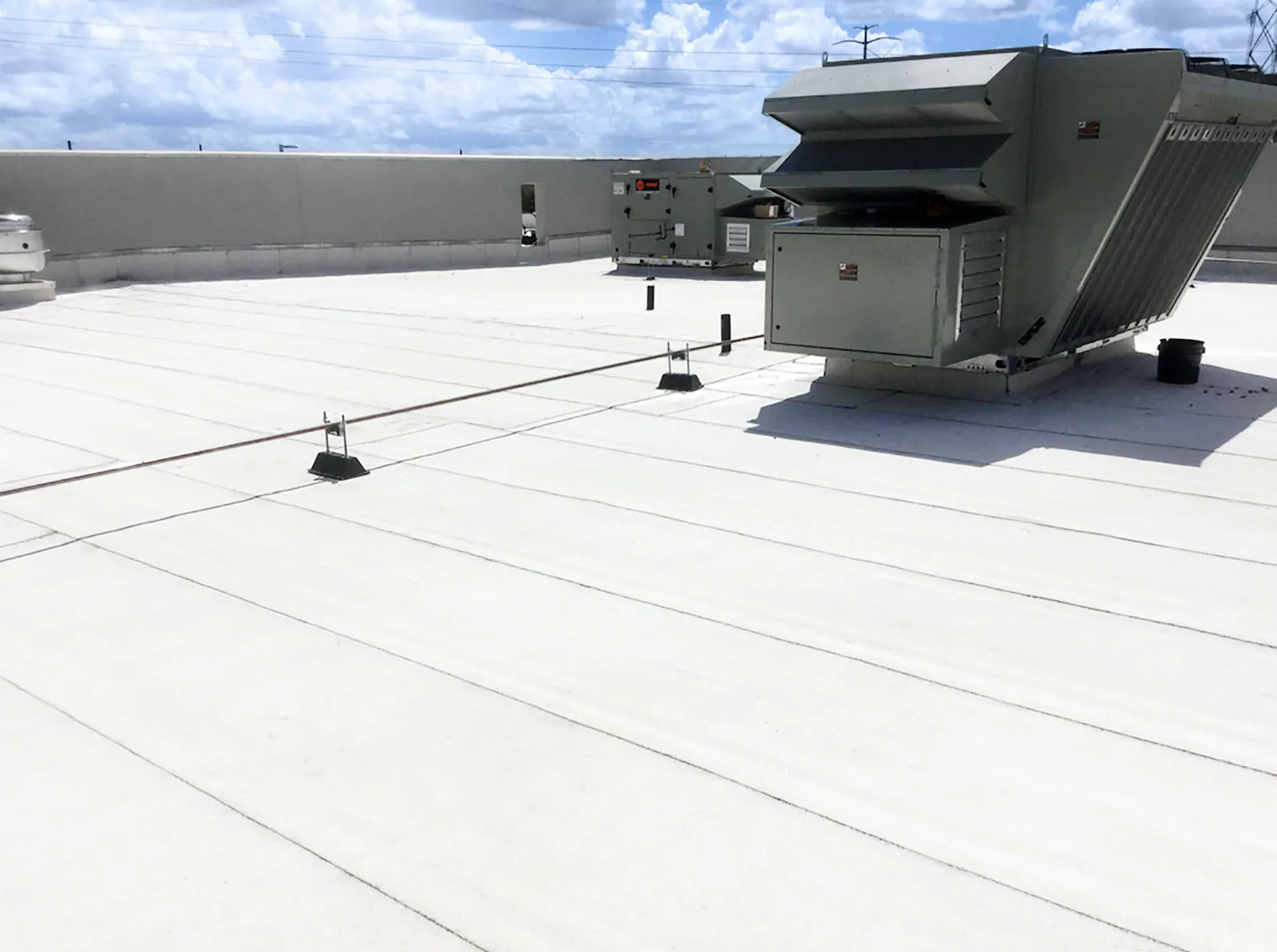
Review SOPREMA commercial roofing in Pueblo, CO with a system-level check of SBS, PVC, liquid-applied details, substrate, and roof zones.
SOPREMA’s commercial roofing range includes SBS-modified bitumen membranes, PVC single-ply products, and liquid-applied systems. Those systems call for different substrates, seams, flashing, and application methods. We begin with the existing roof and the project use, then compare a system that can be built at the actual transitions. A product family alone does not determine whether the roof needs repair, recover, or removal.
Pueblo’s EVRAZ Industrial District supports steel production, while PuebloPlex has existing buildings and planned manufacturing, warehousing, and rail-related uses. Those settings underscore why industrial access and building operations matter, but they do not establish any specific roof assembly. We inspect the property and confirm its records before building the scope.
Which SOPREMA system should be considered?
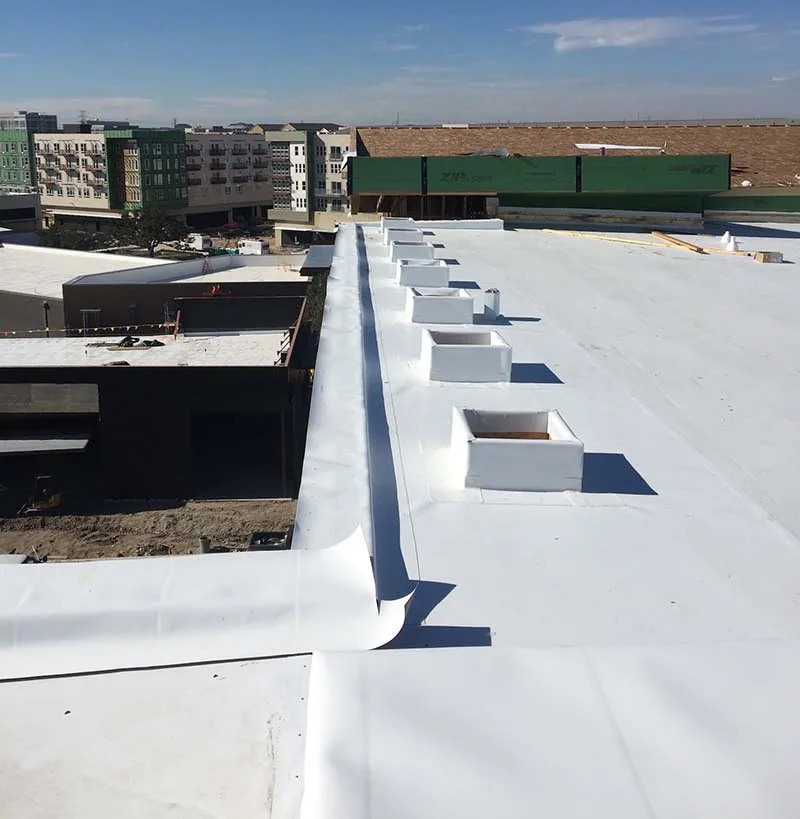
For a multi-ply option, identify whether SBS or APP membranes are specified, how each layer is attached, the surfacing, and what flashing materials complete the assembly. A liquid-applied membrane needs its own substrate preparation, reinforcement, thickness, and curing sequence. A PVC single-ply roof depends on compatible welds and transitions. Compare each option only after the owner knows what layers exist and whether moisture or weak attachment changes the plan.
Modified-bitumen system review can cover the plies, surfacing, and transitions for an SBS option. A PVC system assessment evaluates a different membrane family. SOPREMA’s ELASTOPHENE line includes SBS-modified bitumen products; confirm the current data sheet, application designation, and project specification before selecting a product. The same field condition should be used when comparing other manufacturers such as Sika Sarnafil or Johns Manville.
Before proposing liquid-applied work, confirm that the base is suitable, dry, and prepared according to the product instructions. Verify transitions, penetrations, and reinforcement at corners. If the roof has old coatings or several membrane layers, a test area may be needed to check adhesion and compatibility. Document how that test will be closed before application begins. This prevents a broad coating scope from hiding unresolved moisture or unstable material.
What conditions should be mapped before application?
Locate open seams, blisters, wrinkles, wet areas, damaged surfacing, loose edges, drains, curbs, and wall details. In a multi-ply roof, inspect visible splits and areas where surfacing has separated. On a single-ply assembly, check laps and flashings. For liquid-applied systems, look for cracks or substrate movement that would affect reinforcement. Photograph each roof zone and separate confirmed defects from surfaces that need further testing.
A roof inspection can establish visible conditions and access limits. Where water is entering, leak investigation can relate the interior report to the roof map. If a lap has opened, seam repair review can measure the repair area. At drains and scuppers, drainage inspection should confirm the outlet and overflow path before new material is applied nearby.
If inspection uncovers wet insulation or damaged decking, document the opening and agree on the stop point before removing more material. The owner should see the layer and measurement before authorizing an expanded scope. The project file records what was inspected, what the crew exposed, and what remains inaccessible. These distinctions matter whether the selected system is a membrane, a multi-ply build, or a liquid restoration.
How do Pueblo’s conditions affect roofing work?
Hail and tornado activity is tracked at county scale across south-central and southeast Colorado. That regional record helps frame event awareness, while the field reading and current forecast determine whether a particular roof surface is ready for work. Hot substrate, moisture, wind, and overnight temperatures can alter application, cure, or weld quality. The crew should use product-specific limits and protect any opened area if conditions change.
The Pueblo Armory’s historical bid drawings specify an adhered EPDM system over an existing SBS modified-bitumen assembly for that past project. For a current project, select materials only after the substrate, design, and product requirements are confirmed. It does show why existing layer identification matters before a recover or tear-off is priced. A PuebloPlex-area roof walk likewise needs current building records rather than assumptions based on redevelopment plans.
For sites near industrial or rail activity, confirm delivery path, staging, and whether the roof work must avoid production hours. A temporary protection plan should state who checks the cover after precipitation and how the permanent work resumes. If the project includes torch-applied products, confirm fire-safety controls, hot-work procedures, and building occupancy requirements before setting the crew sequence.
When is restoration enough, and when is removal considered?
Localized damage may be repaired if the material around it remains attached and dry. A liquid-applied restoration may be evaluated only where the existing surface and substrate can accept that system. Widespread moisture, weak attachment, or multiple incompatible layers can point toward removal or another designed assembly. We measure the condition and explain which opening or test would resolve remaining uncertainty.
A restoration scope can identify preparation, repair, reinforcement, and application limits. A targeted repair proposal can define a smaller confirmed defect; a replacement comparison evaluates broader removal and installation. Keep cost drivers such as insulation, edge metal, drains, disposal, and access visible for each option instead of presenting one number without a boundary.
For any selected product, use current technical details to define attachment, substrate, primer, lap, flashing, and required inspection. If a manufacturer’s field representative or approval is part of the issued warranty terms, the owner should confirm that requirement directly. The closeout lists completed work and the warranty documents issued for the installed system, with any owner follow-up identified separately.
What should the SOPREMA project record show?
Keep the current product data and submittals, assembly layers, preparation records, roof-zone photos, work limits, and field changes together. For a multi-ply system, identify each installed layer and surfacing; for PVC, show seams and terminations; for a liquid system, record preparation and application areas. Note any area not included so the owner can distinguish work completed from roof sections that remain as they were.
For work reviewed locally, 2021 editions of building, existing-building, and energy codes apply; the permit lead confirms parcel jurisdiction and amendments. Confirm the property’s permit authority and current requirements before final design. A product’s technical data and a permit record answer different questions and should be retained separately.
Bring plans, prior repairs, inspection photos, access rules, and current product documents to the roof walk. We will inspect transitions and substrate, identify which conditions need testing, and set a work boundary. At closeout, the facility contact receives the roof-zone map, completed details, installation conditions, and any follow-up recommendation. Include the installation date, access window, approved change order, and any area the owner elected to defer.
Commercial Roofing Questions
What commercial systems does SOPREMA make?
Its commercial products include SBS-modified bitumen membranes, PVC single-ply membranes, and liquid-applied roofing systems. The specific current product and assembly should be confirmed in the specification and matched to the roof condition.
Can an SBS membrane be applied over an existing roof?
A recover depends on existing layers, moisture, attachment, substrate, fire and code conditions, and the selected system’s details. We inspect or test the assembly and define what must be confirmed before a new layer is considered.
When is liquid-applied restoration appropriate?
Only when the existing surface is compatible, stable, and prepared under the selected product requirements. We check adhesion and concealed moisture where indicated, then define which details need reinforcement and what remains outside the scope.
How are hot-work and weather limits handled?
The project plan follows product application requirements, current weather, and site fire-safety procedures. We coordinate the work window, protect the opening, and stop if the approved sequence cannot leave a secure roof.
Review a SOPREMA roof assembly in Pueblo
Provide product specifications, roof plans, prior repair history, current inspection records, and site access rules. We will map the assembly and details before comparing repair or restoration options.
Call 555-555-5555 or email [email protected].