Home / Roofing Manufacturers / Sika Sarnafil Commercial Roofing
Sika Sarnafil Commercial Roofing in Pueblo, CO
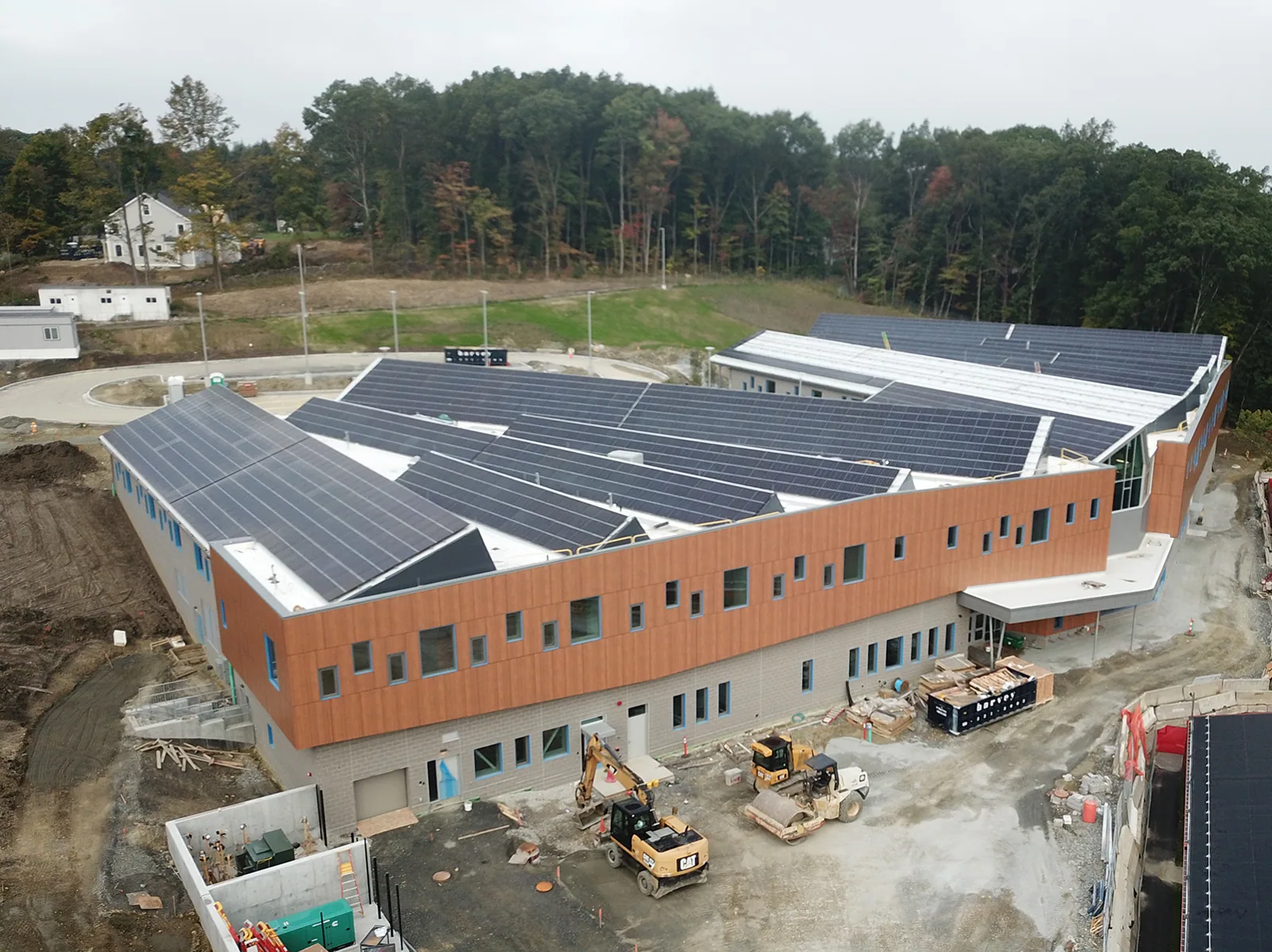
Review Sika Sarnafil commercial roofing in Pueblo, CO with a field assessment of PVC membrane, attachment, substrate, welded seams, and transitions.
A Sarnafil specification can describe an adhered PVC sheet, a mechanically attached membrane, or a more involved assembly. We confirm the product family and detail before a roof scope is priced. Sarnafil G 410 is a PVC membrane with fiberglass reinforcement and heat-weldable seams; S 327 uses polyester reinforcement in mechanically attached systems. The building’s substrate, attachment, transitions, and installation conditions still determine what can be used.
In Pueblo, the EVRAZ Industrial District and St. Charles Industrial Park form distinct employment areas, and the airport district has sites beside US 50. That context may affect access and delivery, but not membrane choice by itself. We map the actual roof zones, equipment, and work routes with the property contact before comparing the proposed assembly.
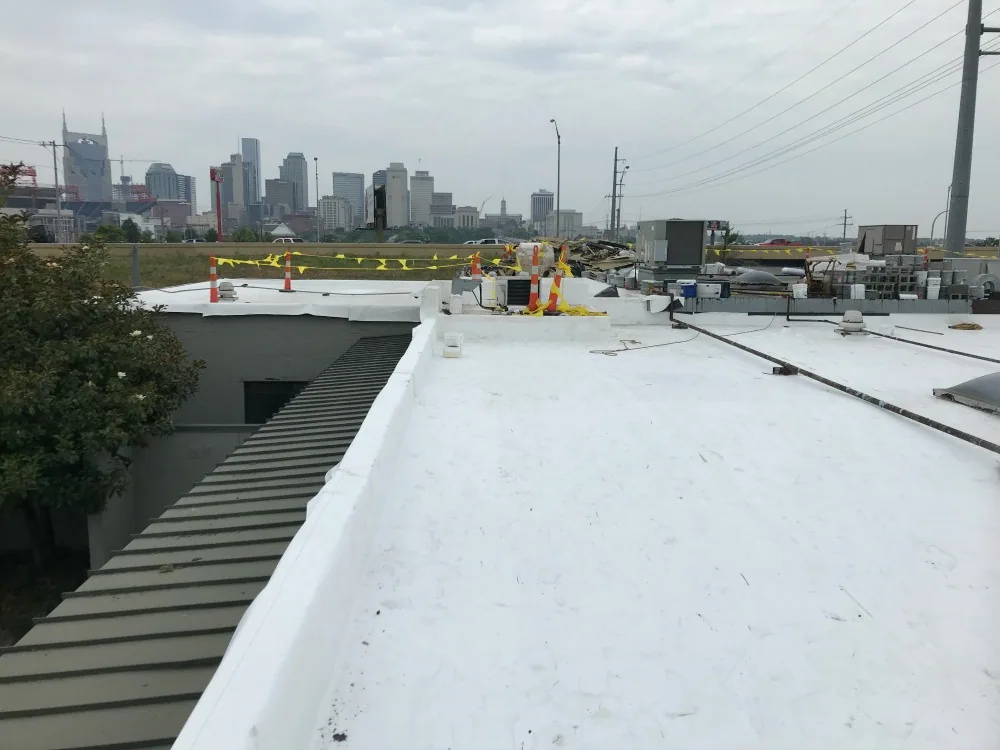
Which Sarnafil membrane configuration fits the roof?
Start with the deck and insulation, then identify whether the system is designed for adhered, mechanically attached, or another approved configuration. G 410 and S 327 are not interchangeable rolls: reinforcement and attachment affect seam placement, movement, and the transitions that must be detailed. Confirm the exact product, thickness, substrate, adhesive or fastener pattern, and edge conditions in the current specification before issuing quantities.
A PVC assembly review can compare the system layers with field conditions. For alternate membranes, Carlisle SynTec and Holcim Elevate offer distinct commercial system families; review each using equivalent attachment and accessory assumptions. A roof survey can confirm existing layers, slope, drains, and defects that affect whether any proposed membrane can be installed.
Where the existing membrane is intended to remain, determine whether it is attached, dry, and suitable for the planned work. A recover requires an assembly review and does not follow automatically from selecting a new membrane. If a test opening reveals wet insulation or deck damage, document the layers and agree on added work before expanding the removal area.
How should seams and flashing be checked?
Heat-welded seams require clean, dry surfaces and the settings prescribed for the membrane and equipment. The crew should confirm the weld and inspect its start, stop, and intersection points. At an adhered system, check bond and surface preparation at the field and vertical transitions. At a mechanically attached system, inspect fastening and the membrane response at high-stress points. Each approach has its own detail and test requirements.
Map terminations at parapets, curbs, drains, expansion joints, and penetrations. An edge-metal scope should state how the membrane ends at the perimeter. If the lap has separated, seam repair review measures the failure before a tie-in is proposed. For a curb or wall transition, flashing repair planning covers that vertical detail separately. Record the material transition so later repairs do not assume a single roof system across all zones.
When equipment or service paths cross the roof, inspect protection and attachment around supports. If another trade needs to move or modify a curb, set the order of work and decide who will restore the membrane. Keep the field seam accessible until it can be checked. Photograph detail work before it is hidden and include the roof-zone label so the owner can locate the completed tie-in.
What controls the Pueblo installation window?
Pueblo’s August mean high is 90.2°F, and average January low is 15.4°F. Pueblo’s summer heat and winter snow influence the work calendar; roof-surface temperature, moisture, wind, and forecast determine whether this system can be installed. For adhesives and hot-air welds alike, the crew follows the product detail and records any condition that changes the work window. Do not expose more roof than can be closed safely.
The airport district’s US 50 access and St. Charles’ rail-served location can matter to deliveries. They do not establish a site’s gate rules or unloading point. A roof walk in the EVRAZ district should confirm property-specific access, laydown, and active operations. If the scope involves multiple zones, establish where work begins, how temporary protection will be secured, and which site lead receives the end-of-shift report.
Plan around occupants, loading activity, and equipment shutdowns. If a roof section is active production support, coordinate the work boundary with the facilities representative before tear-off. A changed forecast or concealed deck condition may require pausing the sequence. The crew should show the owner the condition, protect the exposed zone, and request direction before proceeding beyond the approved scope.
What roof findings point to a larger decision?
A localized membrane opening can be repaired if the substrate and adjacent sheet accept a compatible detail. Repeated seam failures, widespread moisture, or unstable attachment may justify comparing a larger scope. We identify what was inspected and what was not, then list the materials or test results needed to move forward. A single failed detail should not be presented as proof that the entire roof must be replaced.
For an active leak, leak investigation can trace the reported path. Targeted repair can address the measured defect, while replacement planning can set a different work boundary for widespread failure. If an additional layer is considered, evaluate the existing build-up, wet insulation, drainage, attachment, and code before presenting a recover option.
Proposal comparisons should name the membrane, insulation, attachment, cover board, perimeter, drains, curbs, and removal assumptions. If Sika system components are specified, verify the current detail and approved substrate. Warranty coverage follows the issued terms. The owner should review applicability to the installed assembly, transfer requirements, and any required notices with the issuer.
What belongs in a Sarnafil project handoff?
Record exact product names and system layers, roof zones completed, substrate preparation, seam and flashing checks, installation conditions, and changes approved in the field. Include close-up and context photos of seams, edges, drains, and penetrations. Identify any location not repaired or inspected. If the exposed assembly differed from the plans, preserve the original assumption and note how the owner resolved the change.
Before product details are finalized, the project lead confirms the permit jurisdiction and applicable amendments for the selected assembly. Confirm the parcel’s authority and permit requirements; a code reference does not substitute for a roof-system detail. A condition record can keep outstanding items and inspection limits with the closeout.
Bring the specification, roof plan, repair history, access controls, and current operating schedule to the initial roof walk. We will identify what can be confirmed, which transitions need more attention, and how the work can close each zone. At handoff, the owner should know which membrane and attachment were installed and what remains outside the project. Include the final drawing revision, photos of completed details, and the person responsible for any unresolved inspection item.
Commercial Roofing Questions
What is the difference between Sarnafil G 410 and S 327?
G 410 is a fiberglass-reinforced PVC membrane used in adhered configurations; S 327 is polyester-reinforced for mechanically attached systems. The current specification and roof conditions determine which product and detail apply.
Can Sarnafil be used for a recover?
A recover must be evaluated against the existing layers, attachment, moisture, drainage, deck, and product requirements. We inspect the assembly and identify any test opening before stating whether another layer is a feasible option.
How do you verify a finished heat weld?
The crew follows the specified equipment settings and seam procedure, then checks the weld and its intersections. Closeout records identify the areas checked and any limitations; the installation requirements define the accepted method.
Do you represent Sika or provide a Sarnafil warranty?
We install and repair commercial roof systems according to the project documents. Any warranty is issued under its own terms; the owner confirms coverage, transfer, and obligations with the issuer.

Review a Sarnafil roof scope in Pueblo
Share current Sika details, roof plans, existing system information, and access rules. We will inspect the assembly, compare attachment and transition requirements, and define the installation and closeout sequence.
Call 555-555-5555 or email [email protected].